

How Many Days One Has to Work to Buy an iPhone 18 Pro Max in Southeast Asia?
If you work in Singapore, you would only need 8 days of work to buy an iPhone 18 Pro Max.

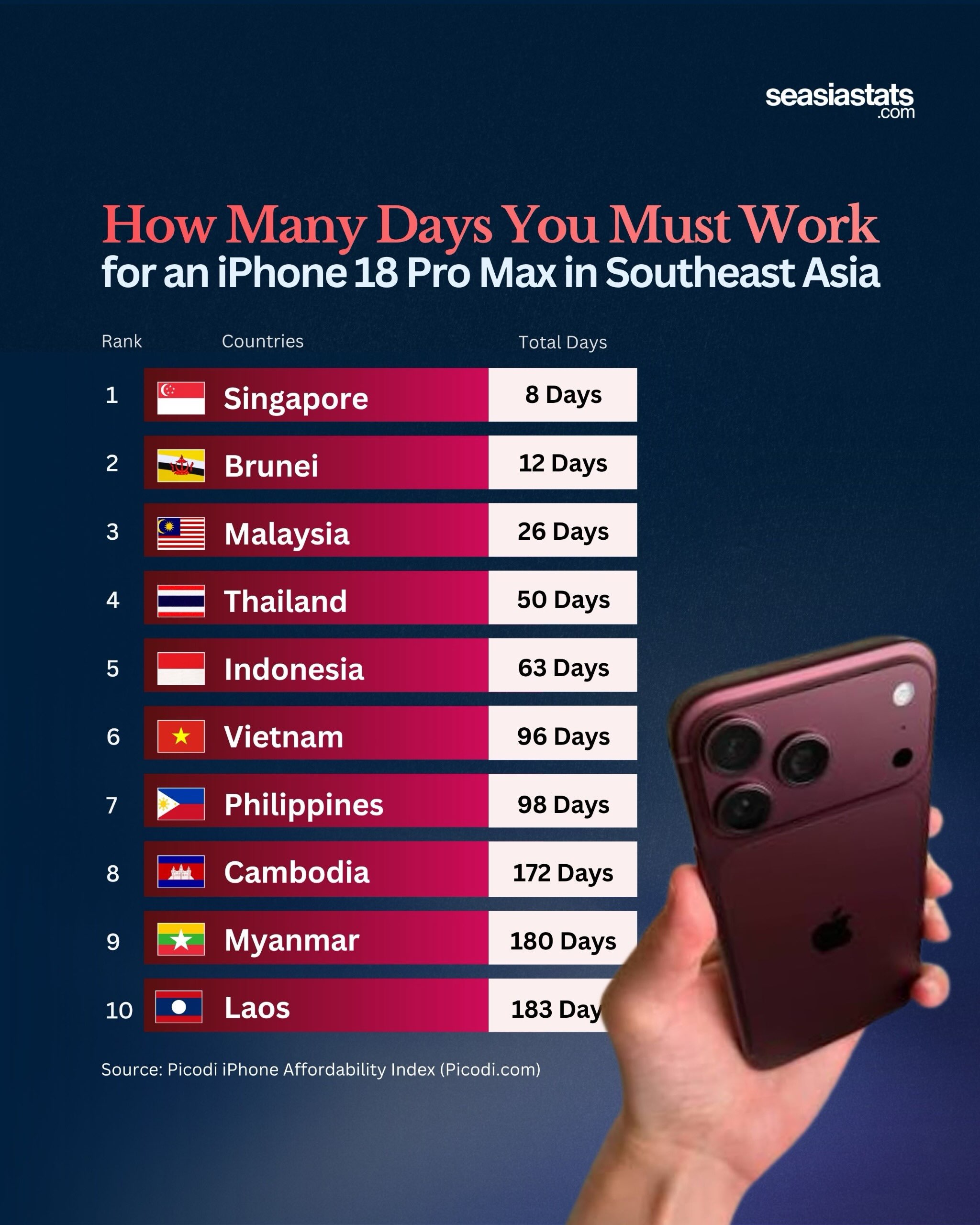
The number of working days required to purchase a flagship smartphone varies significantly across Southeast Asia, highlighting the differences in purchasing power and income levels throughout the region.
According to the Picodi iPhone Affordability Index, workers in the region need between 8 and 183 working days to afford an iPhone 18 Pro Max, depending on their country.
Singapore ranks first as the most affordable country in Southeast Asia for purchasing the device. Workers there need just 8 working days to earn enough to buy the smartphone. Brunei follows in second place, requiring 12 working days, while Malaysia ranks third, with workers needing 26 days of earnings to afford the device.
The figures rise considerably in other countries across the region. In Thailand, workers must spend approximately 50 working days earning enough to purchase an iPhone 18 Pro Max. Indonesia ranks next, with 63 working days required. Meanwhile, workers in Vietnam need 96 working days, closely followed by the Philippines, where the figure reaches 98 days.
The situation is more challenging in several lower-income economies. In Cambodia, workers need 172 working days to afford the flagship smartphone. Myanmar follows with 180 days, while Laos records the highest figure in the region, at 183 working days.
The comparison reveals a substantial affordability gap between Southeast Asian countries. A worker in Singapore needs only eight working days to purchase the device, whereas a worker in Laos must work for nearly 23 times as long. This difference illustrates how income levels and purchasing power can influence access to expensive consumer electronics.
However, the number of working days required does not necessarily represent the actual experience of every worker. The index provides a general comparison based on income and smartphone prices, while individual affordability depends on factors such as wages, living expenses, taxes and personal financial obligations.
Workers who spend a large proportion of their earnings on food, housing and transportation may find it difficult to save for a premium smartphone, even when the index suggests a relatively low number of working days.
Overall, the Picodi iPhone Affordability Index highlights the economic differences within Southeast Asia. Singapore and Brunei lead the region in smartphone affordability, followed by Malaysia, while Cambodia, Myanmar and Laos face the greatest challenges.
Beyond comparing the cost of a popular smartphone, the figures offer a broader perspective on purchasing power and the varying financial realities experienced by workers across the region.