

How Much Do Southeast Asians Eat Pork?
Pork is one of the most favorite types of meat in Southeast Asia with the Vietnamese eat it the most.

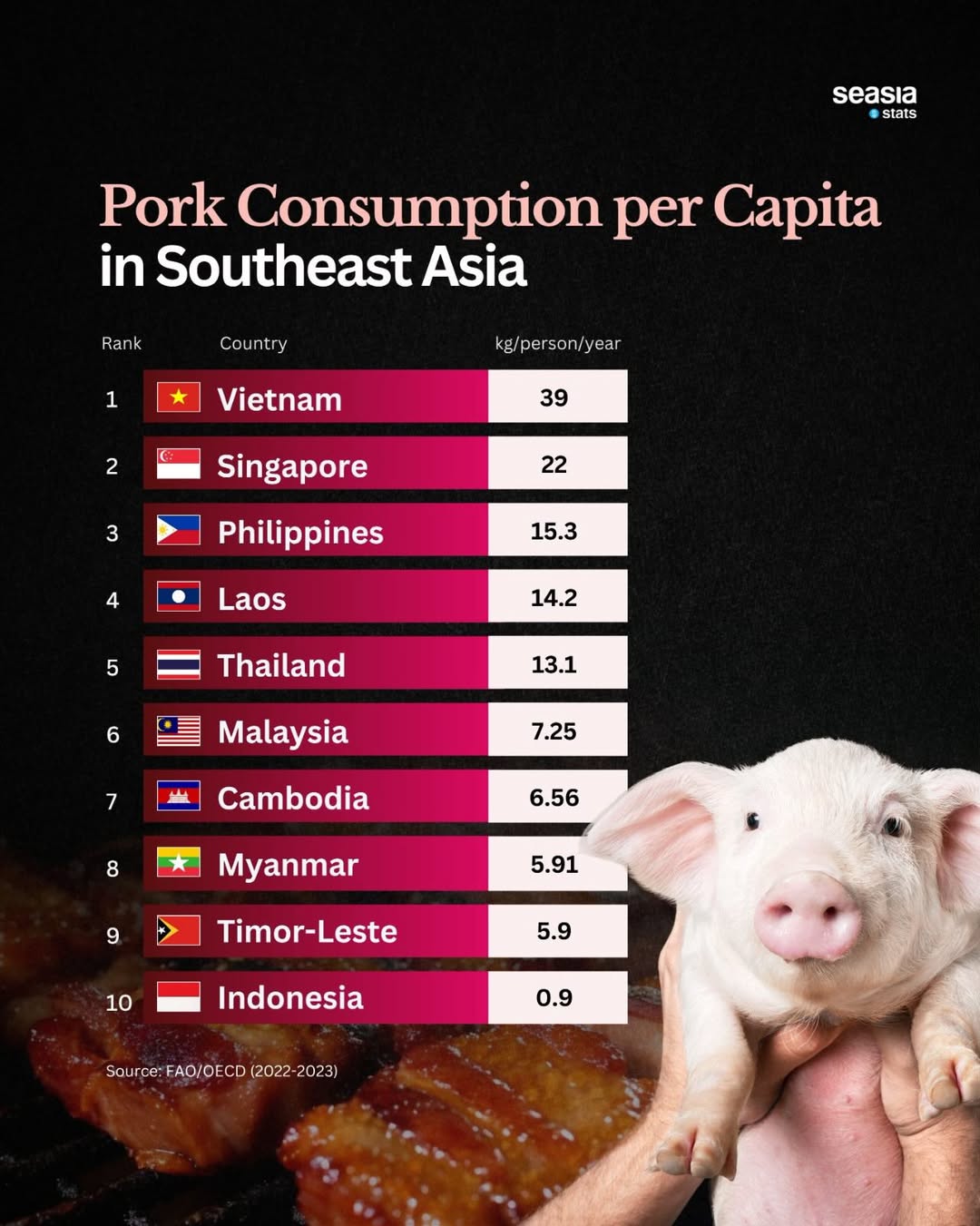
Pork consumption varies significantly across Southeast Asia, reflecting differences in culture, religion, dietary preferences, and economic development. Based on annual per capita consumption measured in kilograms, Vietnam leads the region by a substantial margin, while Indonesia records the lowest level of pork consumption.
Vietnam ranks first in Southeast Asia with an average pork consumption of 39 kilograms per person per year. Pork is a staple protein in Vietnamese cuisine and plays a central role in many traditional dishes. The country's strong domestic pig farming industry and widespread consumer preference for pork contribute to its dominant position in the region.
Singapore follows with 22 kilograms per capita annually. Despite its relatively small population, Singapore's multicultural society and high purchasing power support significant pork consumption. Pork products are widely available through supermarkets, restaurants, and food service establishments, making pork a common part of everyday diets for many residents.
The Philippines ranks third at 15.3 kilograms per person per year. Pork is one of the country's most popular meats and is featured in numerous traditional dishes. Strong consumer demand and a large domestic market have helped maintain relatively high consumption levels.
Laos and Thailand report similar consumption figures, at 14.2 kilograms and 13.1 kilograms respectively. In both countries, pork is an important source of protein and is commonly used in local cuisines. Consumption levels are supported by domestic livestock production and cultural acceptance of pork products.
Malaysia records annual pork consumption of 7.25 kilograms per capita. The country's lower figure is influenced by its Muslim-majority population, for whom pork consumption is prohibited. However, pork remains an important food item among non-Muslim communities.
Cambodia and Myanmar show comparable consumption levels at 6.56 kilograms and 5.91 kilograms respectively. Pork is available and consumed in both countries, although overall intake remains lower than in neighboring Vietnam, Thailand, and the Philippines.
Timor-Leste reports pork consumption of 5.9 kilograms per person per year, nearly identical to Myanmar. Pork plays a role in local diets and cultural celebrations, though consumption levels remain relatively modest.
Indonesia, the world's largest Muslim-majority nation, records the lowest pork consumption in Southeast Asia at just 0.9 kilograms per capita annually. Religious dietary restrictions significantly influence national consumption patterns, although pork remains part of the diet in several regions with substantial non-Muslim populations.
Overall, pork consumption across Southeast Asia demonstrates how cultural traditions, religious beliefs, and economic factors shape food preferences throughout the region.