

Indonesia’s Air Force Diversity Drives Strength but Raises Operational Demands
Indonesia operates a wide mix of fighter aircraft from multiple countries. The Indonesian Air Force uses Rafale, F-16, Sukhoi, and several trainer fighters like

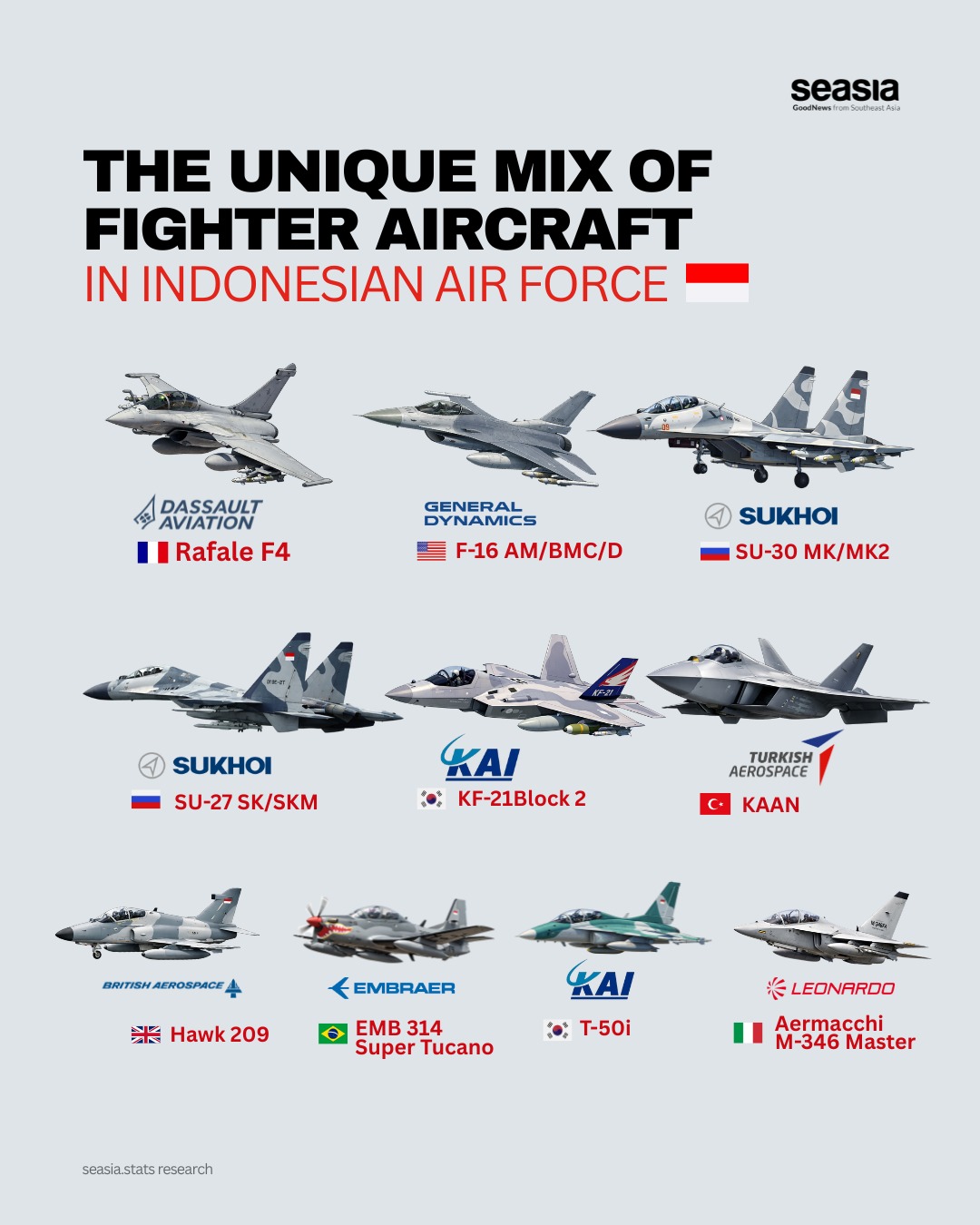
Indonesia operates a wide mix of fighter aircraft from multiple countries. The Indonesian Air Force uses Rafale, F-16, Sukhoi, and several trainer fighters like T-50i and Hawk 209.
This diversity strengthens diplomacy. Indonesia builds ties with France, the United States, Russia, South Korea, Turkey, Brazil, and Italy. Each procurement opens access to training, technology, and defense cooperation. For example, the Rafale deal strengthens ties with France. The KF-21 program deepens collaboration with South Korea.
Air power also becomes stronger. A varied fleet gives more combat options. Different aircraft bring different strengths. F-16 offers proven multirole capability. Sukhoi provides long range and heavy payload. Rafale adds modern sensors and weapons integration. This combination improves operational flexibility in real missions.
The fleet also reduces dependency. Indonesia does not rely on a single supplier. This helps maintain readiness if one supply chain faces disruption.
However, maintenance becomes more complex. Each aircraft needs different spare parts, tools, and technical expertise. Logistics become longer and more expensive. Training for pilots and technicians also takes more time because they must learn multiple systems.
Operational costs increase. Mixed fleets often raise logistics and maintenance costs significantly compared to a more uniform fleet.
Indonesia gains stronger air power and wider diplomatic reach. At the same time, it must manage higher maintenance complexity and costs.