

International Arrivals in Southeast Asia, 2024–2025
Malaysia has the biggest increase of tourist arrival in 2025 compared to 2024.

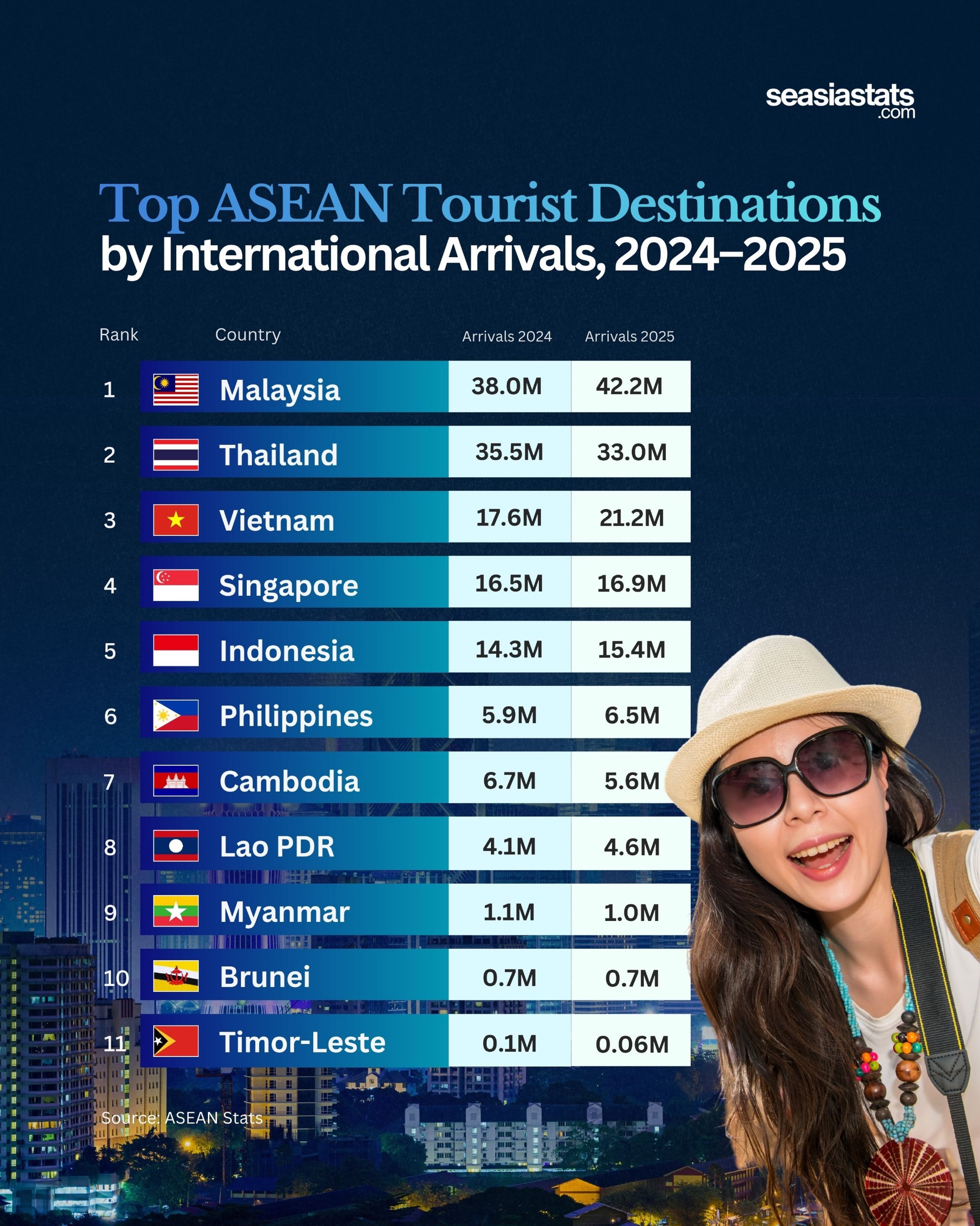
International travel in Southeast Asia showed mixed but generally strong performance between 2024 and 2025.
The region remained one of the world’s most attractive tourism destinations, supported by its beaches, cultural heritage, food, natural landscapes, and increasingly convenient travel connections. Based on the figures provided, Malaysia recorded the highest number of international arrivals in 2025, followed by Thailand and Vietnam.
Malaysia experienced the strongest increase among the region’s major tourism markets, rising from 38.0 million arrivals in 2024 to 42.2 million in 2025. This represented an increase of about 11 percent and strengthened Malaysia’s position as a leading destination in Southeast Asia. Official Malaysian statistics also recorded 38.0 million visitor arrivals in 2024.
Thailand, traditionally one of the region’s tourism leaders, recorded 35.5 million arrivals in 2024, but this declined to 33.0 million in 2025.
Cambodia also experienced a decrease, from 6.7 million to 5.6 million, while Myanmar fell slightly from 1.1 million to 1.0 million. Timor-Leste recorded the smallest figures, declining from 0.1 million to 0.06 million. These declines contrast with the overall growth experienced by several other destinations.
Vietnam was one of the biggest success stories. International arrivals increased from 17.6 million in 2024 to 21.2 million in 2025, a rise of approximately 20 percent. Vietnam’s tourism authority reported that the country recorded the highest international-arrival growth rate among ASEAN countries in 2025.
Other countries also recorded positive growth. Singapore increased from 16.5 million to 16.9 million, while Indonesia rose from 14.3 million to 15.4 million. The Philippines grew from 5.9 million to 6.5 million, and Laos increased from 4.1 million to 4.6 million. Brunei remained stable at approximately 0.7 million arrivals in both years.
Overall, the figures demonstrate that Southeast Asian tourism remained dynamic in 2025. While some countries faced declining arrivals, others achieved substantial growth and strengthened their positions in the regional tourism market.
Vietnam and Malaysia stood out for their particularly strong increases, while Thailand and Cambodia experienced notable declines.
The contrasting results suggest that tourism recovery and growth across Southeast Asia are increasingly shaped by individual countries’ connectivity, tourism policies, visitor markets, and destination appeal. ASEAN data also shows that international tourism recovery continued to vary considerably among member states.