

Largest Airlines in Selected Asian Countries
China Southern Airlines leads the Asian aviation market with a fleet of 850 aircraft, showcasing its expansive reach and capacity to meet China's growing air tr

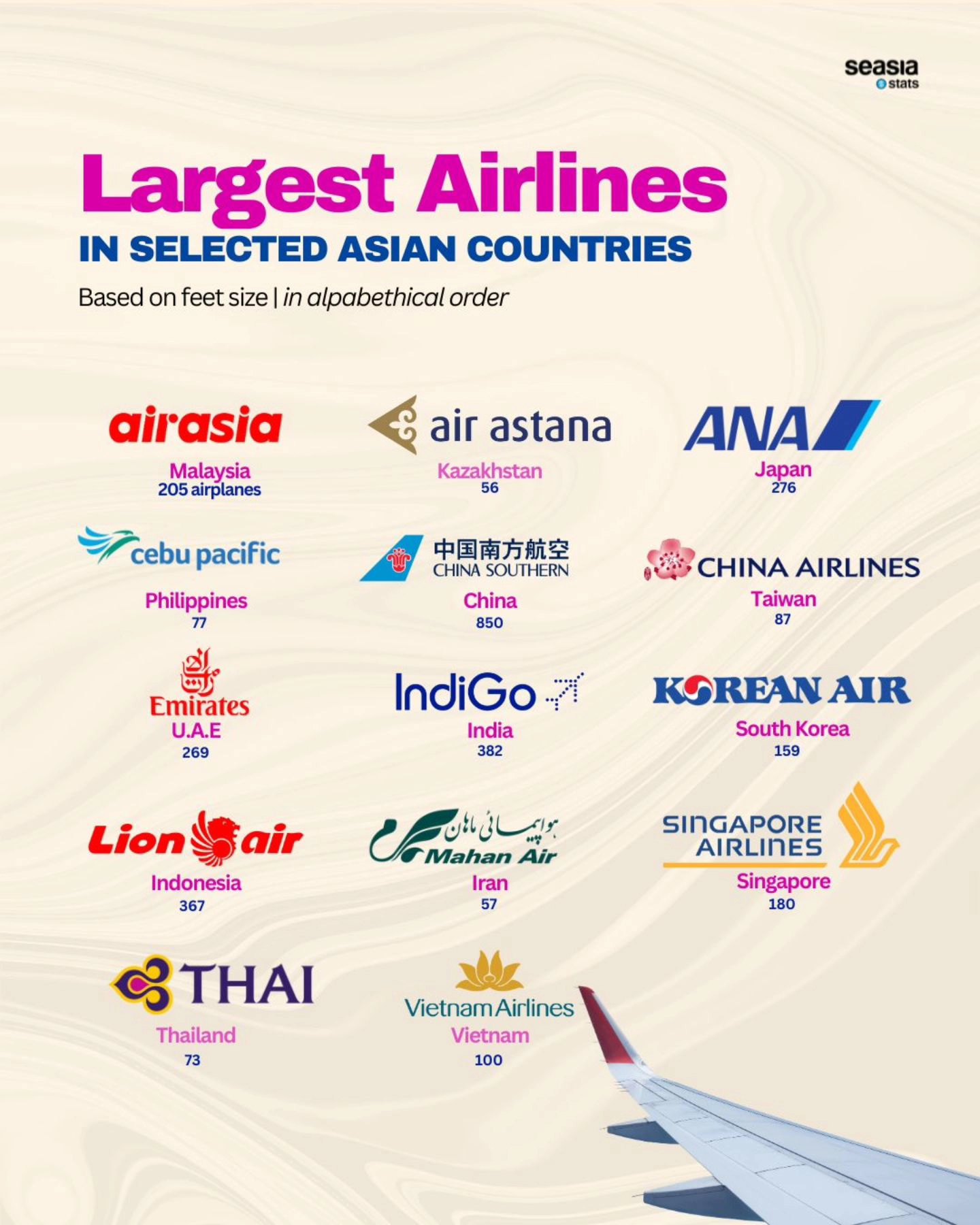
China Southern Airlines leads the Asian aviation market with a fleet of 850 aircraft, showcasing its expansive reach and capacity to meet China's growing air travel demand. The airline's vast fleet underscores its critical role in connecting cities across China's extensive geography. As one of the largest airlines in the world by fleet size, China Southern exemplifies the scale required to support both domestic and international passenger volumes in the region.
China's burgeoning economy and its position as a global trade hub have further fueled air travel demand, solidifying China Southern's dominance. The airline's investment in modernizing its fleet and expanding its international destinations highlights its long-term strategy to maintain leadership. By addressing both domestic needs and global connectivity, China Southern continues to shape the competitive landscape of Asian aviation.
IndiGo: A Reflection of India's Air Travel Boom
IndiGo, with a fleet of 382 aircraft, represents the rapid growth of air travel in India, the world's second-most populous country. Known for its operational efficiency and low-cost model, IndiGo has become a key player in India's domestic market while gradually increasing its international presence. The airline’s success reflects India's rising middle class and the increasing accessibility of air travel.
IndiGo's emphasis on expanding its fleet and route network has been pivotal in maintaining its position in the Indian market. It serves as a benchmark for understanding how carriers can capitalize on growing demand in emerging economies. As the Indian aviation sector continues to expand, IndiGo is well-positioned to strengthen its market share and influence.
Lion Air: Connecting Indonesia's Archipelago
Lion Air, with a fleet of 367 aircraft, underscores the essential role of air travel in Indonesia, a nation spread across more than 17,000 islands. The airline has been instrumental in connecting remote regions to major urban centers, enabling economic development and improving accessibility. Lion Air's presence highlights the unique challenges and opportunities associated with operating in an archipelagic nation.
As Indonesia's largest airline by fleet size, Lion Air has focused on addressing domestic connectivity while gradually expanding to international destinations. Its operations demonstrate how aviation can support regional integration and economic growth in geographically diverse nations. Lion Air remains a critical player in Indonesia’s infrastructure development, linking communities and driving commerce.
The Role of Budget Airlines in Asia: AirAsia's Contribution
Malaysia's AirAsia leads the budget carrier segment in Asia with a fleet of 205 aircraft, making air travel more accessible to a wider population. The airline’s focus on affordability and efficiency has allowed it to thrive in a region with diverse economic demographics. By offering low-cost options, AirAsia has played a significant role in democratizing air travel across Southeast Asia.
AirAsia's growth reflects the increasing demand for budget travel as middle-income populations expand in the region. The airline's hub-based operations and emphasis on short-haul flights have been critical in maintaining profitability while serving a growing customer base. Its success highlights the importance of affordability and efficiency in sustaining growth in the competitive aviation sector.
Other Notable Players in the Market
Japan's ANA (All Nippon Airways) and Emirates also feature prominently in the Asian aviation landscape, with fleets of 276 and 269 aircraft, respectively. ANA exemplifies Japan's commitment to providing high-quality air travel services while maintaining a strong domestic presence. The airline’s investments in fleet modernization and technology underscore its focus on sustainability and passenger comfort.
Emirates, based in the UAE, serves as a vital link connecting Asia with the rest of the world. Its extensive international network and focus on premium services have positioned it as a leader in global aviation. The airline’s role highlights the interconnected nature of Asia's aviation market with global trends, making it a significant player despite being geographically situated outside the core Asian region.
The Outlook for Asian Aviation
The growth of major airlines like China Southern, IndiGo, Lion Air, and AirAsia reflects the dynamic nature of the Asian aviation market. As the region continues to experience economic growth and urbanization, the demand for air travel is expected to rise. Airlines that can adapt to the needs of diverse populations, leverage technological advancements, and expand connectivity will likely continue to thrive.
Asian aviation remains a critical driver of economic development, enabling trade, tourism, and regional integration. By understanding the role of key players and the challenges they face, stakeholders can better navigate the evolving landscape of one of the world’s most important aviation markets.