

Largest Temple Structures in Southeast Asia by Dimensions
Angkor Wat uses scale across all dimensions. The base is wide. The height is high. The structure grows in layers. This creates the largest single built mass in

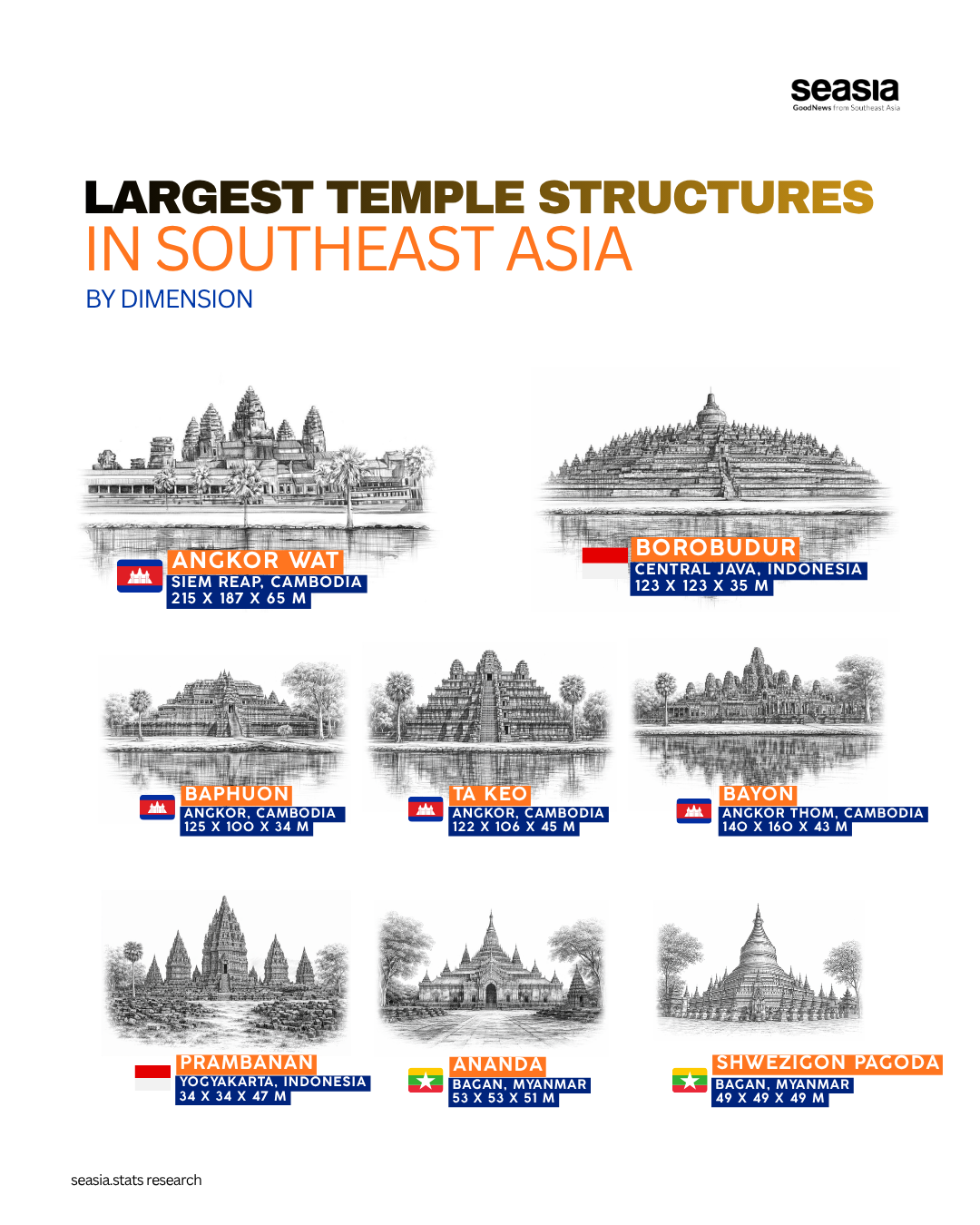
Angkor Wat uses scale across all dimensions. The base is wide. The height is high. The structure grows in layers. This creates the largest single built mass in the region
Borobudur uses volume. The base is square and very large. The structure stacks terraces upward. It feels compact and heavy. It holds more stone in a tighter form
Baphuon and Ta Keo use pyramid form. Both start with large bases and rise steeply
- Baphuon spreads wider. Lower profile
- Ta Keo rises sharper. More vertical
Bayon uses density. Many towers sit close together. The structure looks complex instead of massive. The scale comes from repetition, not a single block
Prambanan uses height. The base is small. The main tower rises fast. It creates strong vertical focus
Ananda Temple combines height and space. The exterior is tall. The interior is large and accessible. The scale works both outside and inside
Shwezigon uses a dome form. The structure is circular and continuous. The mass sits low and rises smoothly. No sharp tiers or towers
Quick pattern
- Maximum size. Angkor Wat
- Maximum mass. Borobudur
- Pyramid form. Baphuon, Ta Keo
- Tower density. Bayon
- Vertical focus. Prambanan
- Interior volume. Ananda
- Rounded mass. Shwezigon