

Literal Translations of Asian Capital Cities
Asian capital names carry profound meaning which invoke curiosity from both their inhabitants and visitors.

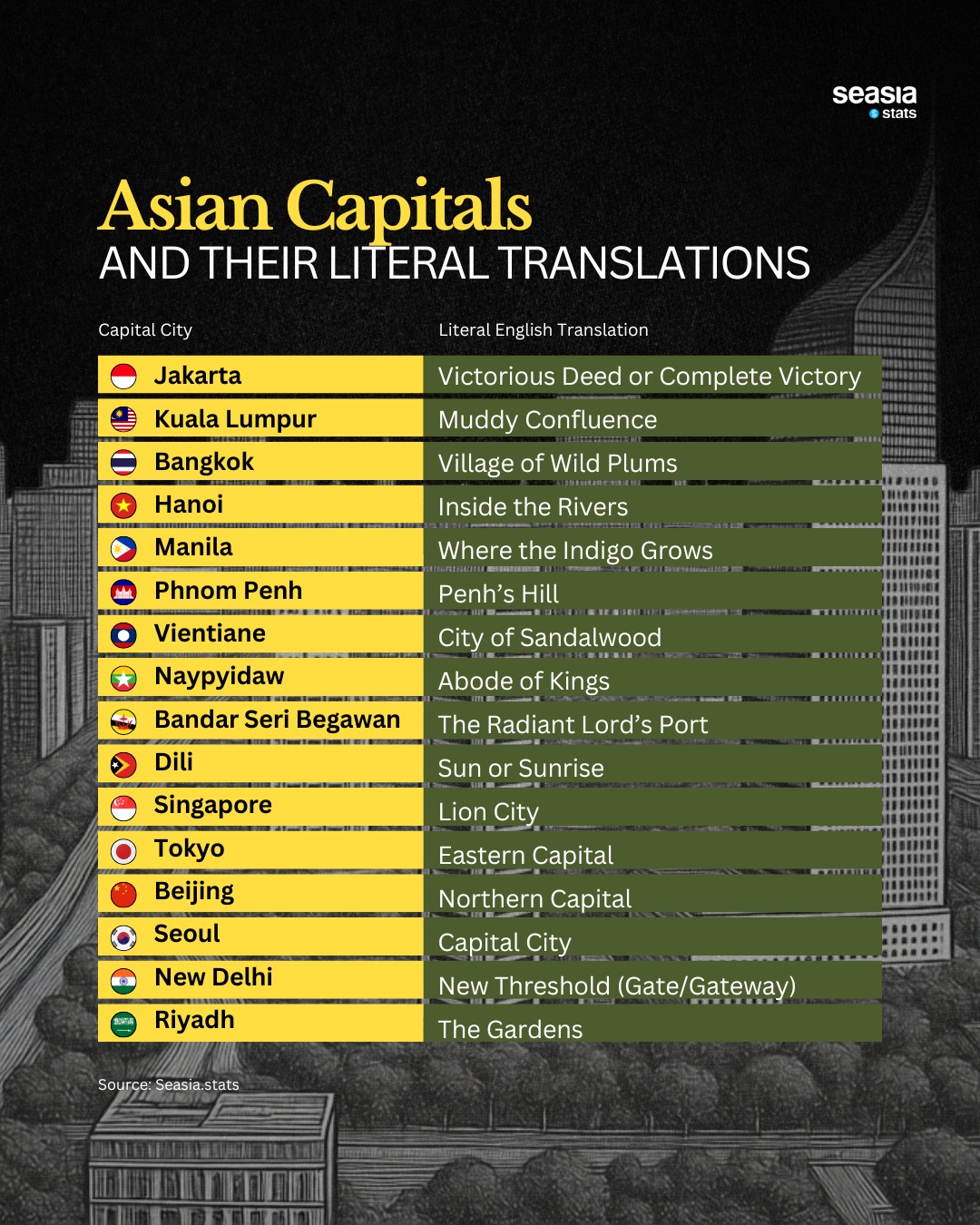
Across Asia, capital city names often carry deep linguistic and historical meanings, reflecting geography, culture, and the aspirations of their founders. Exploring the literal meanings behind these names offers a fascinating glimpse into the identity of each nation.
In Southeast Asia, Jakarta derives from a Sanskrit phrase meaning “victorious deed” or “complete victory,” symbolizing triumph and resilience. Kuala Lumpur translates to “muddy confluence,” referring to its origins at the meeting point of two rivers. Bangkok is often interpreted as “village of wild plums,” highlighting its natural past before urban expansion.
Moving to mainland Southeast Asia, Hanoi means “inside the rivers,” describing its location within the Red River Delta. Manila comes from a phrase meaning “where the indigo grows,” referencing a native plant once abundant in the area.
Phnom Penh translates to “Penh’s hill,” named after a legendary figure associated with the city’s founding. Meanwhile, Vientiane means “city of sandalwood,” pointing to the fragrant trees that once thrived there.
In Myanmar, Naypyidaw means “abode of kings,” reflecting authority and royal tradition. Bandar Seri Begawan translates to “the radiant of the lord’s port,” combining maritime heritage with honorific language. Dili is linked to the word for “sun” or “sunrise,” evoking warmth and new beginnings.
Further north, Singapore famously means “lion city,” derived from Sanskrit roots and a legendary sighting of a lion. In East Asia, Tokyo means “eastern capital,” while Beijing translates to “northern capital,” both reflecting geographic orientation and political importance. Seoul simply means “capital city,” emphasizing its central role.
In South and West Asia, New Delhi means “new threshold,” marking a modern gateway in contrast to the historic city of Delhi. Finally, Riyadh translates to “the gardens,” a reference to the fertile oasis landscape in an otherwise arid region.
Together, these names reveal how geography, history, and language intertwine. Each capital’s name is more than just a label—it is a story, preserving cultural memory and offering insight into how people once understood the places they called home.