

Median Age of Various Religious Groups in Asia-Pacific
In Asia-Pacific, the Muslims have the youngest median age.

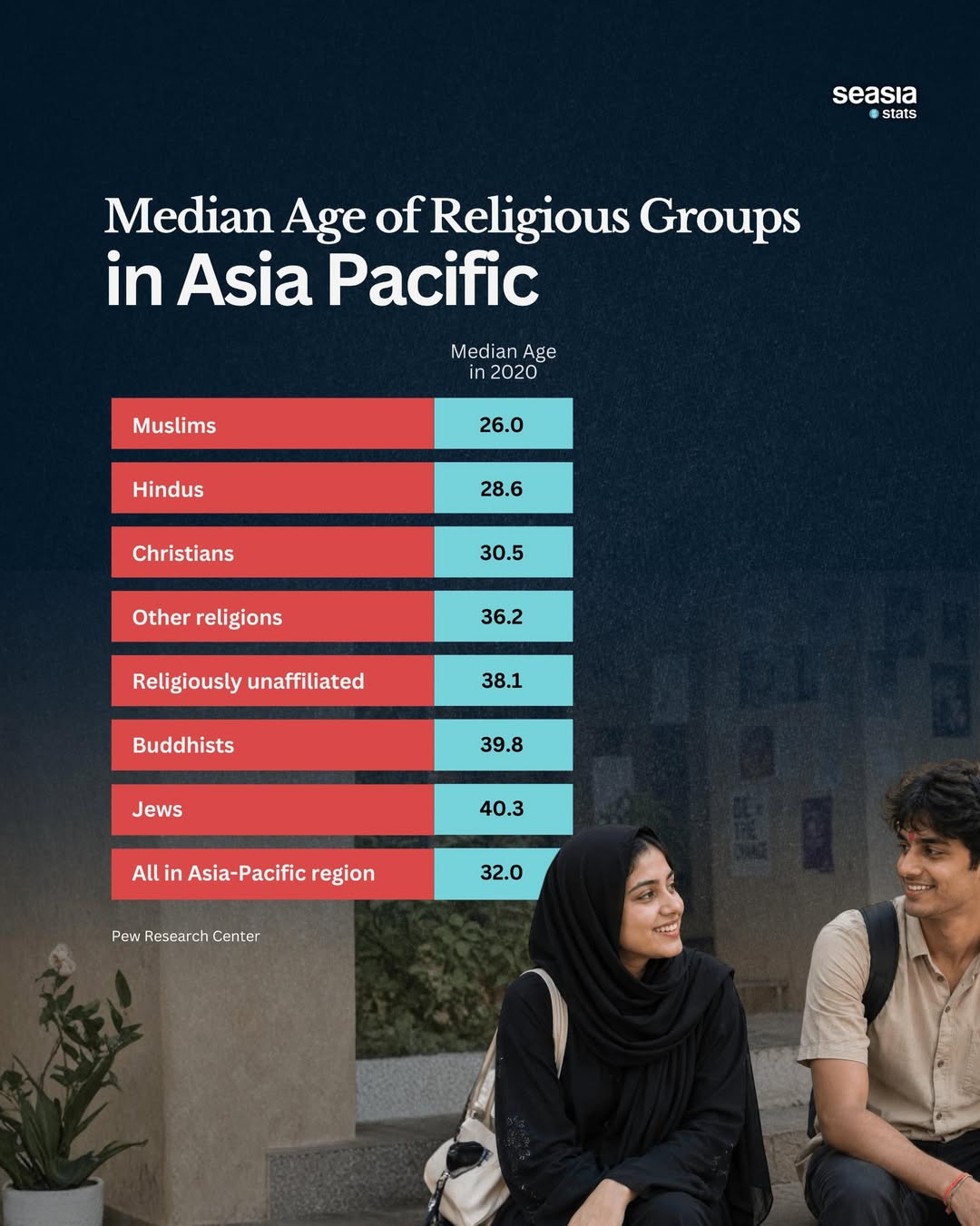
The age structure of religious communities can provide valuable insights into demographic trends, population growth, and future social developments. According to research published by the Pew Research Center, religious groups in the Asia-Pacific region displayed significant differences in their median ages in 2020.
The overall median age for the region was 32.0 years, but individual religious communities varied considerably depending on fertility rates, life expectancy, and population history.
Among the major religious groups, Muslims were the youngest population, with a median age of 26.0 years. This relatively young age profile reflects higher birth rates in many Muslim-majority countries across Asia and the Pacific. A younger population often indicates potential for continued population growth and a larger future workforce.
Hindus had a median age of 28.6 years, making them the second-youngest major religious group in the region. The large Hindu population in countries such as India contributes significantly to this demographic pattern. Like Muslims, Hindus generally have a younger age structure than the regional average.
Christians in the Asia-Pacific region had a median age of 30.5 years, slightly below the regional median of 32.0 years. This reflects a relatively balanced age distribution, with both younger and older populations represented across various countries and denominations.
The category of Other Religions had a median age of 36.2 years. This grouping includes followers of numerous traditional, indigenous, and smaller faith communities. Their age profile is somewhat older than the regional average, suggesting slower population growth in many of these communities.
Religiously unaffiliated individuals, including those who identify as having no religion, had a median age of 38.1 years. This older demographic profile may reflect lower fertility rates and aging populations in several countries where secular or nonreligious identities are more common.
Buddhists had a median age of 39.8 years, making them one of the oldest major religious groups in the region. Many Buddhist-majority societies, particularly in East Asia, have experienced declining birth rates and increasing life expectancy, contributing to an older population structure.
Jews had the highest median age at 40.3 years. Although the Jewish population in the Asia-Pacific region is relatively small, its age profile reflects an older demographic composition compared with other religious groups.
Overall, the data show that religious communities in the Asia-Pacific region differ substantially in age structure. With a regional median age of 32.0 years, the area contains both youthful and aging populations, highlighting the diversity of demographic experiences across religious traditions.