

National Animals of Southeast Asian Countries
Each of Southeast Asian country has its own national animal, both official and unofficial.

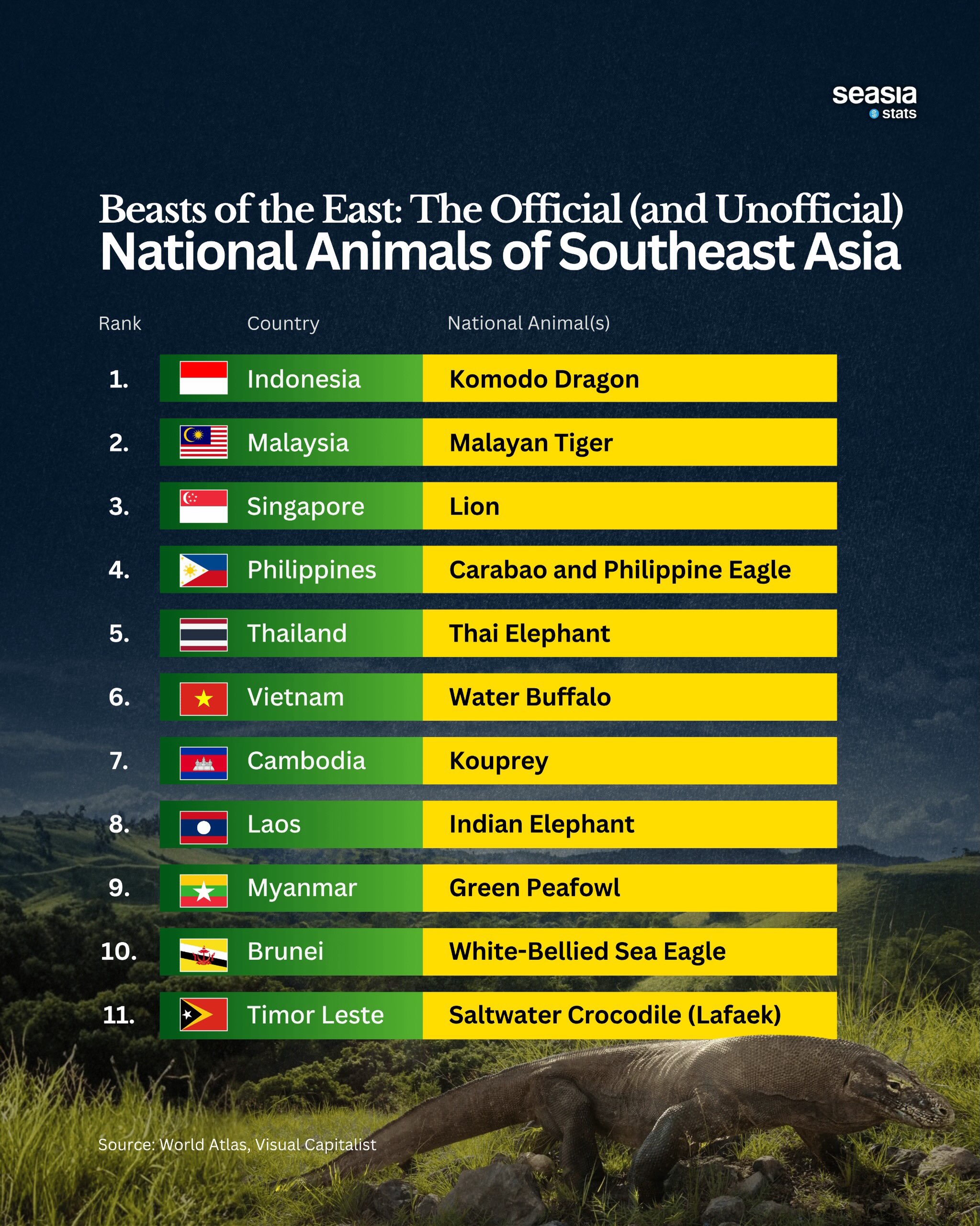
National animals are important symbols that represent a country's natural heritage, cultural identity, and history. In Southeast Asia, each nation has selected an official or widely recognized animal that reflects its unique environment and traditions. These animals also highlight the region's rich biodiversity and the importance of wildlife conservation.
Indonesia's national animal is the Komodo dragon, the world's largest living lizard. Found only on several Indonesian islands, it symbolizes the country's remarkable biodiversity and is protected as an endangered species.
Malaysia's national animal is the Malayan tiger, a powerful symbol of courage, strength, and national pride that appears on the country's coat of arms.
Singapore is represented by the lion, an unofficial national symbol inspired by the legend that gave the island its name, which means "Lion City." Although lions have never lived naturally in Singapore, the lion remains an enduring emblem of the nation.
The Philippines recognizes two national animals: the carabao, which symbolizes hard work, perseverance, and the country's agricultural heritage, and the Philippine eagle, one of the world's largest and rarest eagles, representing strength, freedom, and the importance of wildlife conservation.
Thailand's national animal is the Thai elephant, a revered creature that has long played an important role in Thai culture, religion, and history. Vietnam's national animal is the water buffalo, which represents diligence, resilience, and the country's deep agricultural traditions.
Cambodia's national animal is the kouprey, a rare wild cattle species that symbolizes the nation's natural heritage despite its uncertain conservation status.
Laos recognizes the Indian elephant as its national animal. Historically known as the "Land of a Million Elephants," Laos has long associated elephants with prosperity, strength, and royal heritage.
Myanmar's national animal is the green peafowl, a beautiful bird admired for its colorful plumage and cultural significance. Brunei's national animal is the white-bellied sea eagle, a majestic bird of prey that reflects the country's coastal environment and natural beauty.
Timor-Leste's national animal is the saltwater crocodile, locally known as the lafaek. According to Timorese legend, the island itself was formed from a crocodile, making the animal a powerful symbol of ancestry, protection, and national identity.
Together, these national animals showcase the extraordinary wildlife and cultural diversity of Southeast Asia. Whether officially designated or widely recognized, they serve as enduring symbols of national pride while reminding people of the importance of protecting the region's unique ecosystems for future generations.