

Premium Specialty Coffee Shops Across Asia-Pacific and the Middle East
For coffee lovers, which one of these brands is your favorite?

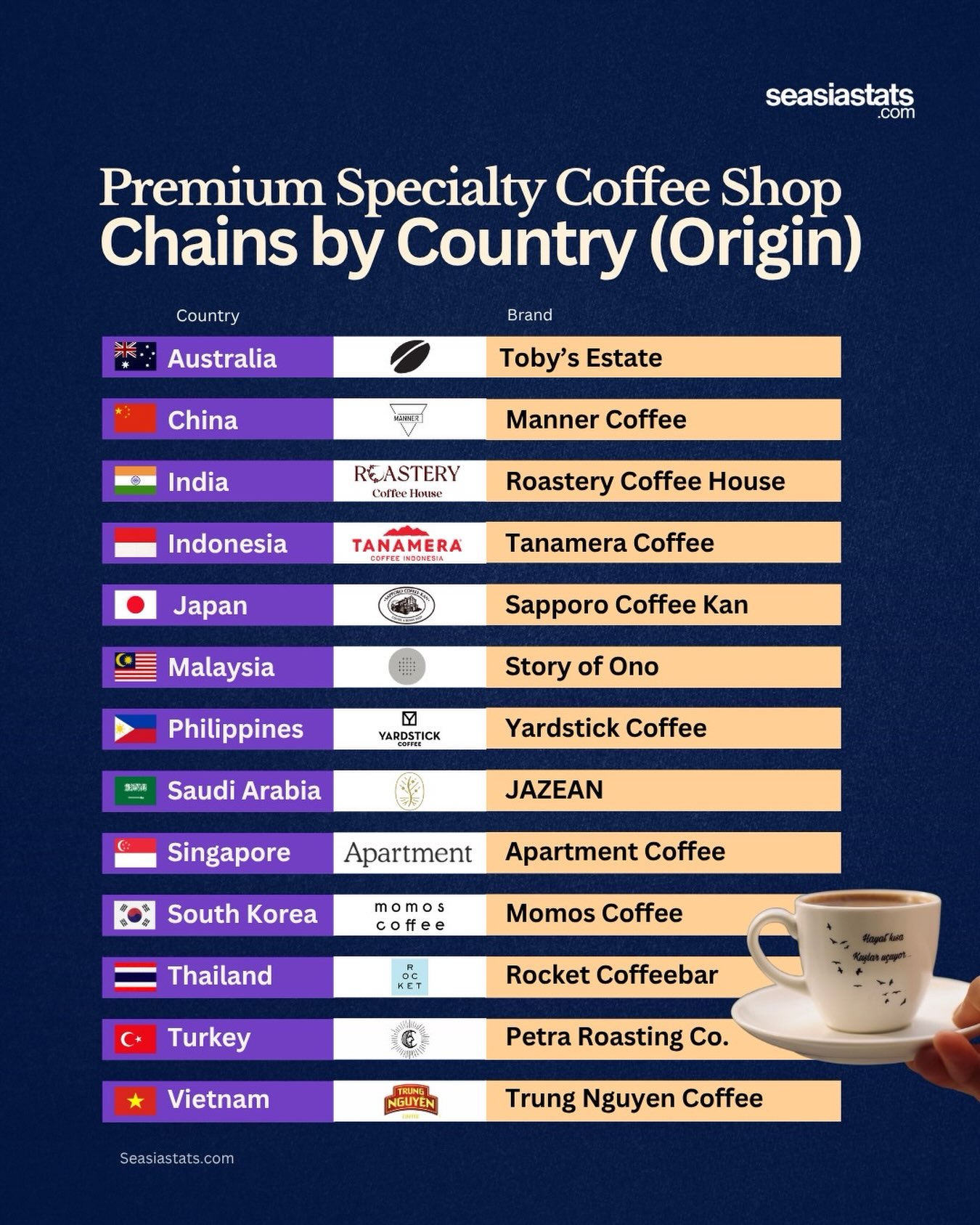
The premium specialty coffee scene has expanded far beyond its traditional strongholds, with distinctive coffee chains and roasters emerging from countries across Asia-Pacific and the Middle East. These brands combine modern café culture with local identities, creating different interpretations of what premium coffee can mean.
From Australia, Toby’s Estate represents a mature specialty-coffee culture, combining contemporary café design with an emphasis on carefully sourced and roasted beans. In China, Manner Coffee has become associated with a compact, modern café format and the rapid evolution of China’s specialty-coffee market.
India’s Roastery Coffee House reflects the country’s growing appreciation for specialty coffee, emphasizing freshly roasted beans and an environment designed for coffee enthusiasts. Meanwhile, Indonesia’s Tanamera Coffee places the country’s own coffee origins at the center of its identity, highlighting Indonesia’s diverse producing regions and distinctive flavors.
Japan contributes Sapporo Coffee Kan, connecting specialty coffee with Japan’s long-established appreciation for meticulous preparation and café craftsmanship.
In Malaysia, Story of Ono adds another contemporary interpretation of specialty coffee, while the Philippines’ Yardstick Coffee has developed a strong identity around specialty roasting and modern coffee education.
The Middle East is also developing its own premium coffee culture. JAZEAN, from Saudi Arabia, represents the region’s increasingly sophisticated specialty-coffee landscape, where traditional coffee culture meets contemporary roasting and café concepts.
Singapore’s Apartment Coffee illustrates the city-state’s highly developed specialty-coffee environment, while Momos Coffee from South Korea reflects the country’s dynamic café culture and interest in refined coffee experiences. Thailand contributes Rocket Coffeebar, a modern specialty-coffee concept associated with Bangkok’s evolving urban café scene.
Turkey’s Petra Roasting Co. brings a distinctive roasting-focused approach, contributing to Istanbul’s reputation as an increasingly important specialty-coffee destination.
Finally, Vietnam’s Trung Nguyen Coffee demonstrates how a major domestic coffee company can build an identity around Vietnam’s deep coffee heritage while reaching consumers beyond the country.
These thirteen brands demonstrate that premium specialty coffee is not a single global formula. Each one reflects the coffee culture, consumer preferences, and entrepreneurial character of their respective countries. Their diversity illustrates the increasingly international nature of specialty coffee, where local identity and global coffee trends increasingly meet.