

Share (%) of Households Owning a Motorbike—2023 Data
In many countries, motorbikes are more than just a mode of transportation—they are a way of life. Whether weaving through the bustling streets of Bangkok, nav

In many countries, motorbikes are more than just a mode of transportation—they are a way of life. Whether weaving through the bustling streets of Bangkok, navigating narrow alleys in Hà Nội, or serving as a lifeline for businesses in Jakarta, motorbikes provide an affordable, efficient, and flexible way to get around. Unlike cars, they require less fuel, are easier to park, and offer a quicker way to move through traffic-heavy cities.
Where Are Motorbikes Most Common?
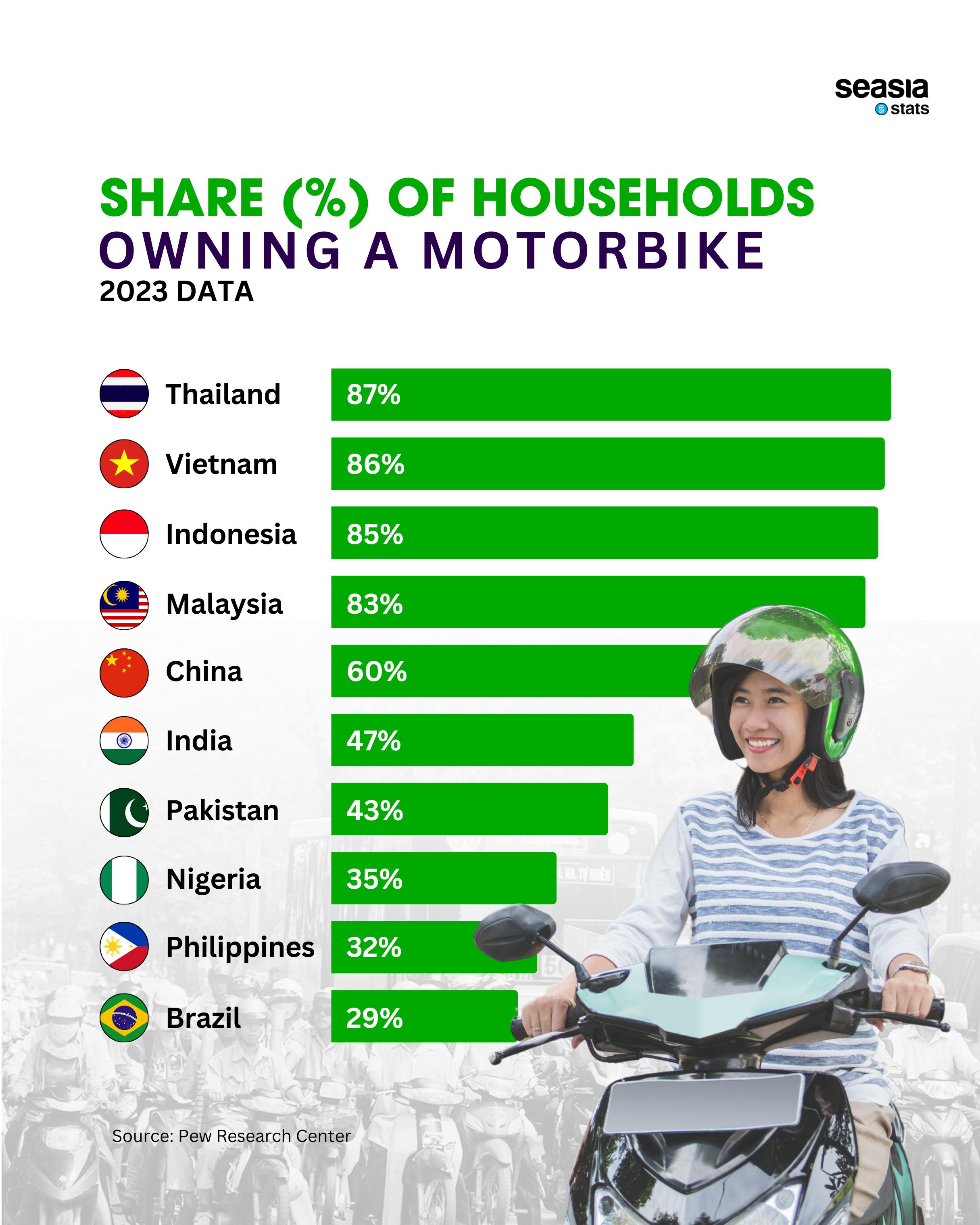
Motorbike ownership varies widely across the world, with Southeast Asia leading the way. According to 2023 data, the percentage of households owning at least one motorbike is remarkably high in several countries:
- Thailand – 87%
- Viet Nam – 86%
- Indonesia – 85%
- Malaysia – 83%
- China – 60%
- India – 47%
- Pakistan – 43%
- Nigeria – 35%
- Philippines – 32%
- Brazil – 29%
Why Are Motorbikes So Popular?
In places like Thailand, Viet Nam, and Indonesia, motorbikes are the backbone of daily transport. They are cheaper than cars, more fuel-efficient, and ideal for navigating congested roads. Many families rely on them for commuting, ride-hailing services, and even transporting goods. In cities like Jakarta or Hồ Chí Minh City, motorbikes often outnumber cars, making them a dominant force in urban mobility.
Even in countries with lower ownership rates, such as Nigeria and Brazil, motorbikes remain essential, particularly in areas where public transport is unreliable. They are widely used in rural regions where roads may be too narrow or underdeveloped for cars.
The Future of Motorbike Mobility
With rising fuel costs, urban congestion, and environmental concerns, the future of motorbike transportation is evolving. Many cities are exploring electric motorbikes as a more sustainable alternative. Governments are also investing in better road infrastructure and safety measures to accommodate the growing number of riders.
Despite these changes, one thing remains clear—motorbikes are not just vehicles, but a lifeline for millions of people worldwide. Whether for work, travel, or daily errands, they will continue to shape how people move in the years to come.