

Signatures of Southeast Asian Leaders, 2025
A signature is more than just a name on paper; it is a symbol of authority, personal identity, and historical significance. In Southeast Asia, the signatures of

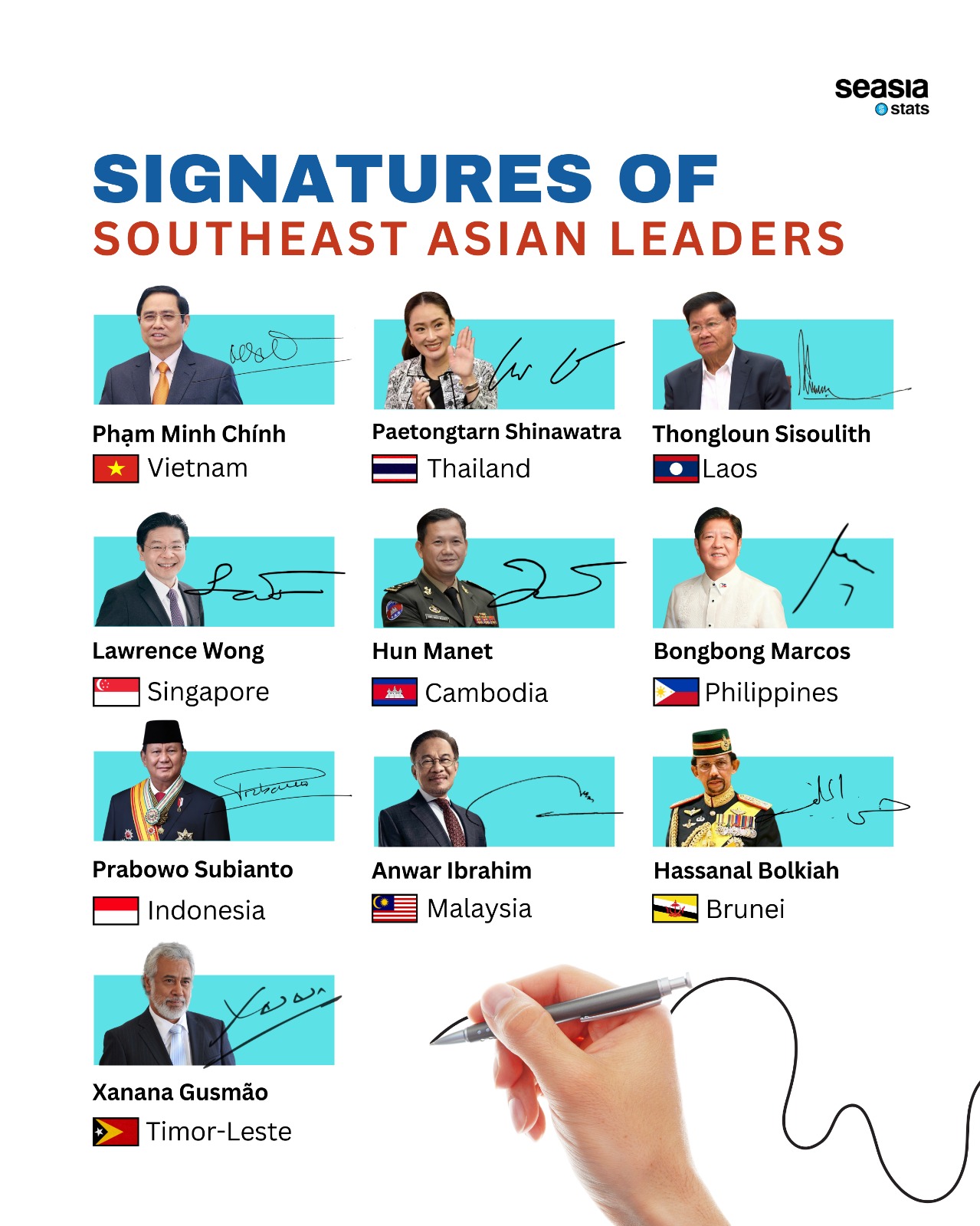
A signature is more than just a name on paper; it is a symbol of authority, personal identity, and historical significance. In Southeast Asia, the signatures of national leaders hold great importance, appearing on official documents, treaties, and legislation that shape the region’s governance and diplomacy. Each leader’s signature is unique, reflecting their individual style and cultural influences.
Symbolism in Leadership Signatures
The signatures of Southeast Asian leaders often embody elements of cultural heritage, calligraphic traditions, and personal expression. Some are highly stylized with elaborate flourishes, while others are more straightforward and minimalistic. These variations can signify different leadership styles, from formal and authoritative to dynamic and modern.
Official Use and Historical Impact
Signatures play a crucial role in legislative approvals, diplomatic agreements, and state functions. They appear on:
- Constitutional documents and laws, signifying legal authority.
- International treaties and agreements, representing national commitment.
- Currency and official letters, reinforcing legitimacy and state power.
Throughout history, the signatures of Southeast Asian leaders have marked pivotal moments in regional development, from independence declarations to economic agreements that shape international relations.
Evolution Over Time
The evolution of signatures reflects shifting political landscapes and personal branding. As leadership styles change, so too do the ways signatures are presented in official settings. Some leaders adopt traditional handwritten signatures, while others incorporate digital authentication for modern governance.
The Legacy of a Signature
Beyond legal and diplomatic significance, a leader’s signature is often preserved in museums, archives, and historical records, serving as a testament to their contributions. In many cases, the signature becomes a recognizable symbol of their tenure, remembered long after their leadership ends.
Whether elaborate or simple, historical or digital, the signature remains a powerful mark of leadership and national identity in Southeast Asia.