

Smart City Ranking in Southeast Asia, 2024
The Institute Management and Development (IMD) has once again released its annual Smart City Index (SCI) survey for 2024, evaluating 142 cities worldwide on the

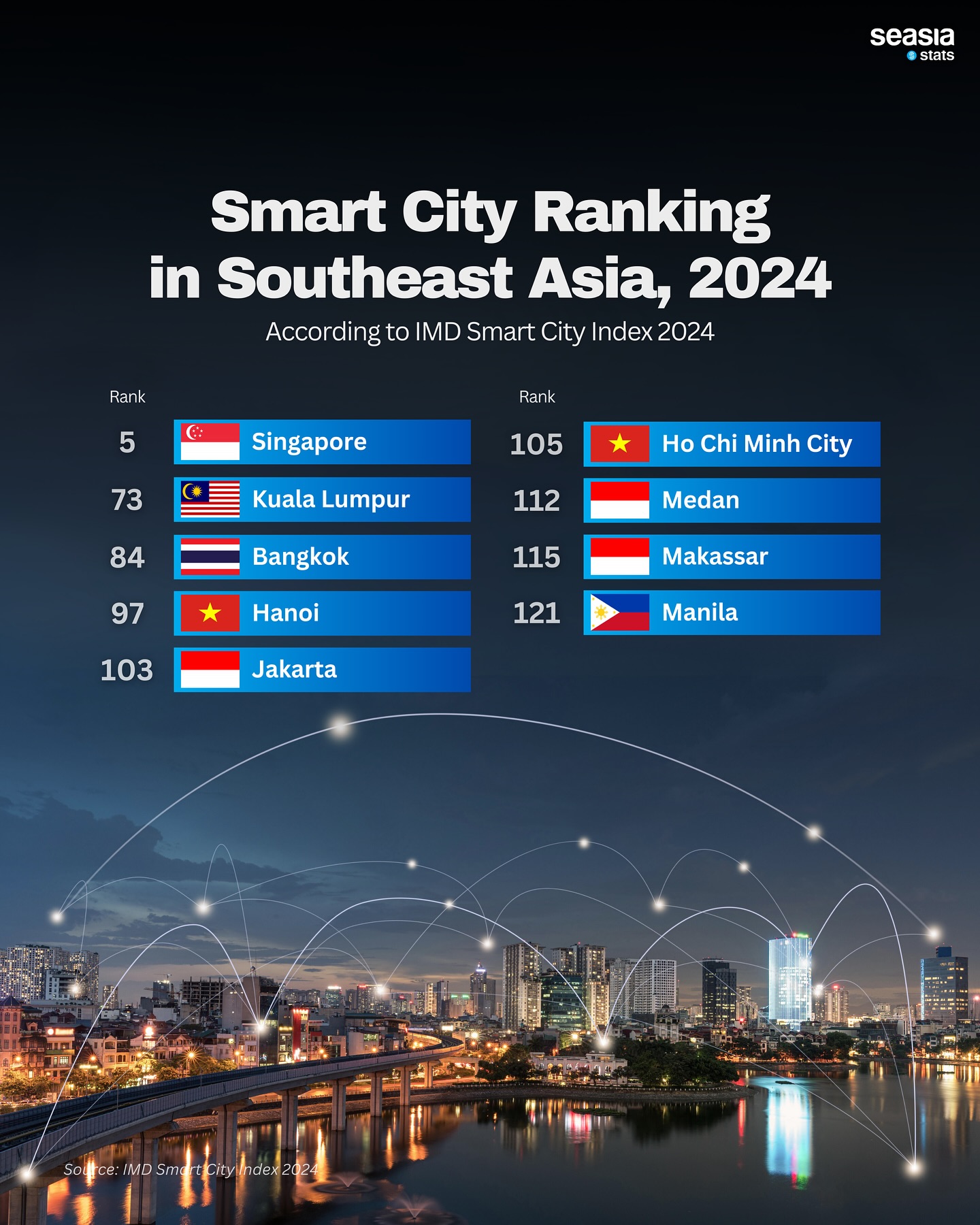
The Institute Management and Development (IMD) has once again released its annual Smart City Index (SCI) survey for 2024, evaluating 142 cities worldwide on their smart city initiatives. This year, Zurich, Switzerland, claimed the top spot, while Singapore stood out as the leading smart city in Southeast Asia, ranking 5th globally. This accolade highlights Singapore's commitment to harnessing technology to improve the quality of life for its residents and underscores its role as a regional leader in smart city development.
The Rise of Singapore in Smart City Rankings
Singapore's ascendancy in the Smart City Index is a testament to its forward-thinking policies, robust infrastructure, and innovative approaches to urban challenges. The city's focus on integrating technology into everyday life has earned it recognition not only in Southeast Asia but on a global scale. The Smart City Index evaluates cities based on various factors, including health and safety, mobility, activities, opportunities, and governance, ensuring that the ranking reflects a holistic approach to smart city development.
Singapore's success can be attributed to several key initiatives:
- Smart Nation Initiative: Launched in 2014, this initiative aims to transform Singapore into a city where technology is embedded into every aspect of life, from healthcare and transport to government services and housing.
- Integrated Digital Delivery (IDD): This initiative enhances construction and infrastructure projects through digital technologies, improving efficiency and reducing costs.
- Smart Mobility: Singapore has invested heavily in smart mobility solutions, including autonomous vehicles, intelligent traffic management systems, and a robust public transport network.
- Sustainable Living: Emphasizing sustainability, Singapore has implemented green building standards, advanced waste management systems, and extensive green spaces to create a more livable city.
Other Southeast Asian Cities in the Rankings
While Singapore leads the region, other Southeast Asian cities are also making strides in smart city development. Kuala Lumpur, Malaysia, ranks 73rd globally, and Bangkok, Thailand, is positioned at 84th. These cities are gradually adopting smart technologies to address urban challenges and improve the quality of life for their inhabitants.
Kuala Lumpur has been focusing on enhancing its digital infrastructure and public services. The city's efforts to develop a comprehensive public transportation system and improve internet connectivity are noteworthy. Meanwhile, Bangkok has been working on smart mobility solutions and digital governance to create a more efficient and responsive urban environment.
The Role of the Smart City Index
The Smart City Index by IMD is a crucial tool for benchmarking and encouraging the development of smart cities worldwide. By focusing on the residents and ensuring that smart city initiatives are inclusive and beneficial for all sectors of society, the SCI provides a roadmap for cities aiming to enhance their technological infrastructure and urban living conditions.
The Index assesses cities based on citizens' perceptions and real-world data, offering valuable insights into how effectively cities implement smart solutions and address urban challenges. The emphasis on people-centric development ensures that technological advancements translate into tangible benefits for city dwellers.
Conclusion
Singapore's ranking as the smartest city in Southeast Asia and 5th globally in the 2024 Smart City Index is a remarkable achievement. It reflects the city's dedication to integrating technology into everyday life and creating a sustainable, efficient, and livable urban environment. As other Southeast Asian cities like Kuala Lumpur and Bangkok continue to develop their smart city initiatives, the region is poised to witness significant advancements in urban living standards and technological innovation.
The Smart City Index serves as a beacon for cities worldwide, guiding them towards creating smarter, more inclusive, and people-centric urban spaces. With ongoing efforts and investments in smart technologies, the future of urban living looks promising, especially in the dynamic and rapidly developing cities of Southeast Asia.