

Southeast Asian Cities with the Most Rail Transit Stations
Rail transit has become a lifeline for workers in big cities. In Southeast Asia, Jakarta leads as the city with the most rail transit stations.

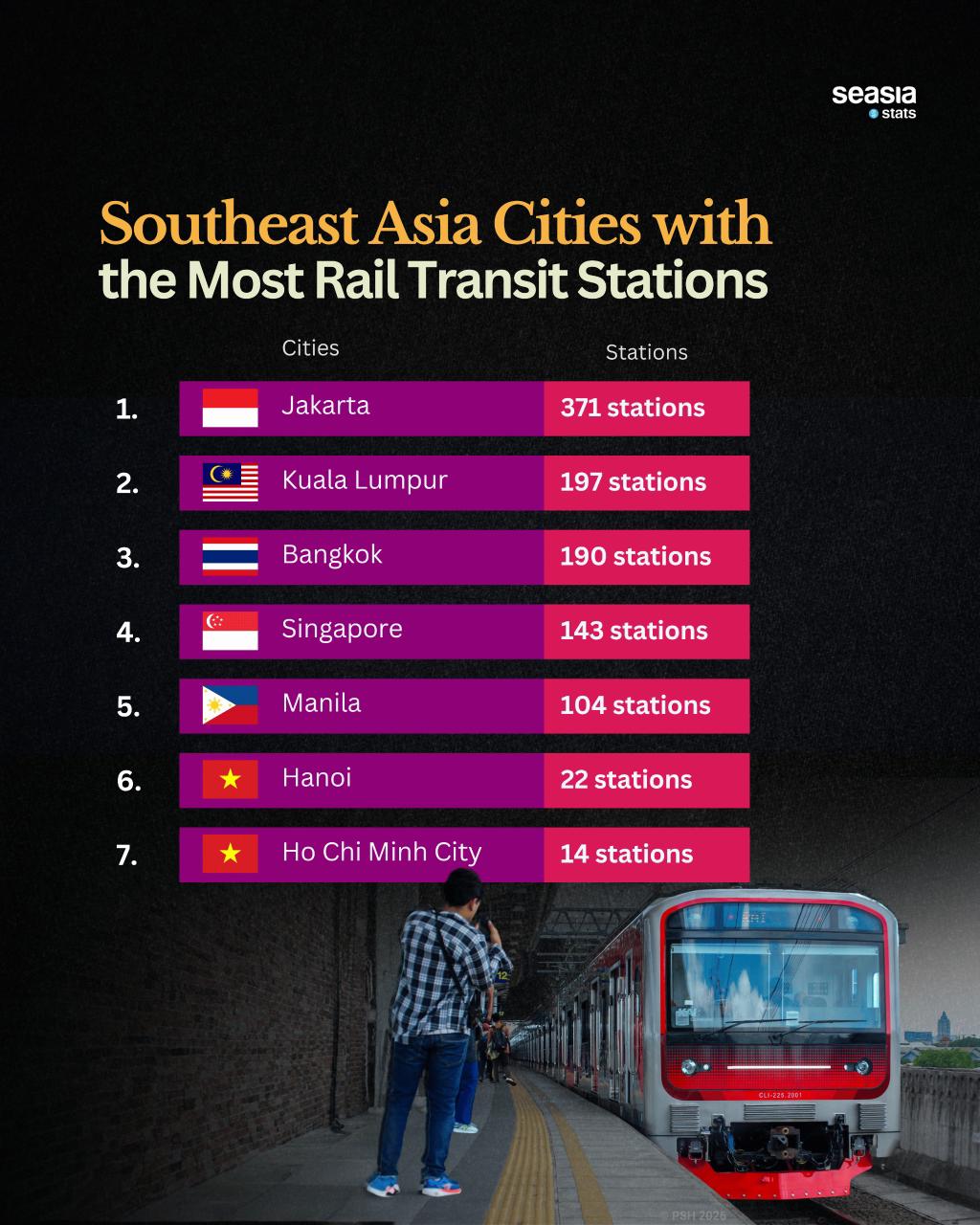
Rail transit systems are rapidly reshaping urban life across Southeast Asia, helping cities manage congestion, improve mobility, and support sustainable growth. Several major cities stand out for the scale of their rail networks, measured by the number of stations serving millions of daily passengers.
Leading the region is Jakarta, with an impressive 371 stations across its commuter rail, MRT, and LRT systems.
As one of the world’s most densely populated metropolitan areas, Jakarta has invested heavily in rail infrastructure to reduce traffic congestion and connect suburban areas with the city center. The network continues to expand, reflecting the capital’s ambition to modernize its public transport.
Next is Kuala Lumpur, home to 197 stations. Its integrated rail system—including LRT, MRT, monorail, and commuter lines—provides extensive coverage across the Klang Valley. The system is known for its connectivity and accessibility, making it a backbone of daily commuting in Malaysia’s economic hub.
Bangkok follows closely with 190 stations. The city’s BTS Skytrain and MRT networks have transformed urban travel, offering efficient alternatives to the capital’s once-notorious traffic jams. Continuous expansion projects aim to link more suburban districts and reduce reliance on road transport.
In Singapore, 143 stations form one of the most advanced and reliable rail systems in the world. The Mass Rapid Transit (MRT) network is renowned for its efficiency, cleanliness, and seamless integration with other modes of transport, playing a central role in the city-state’s urban planning.
The Manila metropolitan area has 104 stations across its LRT and MRT lines. While smaller than some regional counterparts, the system is crucial for daily commuting in one of the most densely populated cities globally. Ongoing upgrades and expansions aim to improve capacity and service quality.
Emerging systems can be seen in Hanoi with 22 stations and Ho Chi Minh City with 14 stations. Both cities are in earlier stages of rail development, but their investments signal a shift toward modern urban transit solutions to support rapid economic growth and urbanization.
Together, these cities illustrate Southeast Asia’s commitment to expanding rail transit as a solution to urban challenges. While levels of development vary, the region’s growing networks highlight a shared vision of more connected, efficient, and sustainable cities.