

Southeast Asian Currencies Against US Dollar
Malaysian Ringgit is getting stronger while Indonesian Rupiah keeps getting weaker.

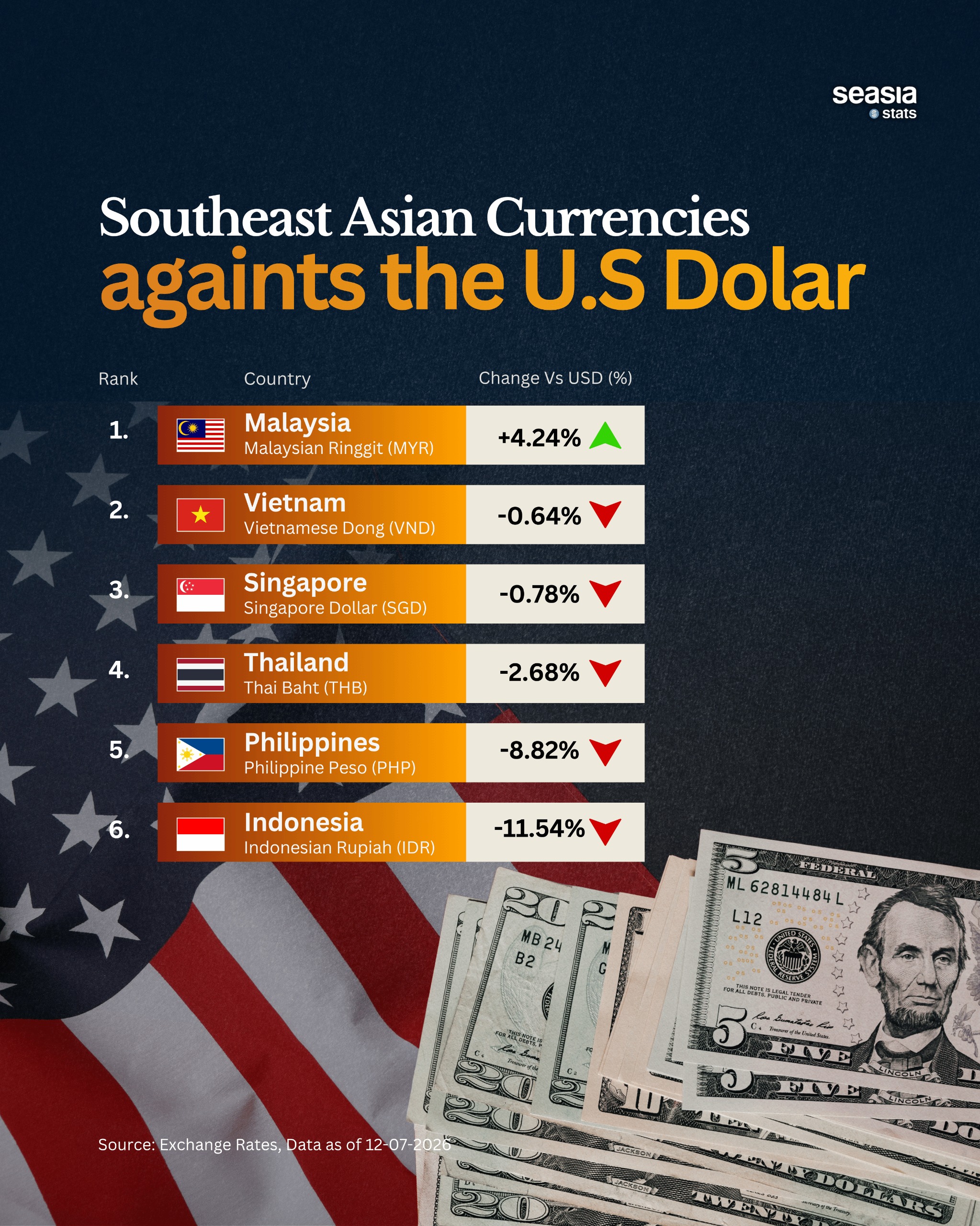
Southeast Asian currencies have experienced varying performances against the US dollar, reflecting differences in economic conditions, monetary policies, and investor sentiment across the region.
While some currencies have demonstrated resilience, others have faced notable depreciation amid global financial uncertainties and the continued strength of the US dollar.
Among the region's major currencies, the Malaysian Ringgit emerged as the strongest performer, appreciating by 4.24% against the US dollar. This positive movement highlights increased confidence in Malaysia's economic outlook, supported by improving domestic fundamentals, stronger export performance, and favorable market sentiment.
The ringgit's appreciation also suggests that Malaysia has been relatively successful in navigating external economic pressures compared with many of its regional peers.
In contrast, the Vietnamese Dong recorded a modest decline of 0.64%, making it one of the most stable currencies in Southeast Asia during the period.
The limited depreciation reflects Vietnam's steady economic growth, resilient manufacturing sector, and prudent exchange rate management, which have helped cushion the impact of global market volatility.
The Singapore Dollar also demonstrated resilience, slipping by only 0.78% against the US dollar. As one of Asia's leading financial centers, Singapore continues to benefit from strong macroeconomic fundamentals and a credible monetary policy framework, helping limit currency fluctuations despite challenging global conditions.
The Thai Baht posted a larger decline of 2.68%, reflecting headwinds from slower economic recovery, weaker tourism momentum in certain periods, and external market pressures. Although Thailand's economy continues to recover, the baht remains sensitive to changes in global capital flows and investor risk appetite.
Meanwhile, the Philippine Peso weakened significantly, falling 8.82% against the US dollar. Higher import costs, inflationary pressures, and a stronger US dollar contributed to the peso's depreciation, presenting challenges for businesses and consumers that rely on imported goods and foreign-denominated obligations.
The Indonesian Rupiah recorded the weakest performance among the selected Southeast Asian currencies, declining 11.54% against the US dollar. The rupiah faced persistent pressure from global financial market uncertainty, capital outflows, and broad-based US dollar strength.
Despite policy measures aimed at maintaining currency stability, external factors continued to weigh heavily on the exchange rate.
Overall, the performance of Southeast Asian currencies illustrates the diverse economic dynamics across the region. While Malaysia stood out with a currency gain, most regional currencies depreciated against the US dollar to varying degrees.
These movements underscore the importance of sound macroeconomic policies, resilient economic fundamentals, and effective monetary management in maintaining currency stability amid an evolving global economic landscape.