

Southeast Asians Want to Learn These Three Languages the Most
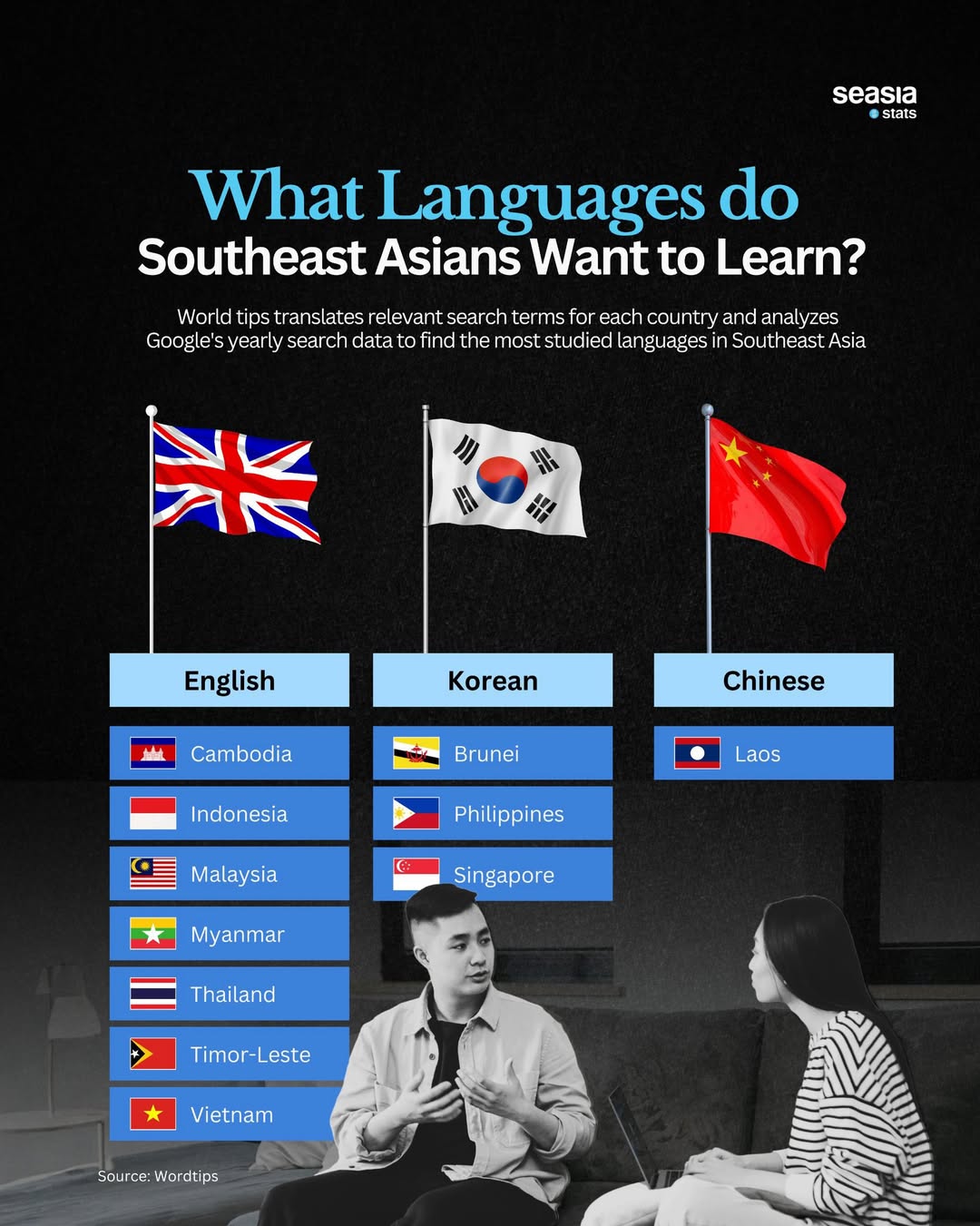
English, Korean, and Chinese are the 3 languages Southeast Asians want to learn the most.

Language learning has become increasingly important across Southeast Asia as globalization, international business, tourism, education, and cultural exchange continue to expand.
While people throughout the region study a wide variety of languages, three foreign languages stand out as the most sought-after: English, Korean, and Chinese. The popularity of each language reflects different economic opportunities, cultural influences, and regional connections.
English is the most desired foreign language in Southeast Asia, ranking first in Cambodia, Indonesia, Malaysia, Myanmar, Thailand, Timor-Leste, and Vietnam. Its dominance is not surprising, as English serves as the world's primary international language for business, higher education, diplomacy, science, and technology.
For many Southeast Asians, English proficiency provides access to better employment opportunities, international communication, and educational resources. Countries such as Indonesia, Thailand, and Vietnam have invested heavily in English education to improve global competitiveness and attract foreign investment.
The widespread appeal of English also reflects the growing integration of Southeast Asian economies into global markets. Whether for studying abroad, working with multinational companies, or participating in international tourism, English remains a valuable skill that can open doors across many sectors.
Korean is the second most popular language in the region and ranks as the most desired foreign language in Brunei, the Philippines, and Singapore.
The rise of Korean reflects the global influence of South Korean popular culture, commonly known as the "Korean Wave" or Hallyu. K-pop music, Korean dramas, films, fashion, and online entertainment have attracted millions of fans throughout Southeast Asia.
In addition to cultural appeal, South Korea's strong economy creates opportunities for employment, business partnerships, and educational exchanges. Many learners are motivated by both professional ambitions and personal interest in Korean culture.
In countries such as the Philippines and Singapore, demand for Korean language courses has increased significantly over the past decade.
Chinese ranks first in Laos, highlighting the country's close economic and geographic ties with China. As China continues to play a major role in regional trade, infrastructure development, and investment, proficiency in Chinese has become increasingly valuable.
Many Laotians view Chinese language skills as a practical advantage for careers in business, tourism, logistics, and cross-border commerce.
Together, English, Korean, and Chinese demonstrate how language learning trends in Southeast Asia are shaped by both global and regional influences.
While English remains the dominant international language, the growing popularity of Korean and Chinese reflects the increasing cultural and economic connections that are transforming the region in the twenty-first century.