

Southeast Asia's Amazing Dance Masks
Southeast Asian nations have extraordinary dance masks that make each performance unforgettable.

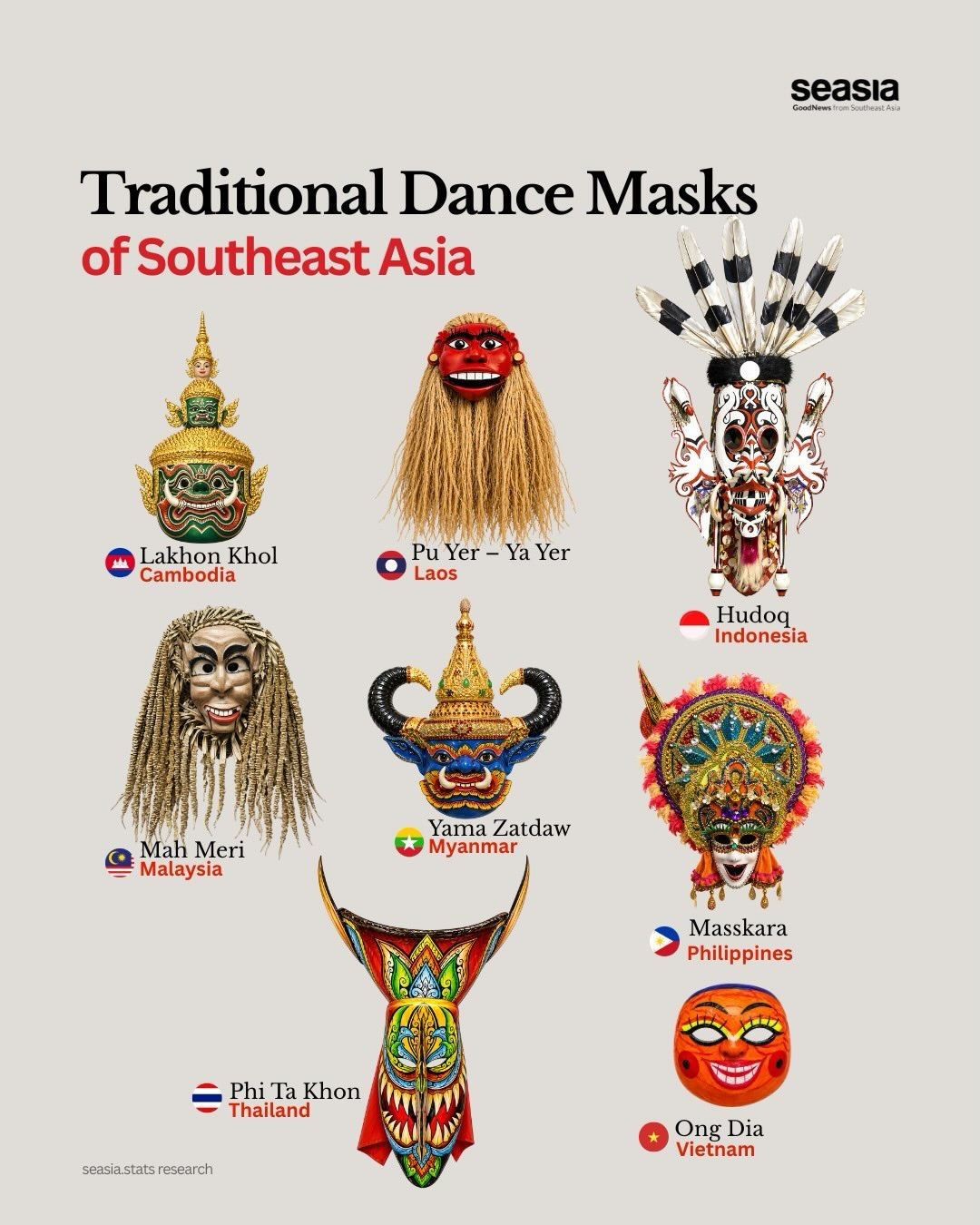
Dance masks across Southeast Asia embody a rich fusion of ritual, storytelling, and community identity. Each tradition reflects local beliefs, histories, and spiritual practices, transforming performances into living expressions of culture.
In Thailand, Lakhon Khol features elaborate masks representing characters from the Ramakien epic. These masks are meticulously crafted, often depicting gods, demons, and mythical beings. Performers rely on precise gestures and choreography rather than spoken dialogue, allowing the masks to convey emotion and narrative.
Another Thai festival, Phi Ta Khon, presents colorful, exaggerated masks worn during a lively ghost festival. Here, masks symbolize spirits and ancestral presences, blending humor with reverence.
Laos offers the traditions of Pu Yer and Ya Yer, ancestral figures represented through masks in ceremonial dances. These performances emphasize respect for elders and spiritual guardians, often performed during important communal rites. The masks themselves are less ornate than others in the region but carry deep symbolic meaning tied to protection and continuity.
In Indonesia, the Hudoq mask dance of Kalimantan is performed by the Dayak people during harvest rituals. The large, striking masks often depict animals or spirits, believed to drive away pests and ensure agricultural prosperity. The dancers’ movements, combined with rhythmic music, create an atmosphere that bridges the human and spirit worlds.
Malaysia’s Mah Meri mask dances are similarly spiritual. The Mah Meri people carve wooden masks representing ancestral spirits, each with distinct personalities. These masks are considered sacred, and the dances serve as acts of communication with unseen realms, reinforcing cultural identity and spiritual balance.
Myanmar’s Yama Zatdaw performances also draw from the Ramayana tradition. While not always mask-focused, certain productions incorporate masks to emphasize dramatic characters, enhancing the theatrical experience with visual symbolism and stylized movement.
In the Philippines, the Masskara Festival in Bacolod showcases vibrant, smiling masks. Unlike the more ritualistic traditions elsewhere, these masks represent resilience and optimism, created in response to hardship. The bright colors and joyful expressions turn the festival into a celebration of community strength.
Finally, Viet Nam’s Ong Dia mask appears in festive dances, especially during Lunar New Year celebrations. Representing a cheerful earth spirit, the mask conveys prosperity and good fortune, often engaging playfully with audiences.
Together, these mask traditions reveal Southeast Asia’s deep connection between art, spirituality, and daily life. Whether solemn or celebratory, each mask tells a story that transcends performance, preserving heritage across generations.