

Southeast Asia's Biggest Snack Lovers
The Filipinos and Vietnamese are the biggest snack lovers in Southeast Asia.

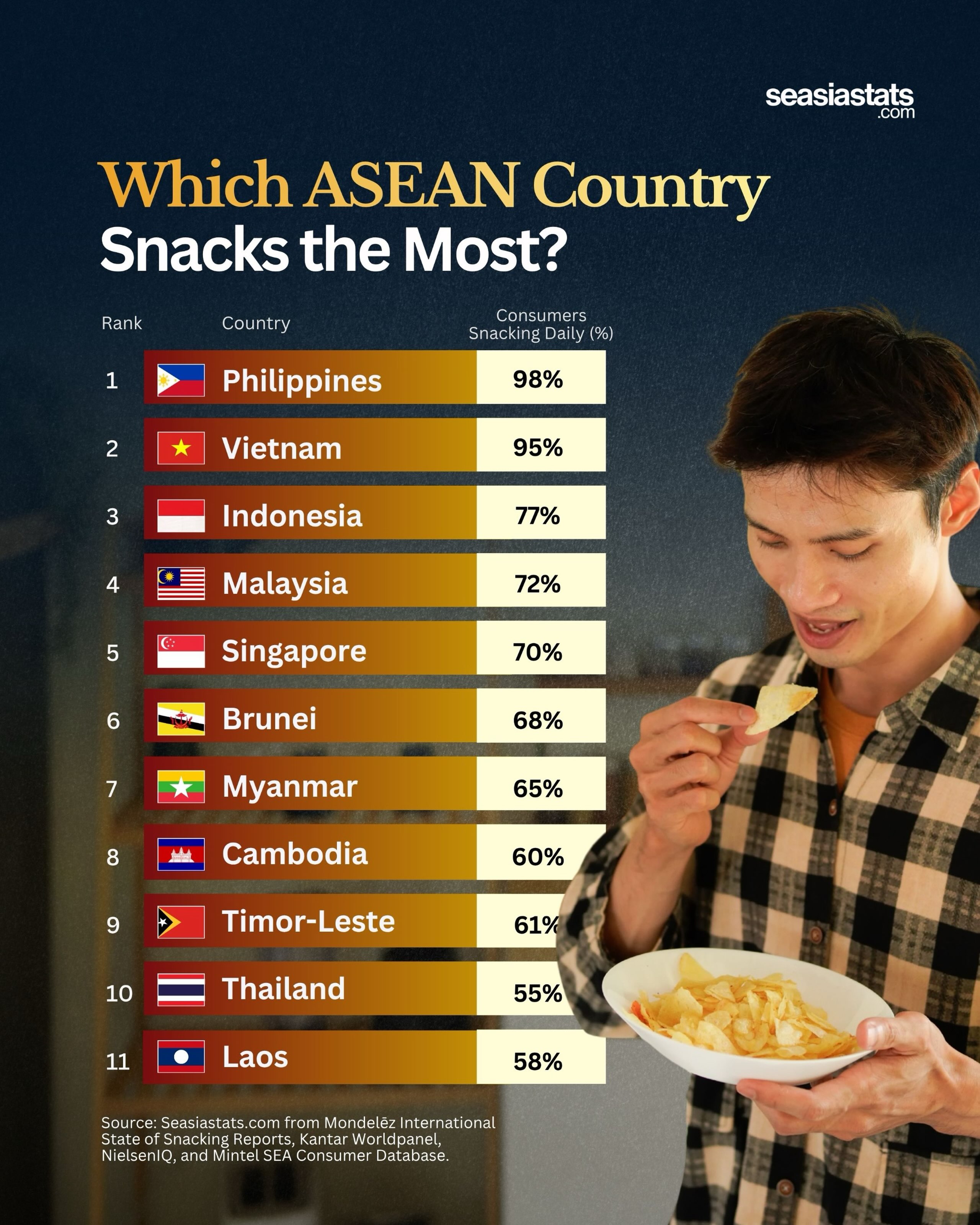
Snacking has become an integral part of daily life across Southeast Asia, reflecting changing lifestyles, busy work schedules, and the region’s rich culinary traditions. Based on the latest figures on the share of consumers who snack every day, Southeast Asian countries display varying levels of enthusiasm for between-meal treats, with the Philippines leading the region.
The Philippines ranks first, with an impressive 98% of consumers enjoying snacks daily. The country's vibrant food culture, combined with a wide variety of sweet and savory treats, makes snacking a nearly universal habit among Filipinos.
Close behind is Vietnam, where 95% of consumers snack every day. Street food culture, fresh local ingredients, and convenient grab-and-go options contribute to the popularity of daily snacking throughout the country.
Indonesia takes third place with 77% of consumers snacking daily. Traditional snacks such as fried foods, cakes, crackers, and modern packaged products remain popular across the archipelago, making snacking a routine part of everyday life.
In fourth place is Malaysia, where 72% of consumers report eating snacks every day. The country's multicultural cuisine offers an abundance of flavorful snack choices, ranging from traditional delicacies to international brands.
Singapore follows closely with a daily snacking rate of 70%. Despite its fast-paced urban lifestyle, residents enjoy a diverse selection of snacks available through convenience stores, hawker centers, cafés, and supermarkets.
Brunei ranks sixth at 68%, demonstrating a strong preference for both local specialties and imported snack products. Myanmar follows with 65%, where traditional snacks continue to play an important role in daily eating habits.
In Timor-Leste, 61% of consumers snack every day, placing the country eighth in the regional ranking. Cambodia comes next at 60%, supported by a growing market for packaged snacks alongside traditional street foods.
Laos records a daily snacking rate of 58%, reflecting increasing consumer demand for convenient food options while maintaining strong local culinary traditions. Thailand rounds out the list with 55% of consumers snacking every day.
Although Thailand is globally renowned for its rich street food culture, the survey indicates that daily snacking is less widespread than in several neighboring countries.
Overall, the figures highlight Southeast Asia's deep appreciation for snacks, whether traditional or modern.
While the Philippines and Vietnam stand out with exceptionally high participation, every country in the ranking demonstrates that snacking has become an important part of daily life. As convenience foods continue to evolve alongside local flavors, the region's snack culture is expected to remain vibrant and diverse for years to come.