

Southeast Asia's Central Banks and Their Forex Reserves
Southeast Asia's central banks hold a vital responsibility in managing their countries' foreign exchange (forex) reserves, acting as a financial buffer against

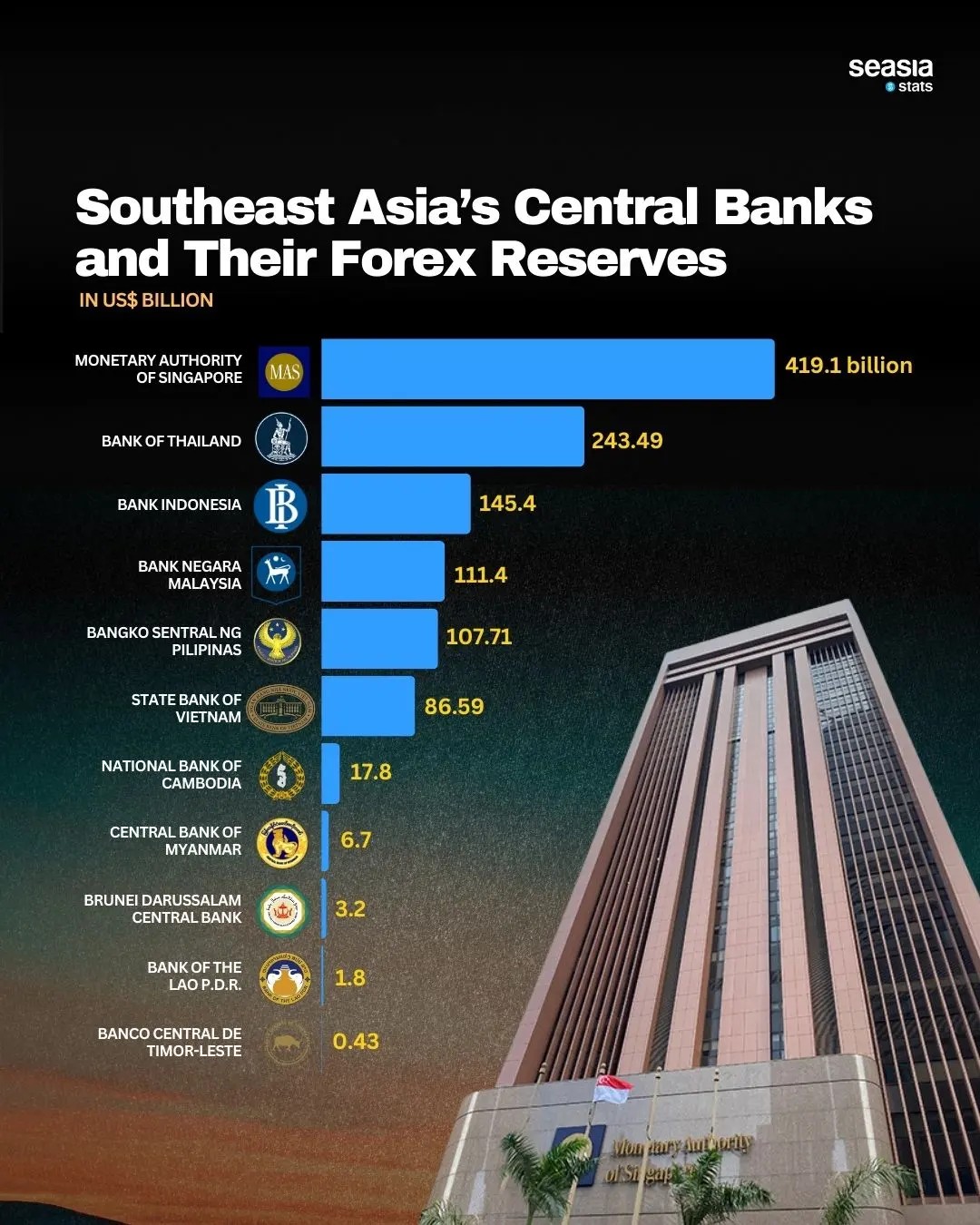
Southeast Asia's central banks hold a vital responsibility in managing their countries' foreign exchange (forex) reserves, acting as a financial buffer against global economic fluctuations. These reserves, which consist of foreign currencies, gold, and other international assets, are essential for stabilizing national currencies, supporting monetary policy, and ensuring liquidity in times of economic uncertainty. As of the latest data, the Monetary Authority of Singapore (MAS) leads the region with the largest forex reserves, underscoring Singapore's role as a financial hub in Southeast Asia.
Top Southeast Asian Central Banks by Forex Reserves
-
Monetary Authority of Singapore (MAS)
Singapore's central bank holds the largest forex reserves in Southeast Asia, reflecting its robust financial sector and the country's global economic position. The MAS actively manages these reserves to maintain exchange rate stability and support Singapore’s open and trade-dependent economy. -
Bank of Thailand
The Bank of Thailand ranks second in the region with substantial forex reserves, crucial for maintaining the stability of the Thai baht. Given Thailand's reliance on exports and tourism, these reserves help cushion the country against external economic shocks and currency fluctuations. -
Bank Indonesia
Indonesia, the largest economy in Southeast Asia, also holds significant forex reserves, which are essential for managing the value of the Indonesian rupiah. The reserves are strategically utilized to control inflation, maintain investor confidence, and mitigate the impact of global market volatility. -
Bank Negara Malaysia
Malaysia’s central bank, Bank Negara Malaysia, holds considerable forex reserves, which serve as a safeguard for the Malaysian ringgit. These reserves play a pivotal role in ensuring financial stability and supporting the country’s export-driven economy. -
Bangko Sentral ng Pilipinas
The central bank of the Philippines, Bangko Sentral ng Pilipinas, uses its forex reserves to stabilize the Philippine peso, particularly important given the country’s large remittance inflows and trade activities. Maintaining these reserves helps the Philippines manage currency risks and bolster economic resilience. -
State Bank of Vietnam
Vietnam's forex reserves have grown in recent years, supporting the country's rapid economic development and increasing trade activities. The State Bank of Vietnam utilizes these reserves to manage the value of the Vietnamese đồng and ensure financial stability amidst growing international integration. -
National Bank of Cambodia
Cambodia’s central bank maintains a smaller but significant amount of forex reserves relative to its economy. These reserves are vital for maintaining confidence in the Cambodian riel and supporting the country’s economic growth and stability. -
Central Bank of Myanmar
Despite political and economic challenges, the Central Bank of Myanmar holds forex reserves to manage the kyat and support the country’s financial system. These reserves are crucial for mitigating economic instability and supporting long-term recovery efforts. -
Brunei Darussalam Central Bank
Brunei, with its small population and high income from oil and gas exports, maintains forex reserves to support the Brunei dollar and ensure economic stability. These reserves help the country navigate fluctuations in global energy prices. -
Bank of the Lao P.D.R.
Laos holds modest forex reserves, which are essential for managing the Lao kip and supporting the country’s financial stability. These reserves are especially important for a developing economy like Laos, where external financial support is often needed to maintain economic growth. -
Banco Central de Timor-Leste
Timor-Leste, Southeast Asia’s youngest nation, has relatively small forex reserves. However, these reserves are critical for ensuring the country’s financial independence and supporting the development of its economy, which remains reliant on oil revenues.
The Role of Forex Reserves in Economic Stability
Central banks in Southeast Asia rely on their forex reserves as a financial buffer to protect their economies from external shocks, such as global market fluctuations, currency crises, and geopolitical tensions. By holding substantial reserves, these banks can intervene in foreign exchange markets to stabilize their national currencies and prevent excessive volatility that could harm their economies.
Forex reserves also provide a safety net during economic crises, allowing central banks to ensure liquidity in the financial system, repay foreign debt, and support monetary policies aimed at promoting growth and controlling inflation. This financial stability is critical for maintaining investor confidence and fostering long-term economic growth in the region.
In conclusion, Southeast Asia's central banks play an indispensable role in managing their nations' forex reserves, which are crucial for economic stability and resilience in an increasingly interconnected global economy. The varying levels of reserves across the region reflect the unique economic challenges and strategies of each country, but all share the common goal of ensuring financial security and supporting sustained growth.