

Southeast Asia's Largest Ethnic Groups
The diversity of ethnic groups in Southeast Asia is astounding, with the Javanese leading the numbers.

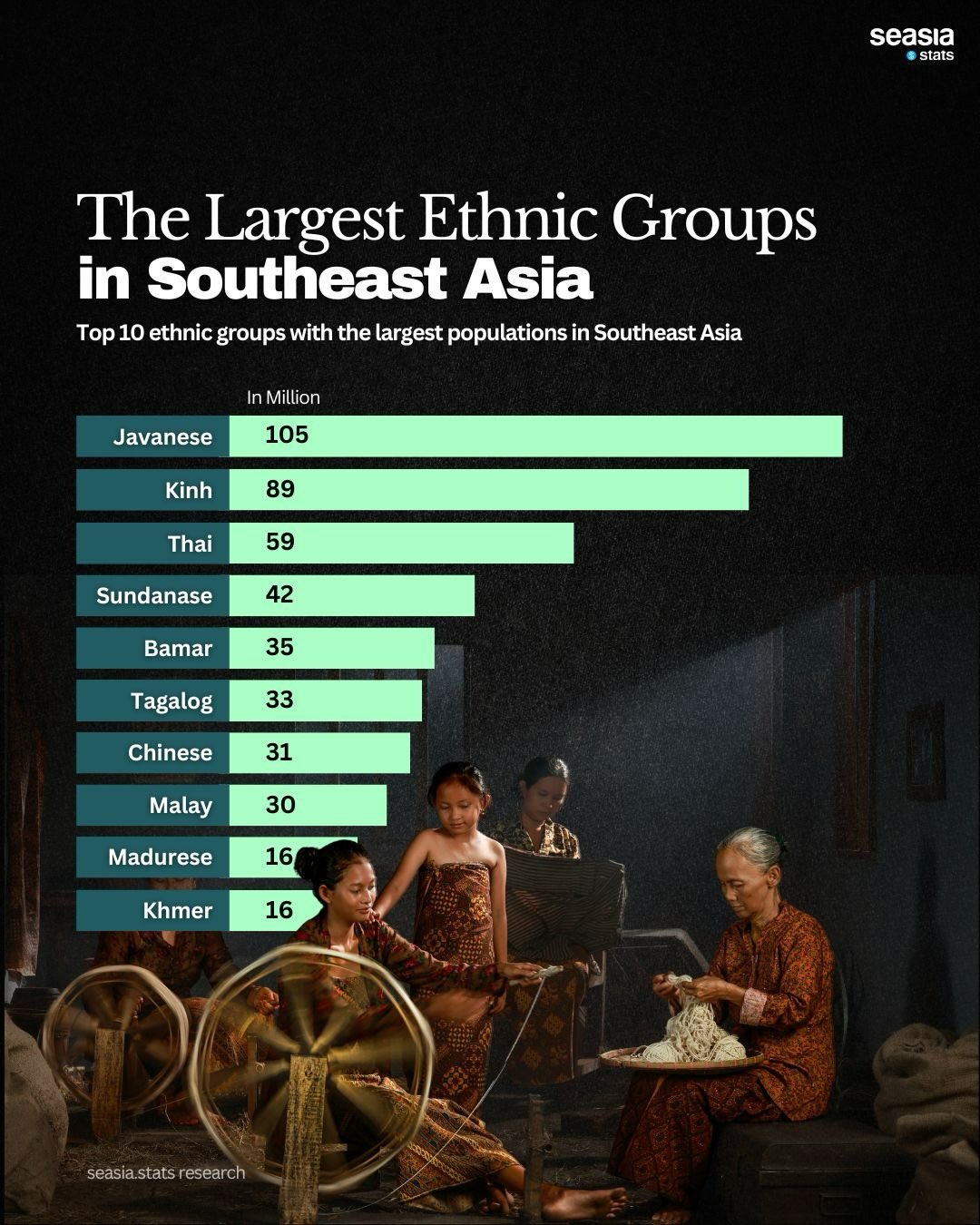
Southeast Asia is one of the most culturally diverse regions in the world, home to hundreds of ethnic groups spread across thousands of islands and mainland territories.
Among these communities, several major ethnic groups dominate the population landscape and play central roles in shaping the politics, languages, traditions, and economies of their respective countries. These groups collectively represent hundreds of millions of people and reflect the region’s rich historical and cultural heritage.
The largest ethnic group in Southeast Asia is the Javanese, numbering around 105 million people. Originating mainly from the island of Java in Indonesia, the Javanese are known for their deep cultural traditions, classical arts, gamelan music, and historical kingdoms such as Majapahit and Mataram.
Their influence is enormous within Indonesia because they make up a significant portion of the national population and have long played a central role in government and politics.
The second largest group is the Kinh ethnic group of Vietnam, with approximately 89 million people. The Kinh form the overwhelming majority in Vietnam and are closely associated with the Vietnamese language, culture, and national identity.
Their civilization developed around the fertile Red River Delta and later expanded throughout modern Vietnam over centuries of migration and state formation.
Thailand’s largest ethnic group, the Thai people, numbers about 59 million. Thai culture is heavily influenced by Buddhism, monarchy, and centuries of regional trade and diplomacy. The Thai language and traditions have become dominant throughout Thailand, although the country also contains many minority communities.
Another major Indonesian ethnic group is the Sundanese, with around 42 million people living mainly in West Java. The Sundanese are known for their distinct language, music, culinary traditions, and strong cultural identity that differs from the neighboring Javanese population.
Myanmar’s largest ethnic community is the Bamar, numbering roughly 35 million people. The Bamar have historically dominated Myanmar’s political and cultural institutions and are closely linked to Theravada Buddhism and the Burmese language.
In the Philippines, the Tagalog people make up around 33 million individuals. Their language became the basis for Filipino, the national language of the country. Tagalog culture has greatly influenced Philippine literature, media, and entertainment.
Southeast Asia is also home to approximately 31 million ethnic Chinese people spread across countries such as Indonesia, Malaysia, Thailand, Singapore, and the Philippines. Chinese communities have historically played major roles in regional trade, business, and urban development.
The Malay ethnic group, with about 30 million people, is concentrated mainly in Malaysia, Indonesia, Brunei, Singapore, and southern Thailand. Malay culture has historically been tied to maritime trade, Islam, and powerful sultanates.
Completing the list are the Madurese of Indonesia and the Khmer of Cambodia, each with around 16 million people. Both groups maintain strong cultural traditions and continue to shape the social identity of their nations.