

Southeast Asia's Obesity Rates
Brunei and Malaysia are leading the obesity rates across Southeast Asia.

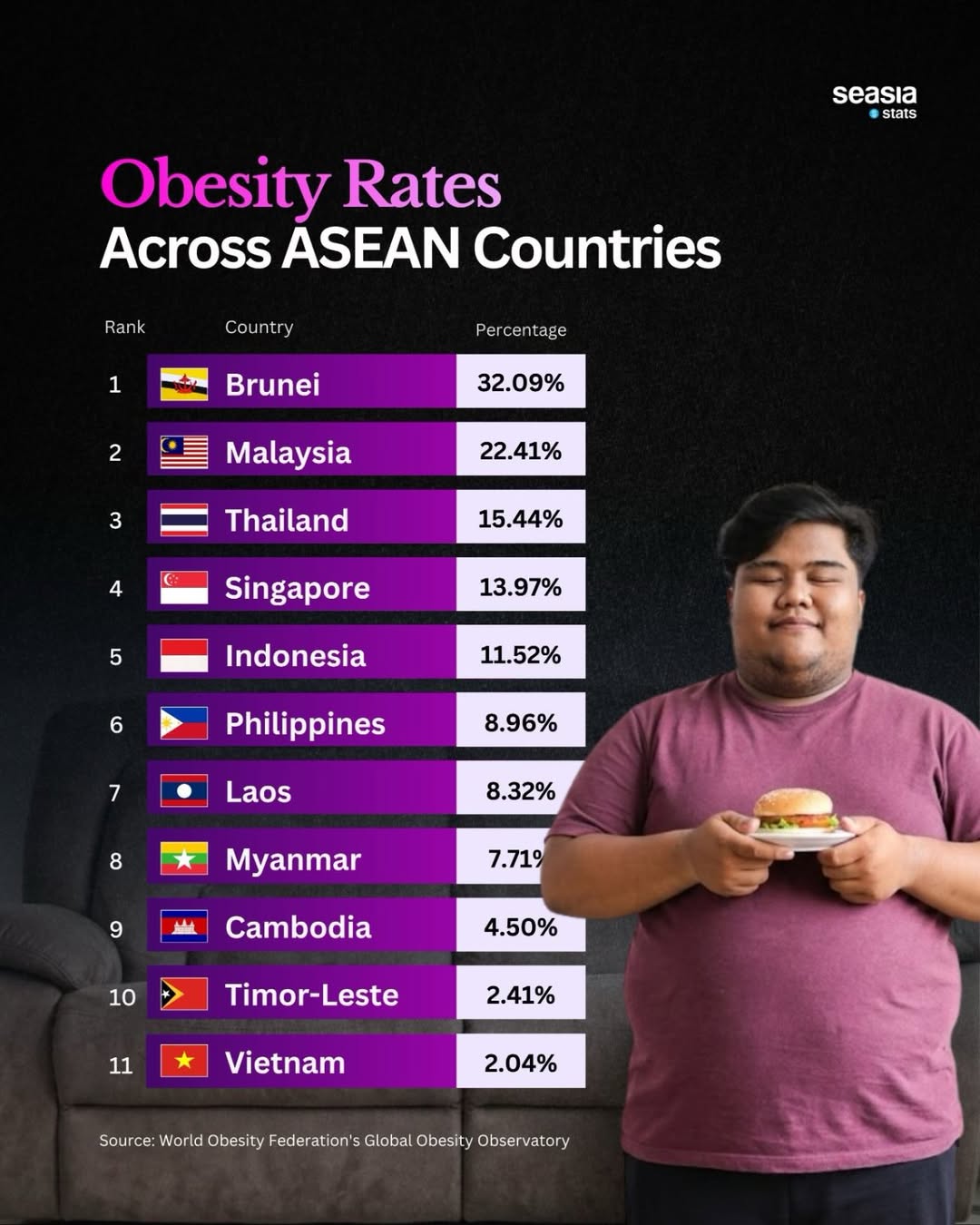
Obesity has become an increasingly important public health concern across Southeast Asia, reflecting changes in lifestyles, eating habits, and levels of physical activity. According to the World Obesity Federation, the prevalence of obesity varies significantly among countries in the region, highlighting diverse health challenges and socioeconomic conditions.
Brunei records the highest obesity rate in Southeast Asia at 32.09%, meaning nearly one in three adults is classified as obese. Malaysia follows with an obesity rate of 22.41%, making it the second most affected country in the region. These high rates have been linked to urban lifestyles, increased consumption of calorie-dense foods, and reduced physical activity.
Thailand ranks third with an obesity rate of 15.44%, while Singapore reports 13.97%. Although Singapore is widely recognized for its advanced healthcare system and strong public health initiatives, obesity remains a concern due to sedentary lifestyles and changing dietary patterns.
Indonesia follows with an obesity rate of 11.52%, reflecting the country's ongoing nutrition transition as economic development and urbanization influence food choices and daily habits.
In the middle of the regional rankings is the Philippines, with an obesity rate of 8.96%, followed closely by Laos at 8.32% and Myanmar at 7.71%. These countries face the dual challenge of addressing both undernutrition and the growing burden of obesity, a phenomenon often referred to as the "double burden of malnutrition."
Lower obesity rates are observed in Cambodia, where 4.50% of the population is classified as obese. Timor-Leste records 2.41%, while Vietnam has the lowest obesity prevalence in Southeast Asia at 2.04%.
Although these figures are comparatively low, health experts emphasize that continued economic growth and urbanization could contribute to rising obesity rates if preventive measures are not maintained.
The differences in obesity prevalence across Southeast Asia demonstrate that no single factor explains the trend. Economic development, cultural dietary practices, urbanization, access to healthy food, and opportunities for physical activity all influence obesity levels.
Governments throughout the region are increasingly promoting healthier diets, encouraging regular exercise, and implementing public health campaigns to reduce the risk of obesity-related diseases such as type 2 diabetes, cardiovascular disease, and hypertension.
As Southeast Asia continues to develop, balancing economic progress with healthier lifestyles will be essential. Continued monitoring by organizations such as the World Obesity Federation can help policymakers design effective strategies to reduce obesity and improve long-term public health outcomes across the region.