

Southeast Asia's Populations Aged 65 and Older in 2026
Thailand has the most residents aged 65 and older in Southeast Asia.

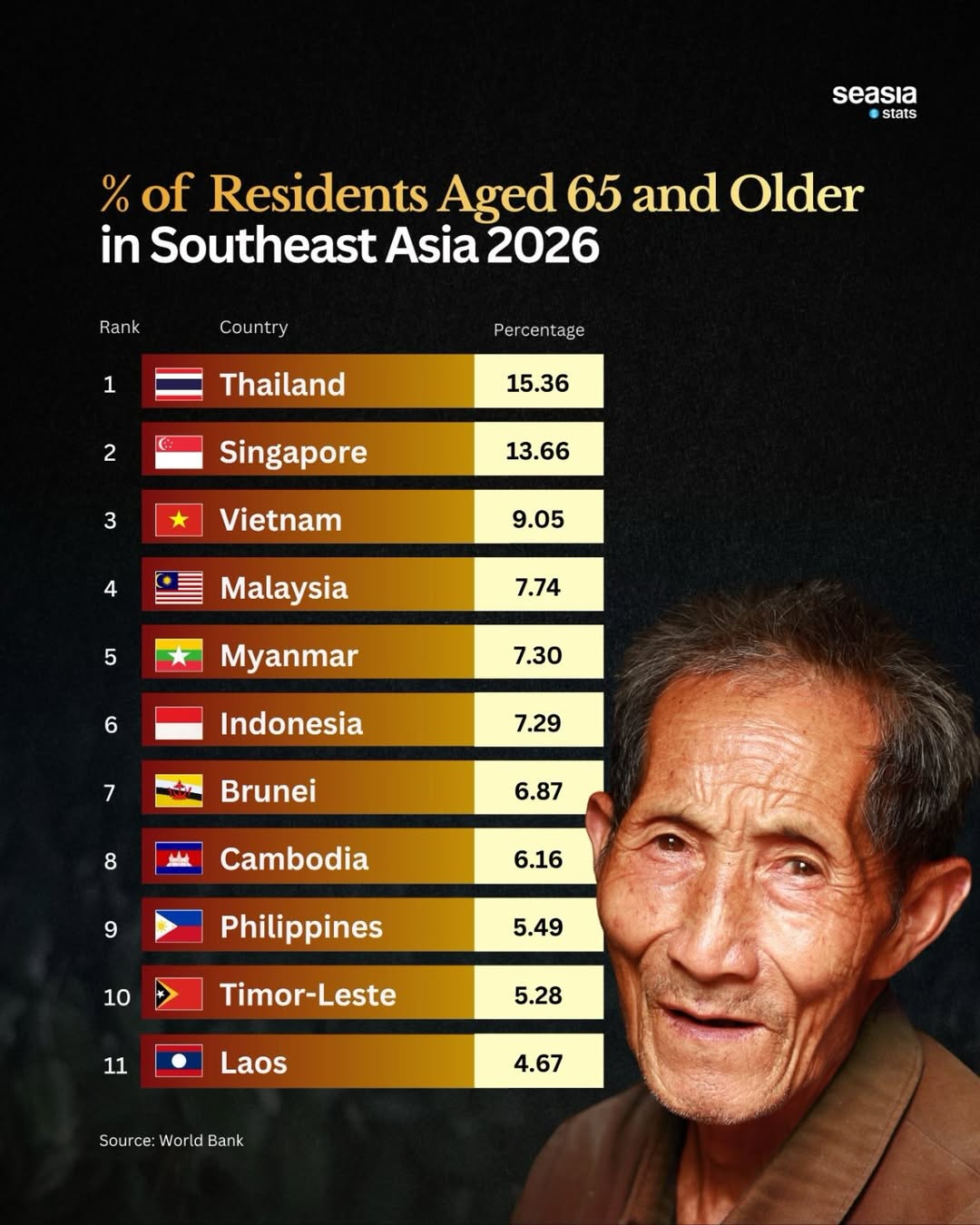
According to the World Bank, Southeast Asia is experiencing a gradual demographic transition as the share of residents aged 65 and older continues to increase across the region.
While countries remain at different stages of population aging, longer life expectancy, declining birth rates, and improved healthcare are reshaping demographic structures and creating new opportunities and challenges for economic development and public policy.
Thailand has the highest proportion of older residents in Southeast Asia, with 15.36% of its population aged 65 and above. The country has experienced one of the region's fastest demographic transitions, prompting greater attention to healthcare, pension systems, elderly care, and workforce planning as the population continues to age.
Singapore ranks second with 13.66% of its residents aged 65 and older. As one of Asia's most developed economies, the city-state has invested heavily in healthcare, retirement planning, and age-friendly urban infrastructure to support its growing senior population while maintaining economic competitiveness.
Vietnam follows with 9.05%, reflecting the country's steady demographic shift as life expectancy rises and fertility rates decline.
Malaysia ranks fourth with 7.74%, closely followed by Myanmar at 7.30% and Indonesia at 7.29%. Although these countries still have relatively young populations compared with many developed nations, the proportion of older adults is expected to continue increasing in the coming decades.
Brunei records 6.87% of residents aged 65 and above, while Cambodia reports 6.16%. Both countries are gradually adapting their healthcare systems and social services to meet the changing needs of aging populations while continuing to support younger generations.
The Philippines has 5.49% of its population aged 65 or older, reflecting its comparatively youthful demographic profile.
Timor-Leste follows with 5.28%, while Laos has the lowest share among the countries listed, with 4.67% of residents in this age group. These nations continue to benefit from relatively young populations, although demographic aging is expected to accelerate over time.
The varying proportions of older residents across Southeast Asia illustrate the diverse stages of demographic transition within the region. Countries with larger senior populations are placing greater emphasis on healthcare services, long-term care, retirement security, and policies that encourage active aging.
Meanwhile, countries with younger populations have an opportunity to prepare for future demographic changes by investing in education, healthcare, and sustainable social protection systems.
As life expectancy continues to improve and fertility rates evolve, population aging will become an increasingly important factor shaping economic growth, labor markets, and public policy throughout Southeast Asia in the decades ahead.