

Southeast Asia’s Soft Power Moment in 2026
In an era where influence is no longer measured only by military strength or economic size, soft power—the ability to attract, inspire, and persuade.

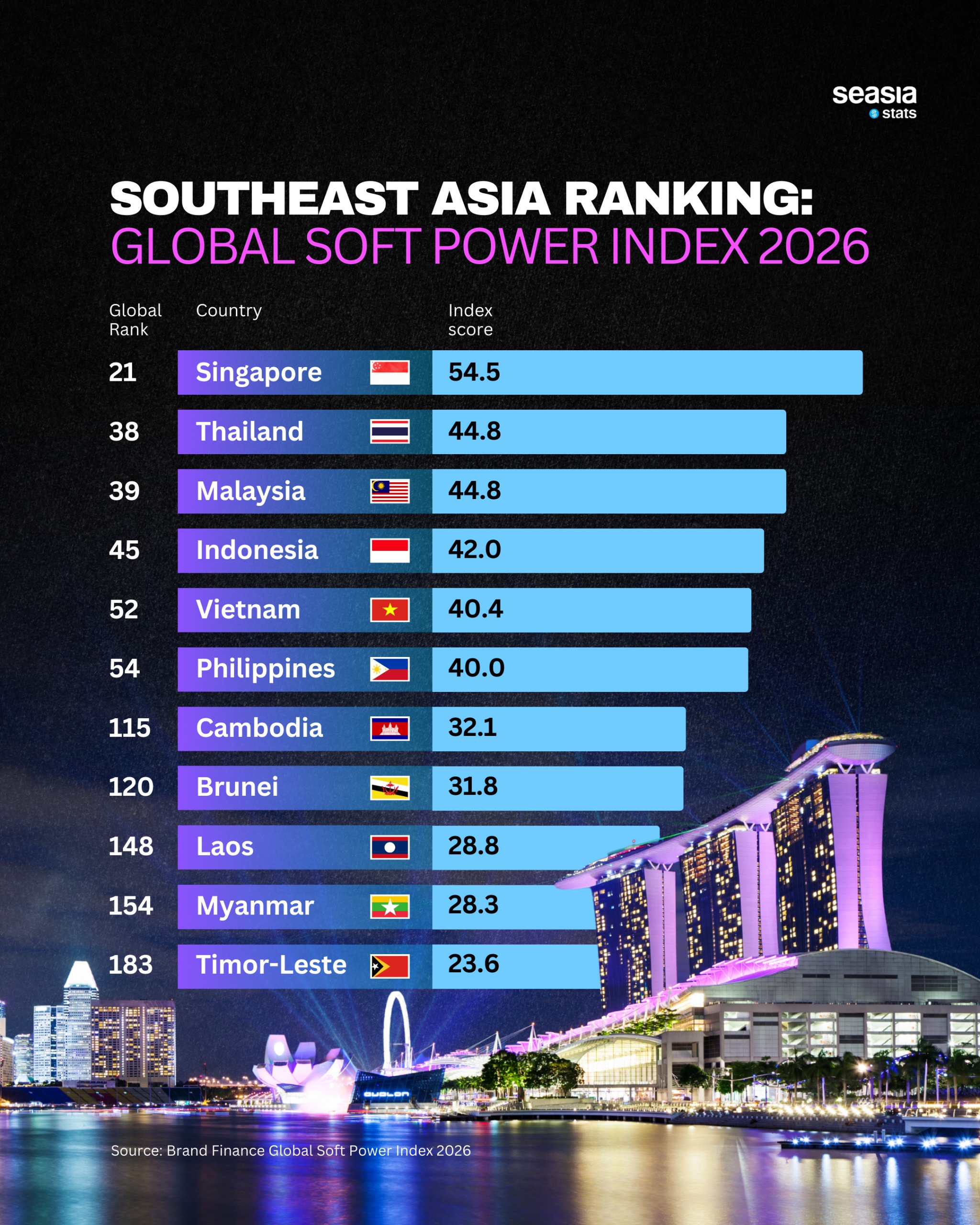
In an era where influence is no longer measured only by military strength or economic size, soft power—the ability to attract, inspire, and persuade—has become a critical currency. The 2026 Global Soft Power Index by Brand Finance shows that Southeast Asia is steadily strengthening its international appeal, with culture, governance, tourism, and business reputation driving the region’s global standing.
Singapore: ASEAN’s Undisputed Soft Power Leader
Once again, Singapore stands head and shoulders above its regional peers, ranking 21st globally in 2026. The city-state continues to excel across nearly every pillar of soft power, particularly Business & Trade, Governance, and Education & Science. Notably, Singapore ranks 4th worldwide for ease of doing business, reinforcing its reputation as Asia’s most reliable and efficient global hub.
Beyond economics, Singapore’s strong institutions, international education sector, and diplomatic credibility allow it to punch far above its size, making it Southeast Asia’s most influential soft power exporter.
Thailand and Malaysia: Culture and Credibility Drive Influence
Following Singapore are Thailand and Malaysia, which occupy 38th and 39th globally, respectively. Thailand’s rise is largely fueled by its extraordinary cultural reach. Ranked 7th worldwide for “food and fun,” Thai cuisine, tourism, and pop culture remain powerful tools of attraction, drawing millions of visitors annually and shaping global perceptions.
Malaysia, meanwhile, benefited from its role as ASEAN Chair in 2025, which boosted its diplomatic visibility. Brand Finance highlighted improvements in Malaysia’s ethical standards, inclusiveness, and welcoming image, reinforcing its status as a culturally diverse and investor-friendly nation.
Indonesia: Rising Visibility and Future Potential
Indonesia holds steady at 45th globally, maintaining its position from the previous year. While its overall rank remains unchanged, the report points to a significant rise in international visibility and future growth potential, where Indonesia ranks 23rd globally.
With its massive population, expanding creative economy, and increasing diplomatic engagement through forums like the G20 and ASEAN, Indonesia’s soft power is expected to grow further—especially as its cultural exports, tourism recovery, and digital influence expand.
Vietnam and the Philippines: Culture as a Competitive Edge
Vietnam, ranked 52nd, continues to leverage trade and culture as its strongest assets. Brand Finance places Vietnam 14th globally for cuisine, highlighting how food, tourism, and manufacturing success combine to shape positive perceptions.
The Philippines, at 54th, experienced a slight dip but remains a global standout for friendliness, hospitality, and fun. These attributes—often undervalued in traditional rankings—play a crucial role in shaping tourism appeal, diaspora influence, and international goodwill.
Emerging ASEAN Voices
Further down the list, Cambodia, Brunei, Laos, Myanmar, and Timor-Leste occupy lower positions, reflecting challenges related to governance capacity, global visibility, and institutional trust. However, even among these nations, soft power is evolving through cultural heritage, niche tourism, and regional diplomacy.
A Region Growing in Influence
Taken together, the 2026 rankings reveal a clear trend: Southeast Asia’s soft power is no longer peripheral. While Singapore remains the anchor, countries like Thailand, Malaysia, Indonesia, Vietnam, and the Philippines are increasingly shaping global perceptions through culture, openness, and future potential.
As geopolitical competition intensifies, ASEAN’s collective influence—rooted in attraction rather than coercion—may prove to be one of its most valuable strategic assets in the years ahead.