

Southeast Asia's Sovereign Wealth Funds
Southeast Asia have several countries with their own sovereign wealth funds.

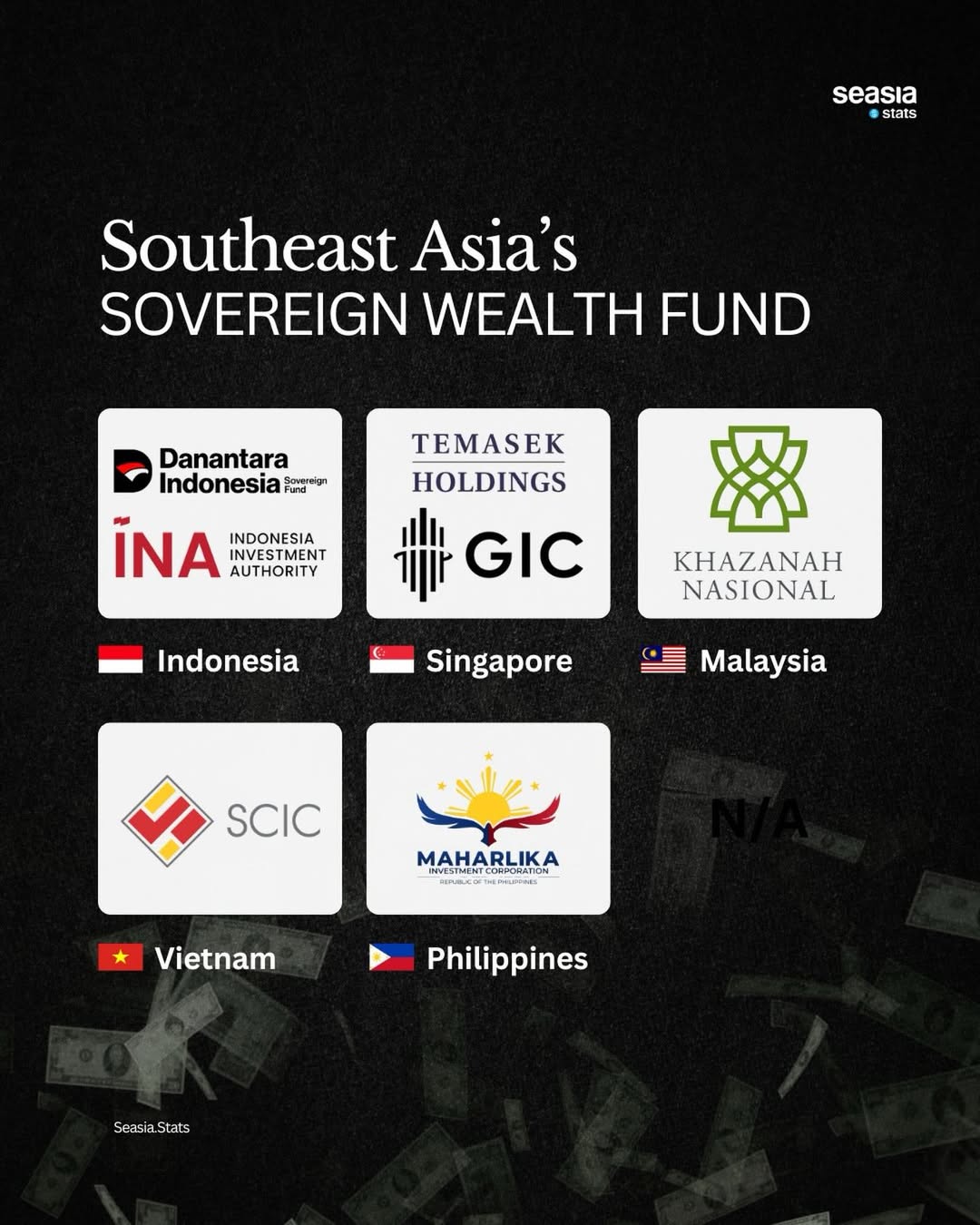
Sovereign wealth funds have become increasingly important in Southeast Asia as governments seek to strengthen national economies, attract investment, and secure long-term financial stability.
These state-owned investment institutions manage public assets and invest in sectors ranging from infrastructure and technology to energy and global financial markets. Across the region, several sovereign wealth funds now play major roles in economic development and international investment.
Indonesia has recently expanded its sovereign investment ambitions through the Indonesia Investment Authority, also known as INA, and Daya Anagata Nusantara, commonly called Danantara.
INA was established in 2021 to attract foreign capital and support infrastructure, transportation, healthcare, and digital economy projects. Danantara, meanwhile, represents Indonesia’s broader effort to consolidate and optimize state-owned assets in support of national economic growth and industrial development.
Singapore is home to two of the world’s most influential sovereign wealth funds: Temasek Holdings and GIC. Temasek Holdings, founded in 1974, actively invests in companies across sectors such as finance, telecommunications, energy, and technology. It owns stakes in major regional corporations and has become a globally recognized investor.
GIC, formerly known as the Government of Singapore Investment Corporation, focuses on managing Singapore’s foreign reserves through long-term investments in equities, bonds, real estate, and private equity worldwide. Together, these institutions have helped Singapore maintain strong financial resilience despite its limited natural resources.
Malaysia’s sovereign wealth fund, Khazanah Nasional, was established in 1993 and serves as the strategic investment arm of the Malaysian government.
Khazanah invests in both domestic and international assets, including aviation, healthcare, infrastructure, and technology. The fund also supports national economic transformation initiatives and sustainable development goals.
In Viet Nam, the State Capital Investment Corporation, or SCIC, manages state investments in various enterprises. Created to improve efficiency in state-owned companies, SCIC plays an important role in Vietnam’s transition toward a more market-oriented economy while maintaining government oversight in strategic industries.
The Philippines entered the sovereign wealth sector with the establishment of the Maharlika Investment Fund. Designed to finance infrastructure and development projects, the fund aims to mobilize public capital to accelerate economic growth and attract international investors.
As Southeast Asia continues to grow economically, sovereign wealth funds are becoming powerful instruments for regional development, global investment, and long-term national prosperity. Their influence is expected to expand further as governments pursue modernization and economic diversification in an increasingly competitive global economy.