

Southeast Asia’s Top 10 Urban Rankings in 2026
Singapore comes first in Southeast Asia's urban rankings according to Oxford Economics Global Cities Index 2026.

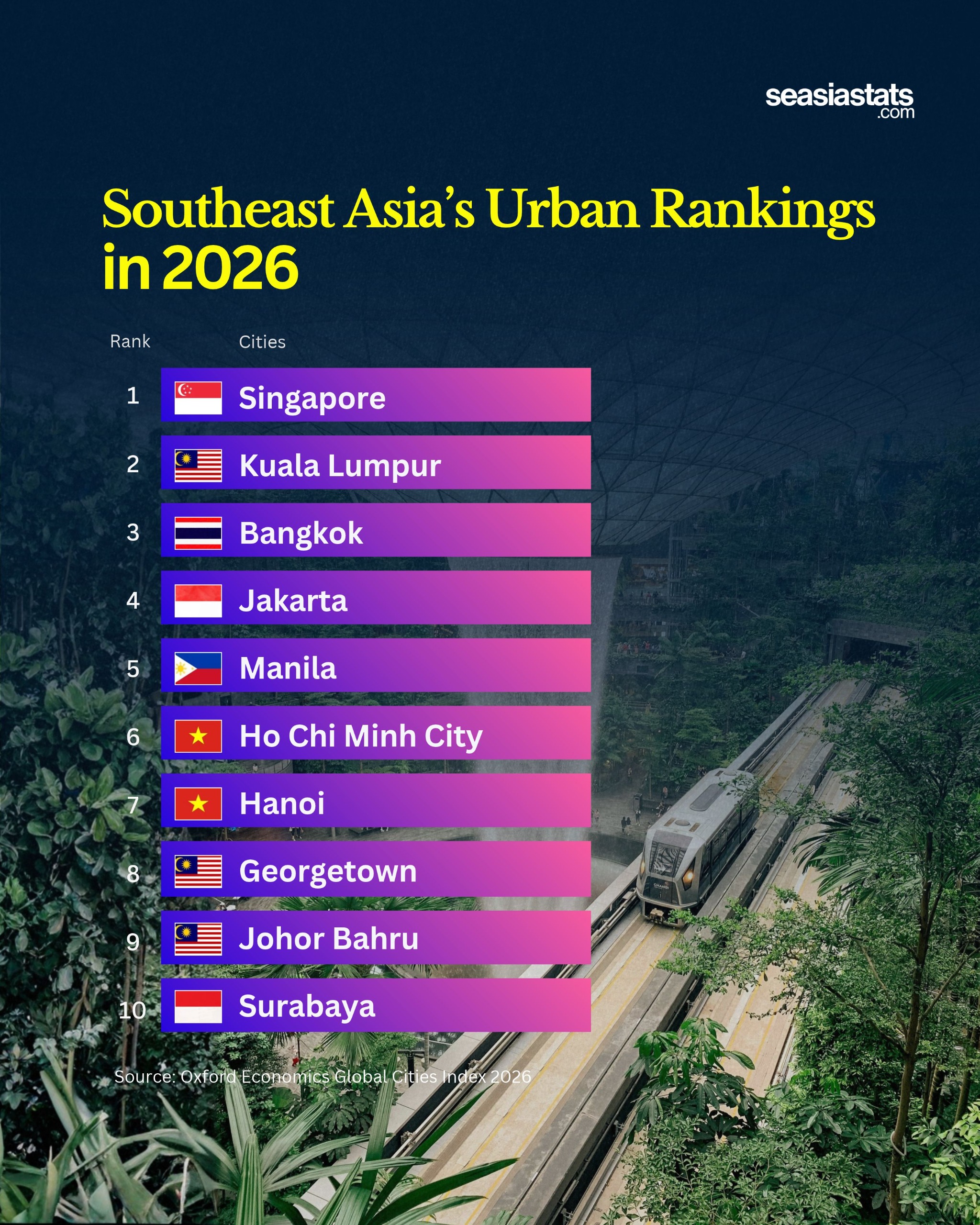
Southeast Asia’s leading cities continue to play an important role in driving economic growth, attracting investment and connecting the region to the global economy.
The list from Oxford Economics Global Cities Index highlights the diversity of Southeast Asia’s urban centres, from established international business hubs to rapidly developing metropolitan areas.
Singapore takes first place in the regional ranking, supported by its role as an international financial centre, major trading hub and gateway for global businesses. Its advanced infrastructure, connectivity and business environment have helped establish the city-state as one of Southeast Asia’s most influential urban centres.
Kuala Lumpur ranks second, reflecting Malaysia’s capital city’s importance as a centre for finance, commerce, services and tourism. Its modern infrastructure and regional business connections contribute to its position among Southeast Asia’s leading cities.
Bangkok comes third. As Thailand’s capital and largest urban centre, Bangkok is a major destination for tourism, manufacturing, trade and business services. Its extensive transport networks and concentration of economic activity make it an important hub for mainland Southeast Asia.
Jakarta ranks fourth, maintaining its importance as Indonesia’s principal economic and commercial centre. The metropolitan area has a large consumer market and a substantial concentration of businesses, although congestion and infrastructure pressures remain significant urban challenges.
Manila takes fifth place, serving as the Philippines’ primary centre for government, finance, commerce and professional services. Its metropolitan economy benefits from a large workforce and strong demand for business and consumer services.
Ho Chi Minh City ranks sixth, reflecting its growing importance in Vietnam’s manufacturing, trade and technology sectors. Hanoi follows in seventh place, combining its role as Vietnam’s political capital with expanding business activity and investment.
George Town, in Malaysia’s Penang state, ranks eighth. Known for its cultural heritage and tourism, the wider Penang area is also an important centre for electronics manufacturing and technology-related industries.
Johor Bahru ranks ninth, benefiting from its strategic position near Singapore and its cross-border economic connections. Investment, manufacturing and regional transport links contribute to its growing urban significance.
Surabaya completes the top 10. As East Java’s principal commercial centre, it plays an important role in Indonesia’s domestic trade, logistics, manufacturing and distribution networks.
Overall, these rankings illustrate Southeast Asia’s varied urban landscape. Singapore remains the region’s leading international hub, while Kuala Lumpur and Bangkok maintain strong regional positions. Meanwhile, Jakarta, Manila, Vietnam’s major cities, George Town, Johor Bahru and Surabaya demonstrate the breadth of economic activity across the region.