

Steering Wheel Placement Across Southeast Asia: A Regional Divide
In Southeast Asia, seven countries put steering wheel on the right side of the vehicle, while the rest put it on the left.

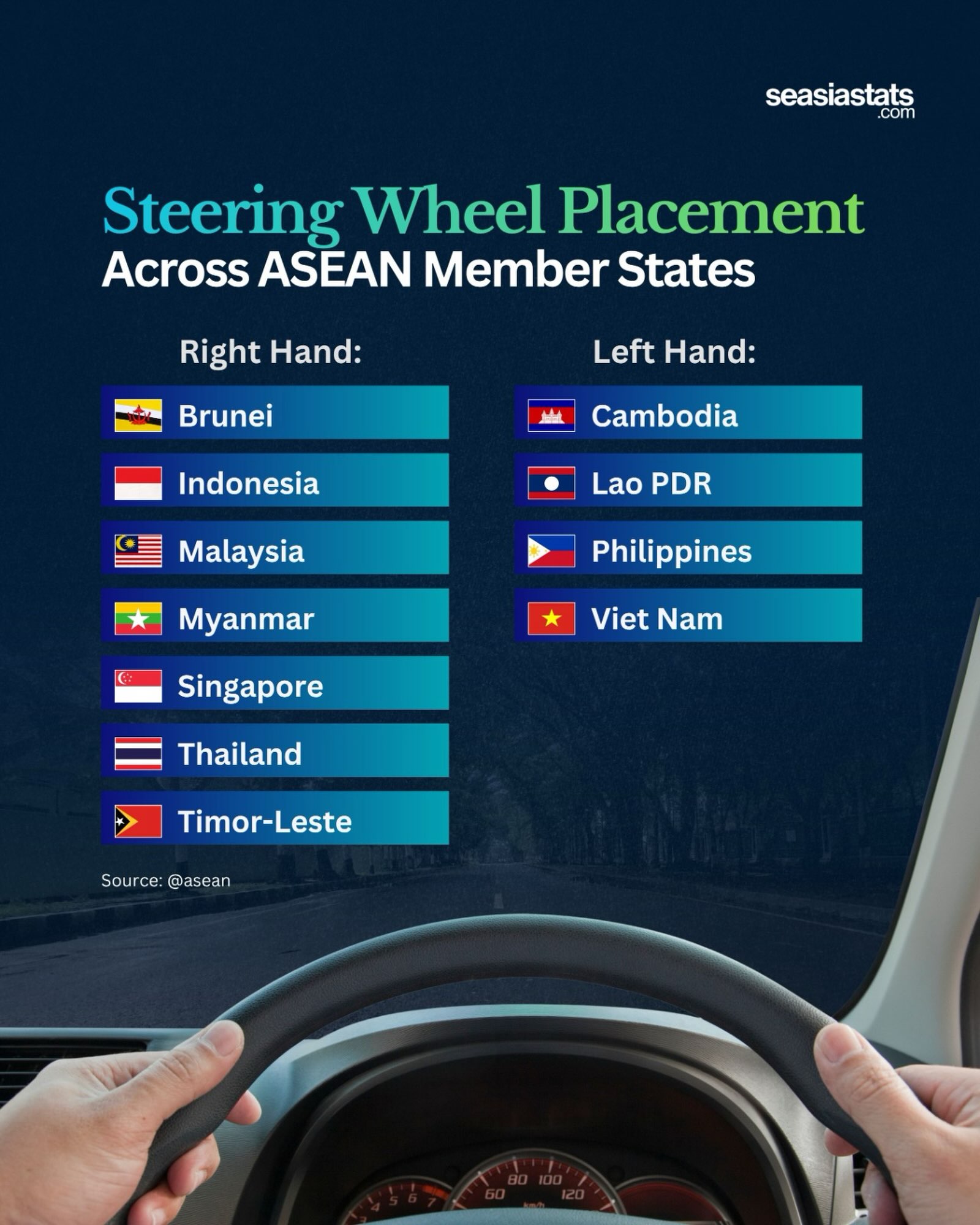
Southeast Asia presents a fascinating contrast in driving conventions, particularly regarding the placement of the steering wheel. While the region shares many cultural and economic ties, its countries are divided between right-hand drive and left-hand drive systems.
This distinction influences everything from vehicle design and road infrastructure to the everyday experience of drivers and passengers.
Seven Southeast Asian nations follow the right-hand drive configuration, meaning the steering wheel is positioned on the right side of the vehicle and traffic generally keeps to the left side of the road.
These countries are Brunei, Indonesia, Malaysia, Myanmar, Singapore, Thailand, and Timor-Leste. In these nations, drivers sit on the right, allowing them a clearer view of the road’s center when navigating left-side traffic. This setup is common in countries with historical connections to British influence or neighboring states that adopted similar systems.
Vehicles imported or manufactured for these markets are specifically designed with right-hand steering to match local traffic rules and ensure safer overtaking and turning maneuvers.
In contrast, four countries in the region use left-hand drive vehicles, with the steering wheel located on the left side. Cambodia, Laos, the Philippines, and Vietnam fall into this category. Here, drivers sit on the left while traffic typically moves on the right side of the road.
This arrangement aligns more closely with continental European and American conventions. In these nations, the left-hand steering position provides drivers with better visibility of oncoming traffic when preparing to overtake or make right turns.
The division creates practical implications for travelers and the automotive industry. Cross-border journeys can require adjustments, as drivers moving from a right-hand drive country into a left-hand drive one must adapt to opposite traffic flows and vehicle controls.
Vehicle manufacturers and importers carefully tailor models to each market, producing right-hand drive cars for Brunei, Indonesia, Malaysia, Myanmar, Singapore, Thailand, and Timor-Leste, while supplying left-hand drive versions for Cambodia, Laos, the Philippines, and Vietnam.
Despite these differences, road safety standards, licensing requirements, and traffic regulations continue to evolve across the region. Understanding the steering wheel placement in each country remains essential for both residents and visitors.
Whether navigating the bustling streets of Singapore or the scenic roads of Vietnam, awareness of local driving conventions helps ensure smoother and safer journeys throughout Southeast Asia. This clear geographical split in vehicle design underscores the diverse influences that have shaped the region’s transportation landscape.