

Ten Muslim-Friendly Cosmetic Brands
In today’s global beauty industry, inclusivity is no longer a trend—it is an expectation.

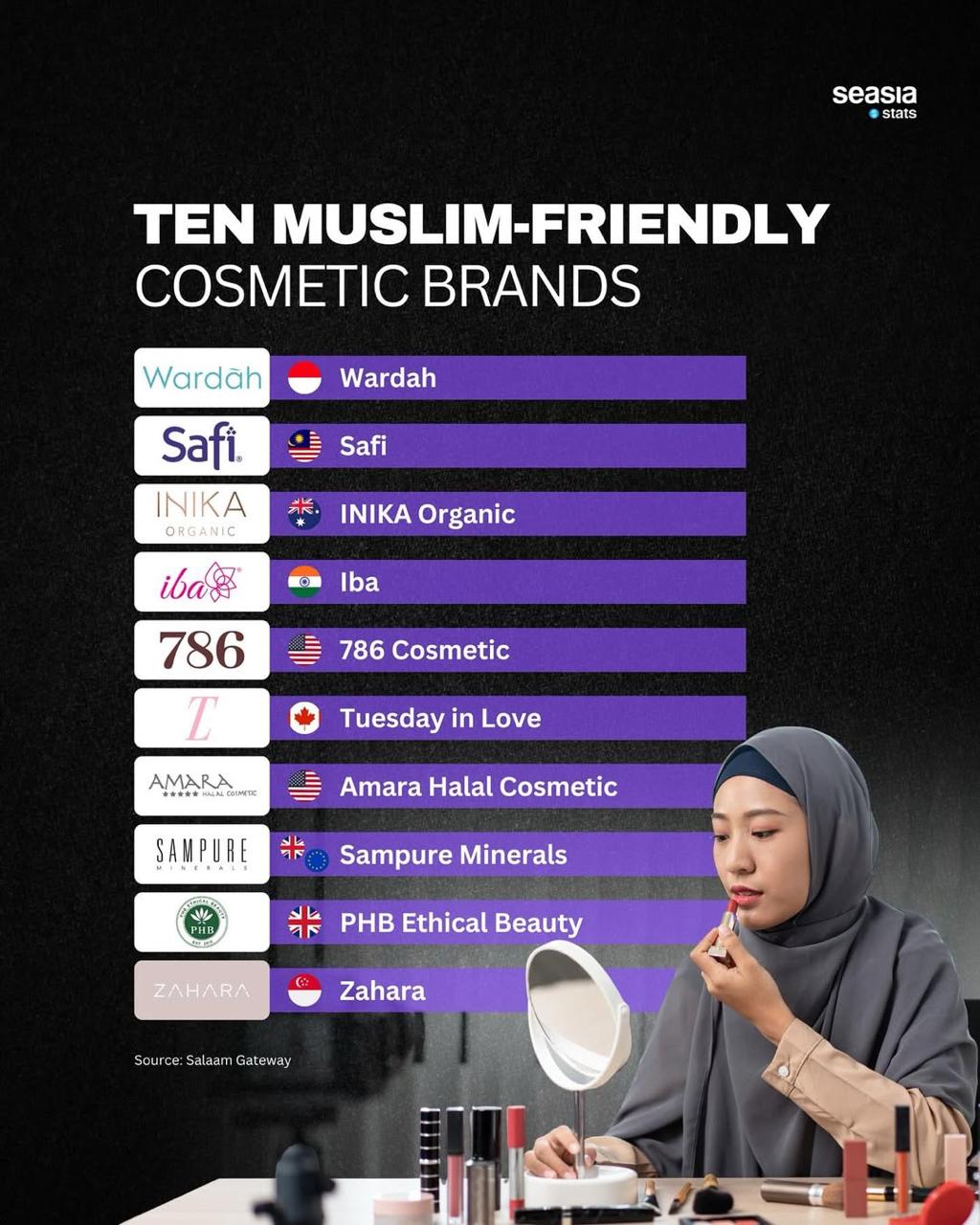
In today’s global beauty industry, inclusivity is no longer a trend—it is an expectation. Across markets from Southeast Asia to Europe and North America, Muslim-friendly cosmetics are gaining remarkable traction. These products go beyond aesthetics, combining halal certification with ethical standards such as vegan ingredients, cruelty-free testing, and environmentally conscious production. According to data from Salaam Gateway and Seasia Stats, the sector is being led by innovative brands rooted in Southeast Asia, positioning the region as a global powerhouse in halal beauty.
Southeast Asia Leads the Halal Beauty Movement
At the forefront of the ranking is Wardah, Indonesia’s pioneering halal cosmetic brand, widely recognized as the top Muslim-friendly cosmetic brand in the world. Wardah’s success reflects Indonesia’s massive consumer base and its strong demand for faith-conscious, high-quality products.
Following closely behind is Malaysia’s Safi, another major Southeast Asian player that has built a loyal following through affordable, science-backed skincare lines designed specifically for Muslim consumers. Together, Indonesia and Malaysia are driving the global halal beauty narrative, with Jakarta and Kuala Lumpur emerging as major innovation hubs in the industry.
Singapore also contributes to the region’s influence through Zahara, a brand known for its modern aesthetic and halal-certified formulas. Meanwhile, countries such as Brunei and Thailand are seeing growing demand for halal-certified cosmetics, supported by their strong Muslim consumer markets and expanding retail ecosystems.
Global Brands Embrace Halal and Ethical Standards
While Southeast Asia leads the charge, the global nature of the halal beauty movement is evident. Australia’s INIKA Organic, ranked third, blends halal principles with organic and vegan ingredients, appealing to a broader eco-conscious audience.
India’s Iba has also made waves as the country’s first halal-certified and vegan beauty brand, while 786 Cosmetics from the United States has gained popularity for its breathable, water-permeable nail polishes—designed to align with religious practices such as ablution.
From Canada, Tuesday in Love specializes in prayer-friendly nail products, while Amara Halal Cosmetics in the U.S. focuses on premium halal-certified makeup. European brands such as Sampure Minerals and PHB Ethical Beautyfurther reinforce the industry’s global reach by integrating ethical sourcing, vegan formulas, and sustainability into their halal offerings.
Beyond Halal: A Broader Ethical Beauty Movement
What sets Muslim-friendly cosmetics apart is their alignment with wider ethical beauty trends. Many of these brands emphasize transparency, natural ingredients, and cruelty-free practices—values that resonate not only with Muslim consumers but also with younger, environmentally conscious buyers worldwide.
In Southeast Asia, this alignment is particularly powerful. Consumers in countries like Indonesia, Malaysia, and Vietnam are increasingly seeking products that reflect both their cultural identity and global ethical standards. As a result, halal beauty is becoming synonymous with clean, responsible, and inclusive beauty.
A Growing Market with Global Potential
The global halal cosmetics market is projected to continue expanding rapidly, driven by a young, digitally connected Muslim population and increasing demand for ethical products. Southeast Asia’s leadership—anchored by brands like Wardah and Safi—positions the region at the center of this growth story.
As innovation continues to flourish in cities like Jakarta and Kuala Lumpur, and as new brands emerge from across ASEAN, Muslim-friendly cosmetics are no longer niche. They represent a dynamic, fast-growing segment of the global beauty industry—one that celebrates diversity, faith, and sustainability all at once.