

The 10 Thinnest Countries in the World
Despite a global rise in obesity, one country stands out for staying lean: Viet Nam. According to new data compiled by WorldAtlas and visualized by Seasia Stats

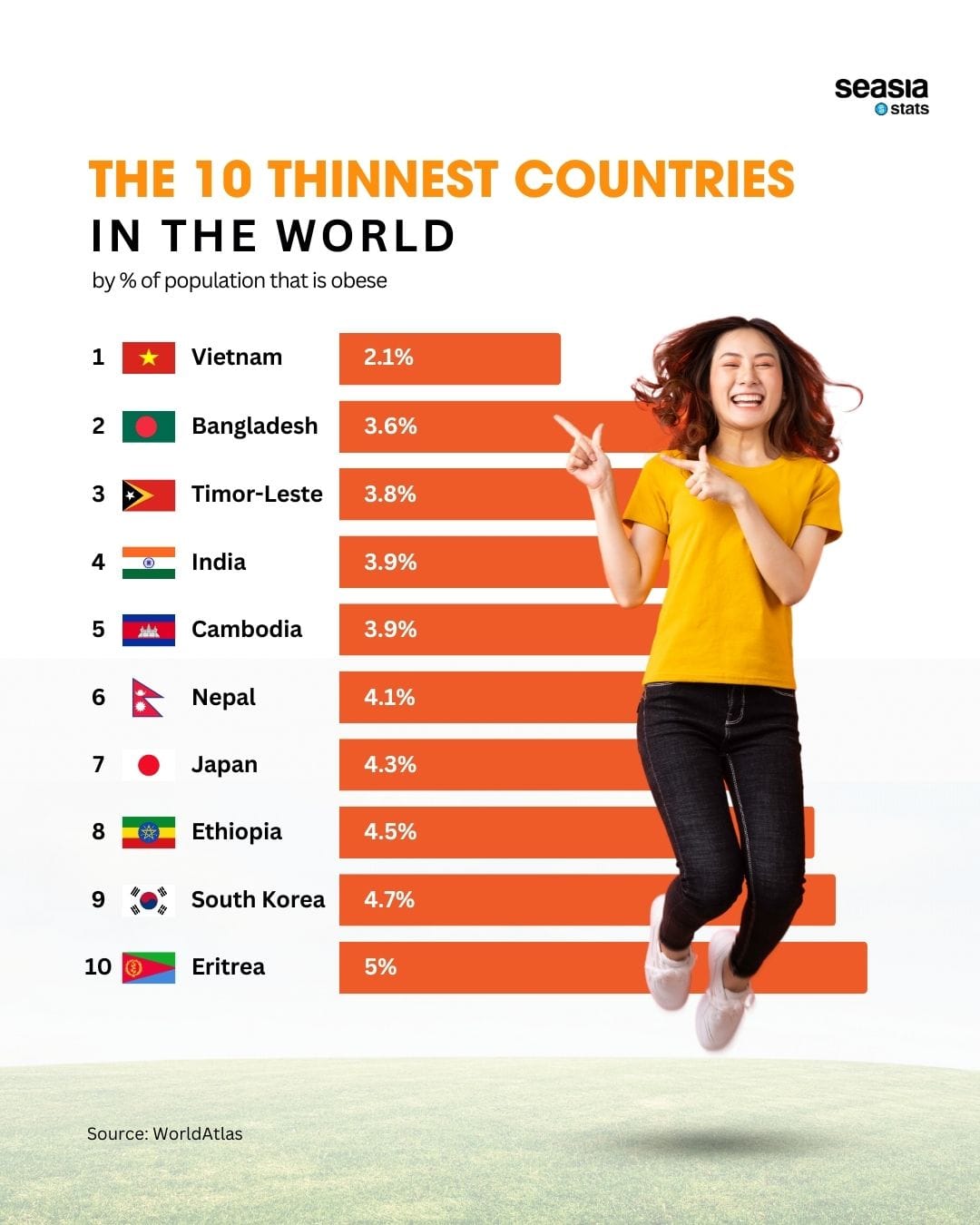
Despite a global rise in obesity, one country stands out for staying lean: Viet Nam. According to new data compiled by WorldAtlas and visualized by Seasia Stats, Viet Nam has been ranked the thinnest country in the world, with just 2.1% of its population classified as obese.
This low obesity rate highlights a unique contrast with global health trends and reflects deeper patterns in lifestyle, culture, and diet across much of Asia.
A Regional Trend Led by Asia
Viet Nam's top position is closely followed by Bangladesh (3.6%) and Timor-Leste (3.8%), with India and Cambodia tied at 3.9%. These countries, mostly located in Asia, share common dietary characteristics — meals often centered on rice, vegetables, legumes, and moderate portions of meat — as well as active modes of daily transport like walking or cycling.
Also making the top ten are Nepal (4.1%), Japan (4.3%), and South Korea (4.7%), all of which maintain relatively low obesity rates compared to Western nations. Two African countries, Ethiopia (4.5%) and Eritrea (5%), complete the list, reflecting similar patterns of lower calorie diets and more physically demanding lifestyles.
Diet, Culture, and Infrastructure Play a Role
Experts suggest Viet Nam’s ranking is no coincidence. A typical Vietnamese meal is light, balanced, and filled with vegetables, rice, fermented products, and lean proteins such as fish and tofu. Even in urban areas, the Vietnamese lifestyle still includes a high level of physical movement, from walking through narrow alleys to using bicycles or motorbikes for transport.
Moreover, the limited penetration of ultra-processed and fast foods, especially outside of major cities, plays a significant role in curbing obesity. Cultural attitudes toward body image and health also emphasize moderation and movement.
Thin Doesn’t Always Mean Healthy
However, while low obesity rates are often seen as a health indicator, experts caution that being “thin” is not the same as being healthy. Undernutrition, hidden hunger, and rising rates of diabetes are ongoing issues in several of these countries, including Viet Nam. As economies grow and food systems shift, public health campaigns must address both ends of the nutrition spectrum.
A Global Outlier Worth Watching
In a world where obesity-related illnesses are becoming increasingly common, Viet Nam’s standing is both notable and instructive. It presents a case study on how cultural, dietary, and urban design factors can collectively influence national health outcomes.
But as modernization continues, the real test will be whether countries like Viet Nam can maintain this balance — avoiding the pitfalls of overnutrition while addressing the ongoing risks of undernutrition and sedentary lifestyles.