

The Best European Countries for Work-Life Balance
If you're planning to move to Europe for better work-life balance, here are the best countries for it.

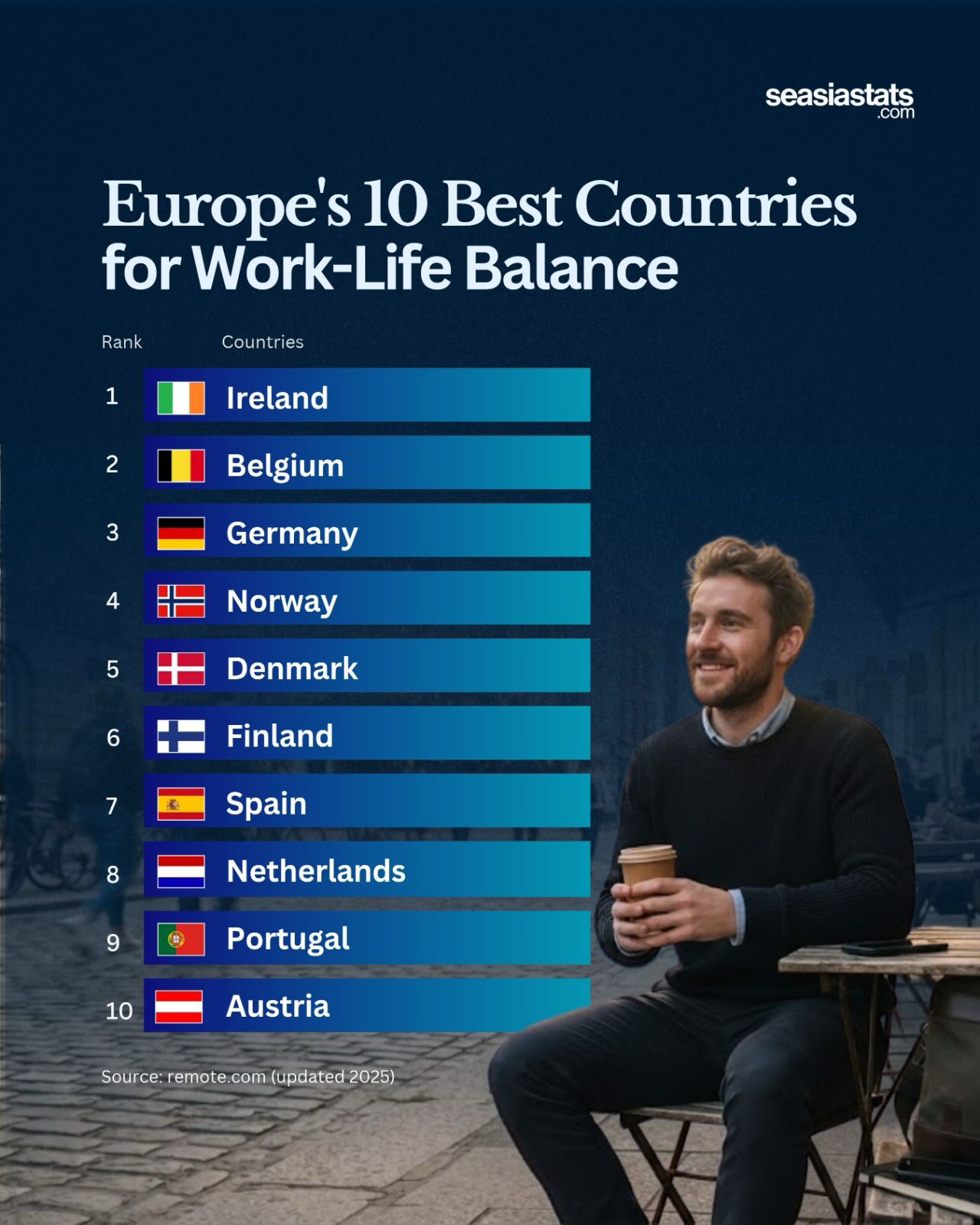
Achieving a healthy work-life balance has become an increasingly important priority for employees across Europe. Beyond earning competitive salaries, workers are looking for countries that offer reasonable working hours, generous annual leave, accessible healthcare, parental benefits, workplace flexibility, and a high quality of life.
According to Remote.com's Global Life-Work Balance Index 2025, several European countries stand out for their efforts to create a healthier balance between professional responsibilities and personal well-being.
Ireland is one of Europe's leading countries for work-life balance, supported by employee benefits, competitive wages, and strong workplace protections. Belgium follows closely, offering generous annual leave, accessible healthcare, and employment policies designed to protect workers' rights.
Germany is another excellent destination for professionals seeking a balanced lifestyle. Its strong labor regulations, comprehensive healthcare system, and emphasis on productivity help employees maintain a healthy separation between work and personal life.
Similarly, Norway is widely recognized for its progressive employment policies, generous parental leave, and commitment to equality and employee welfare.
Denmark is particularly attractive because of its flexible working culture and emphasis on personal freedom. Employees benefit from a social system that supports family life and encourages people to enjoy time outside the workplace.
Meanwhile, Finland offers excellent public services, comprehensive healthcare, and generous vacation policies, contributing to its reputation as one of Europe's most comfortable countries to live and work in.
Moving further south, Spain provides an appealing lifestyle with a strong emphasis on family, social connections, and leisure activities. Its combination of annual leave entitlements and accessible healthcare makes it an attractive option for international professionals.
The Netherlands is especially well known for its flexible employment arrangements and relatively short average working hours. These conditions allow many employees to dedicate more time to family, hobbies, and personal interests.
Portugal has also become an increasingly attractive destination for international workers. Its pleasant climate, comparatively affordable cost of living, and relaxed lifestyle appeal to professionals seeking a better balance between work and leisure.
Finally, Austria completes the list, offering strong labor protections, reliable healthcare, public safety, and a high standard of living.
Overall, these ten European countries demonstrate that work-life balance is about more than salary. Supportive employment policies, healthcare, leisure time, and personal well-being all contribute to a fulfilling professional and personal life.
As work-life balance becomes a greater priority for employees, these countries provide valuable examples of how to build healthier working environments.