

The Best "Second Cities" in Asia to Visit Instead of the Usual Capitals
The best trips are often the ones that happen just outside the spotlight.

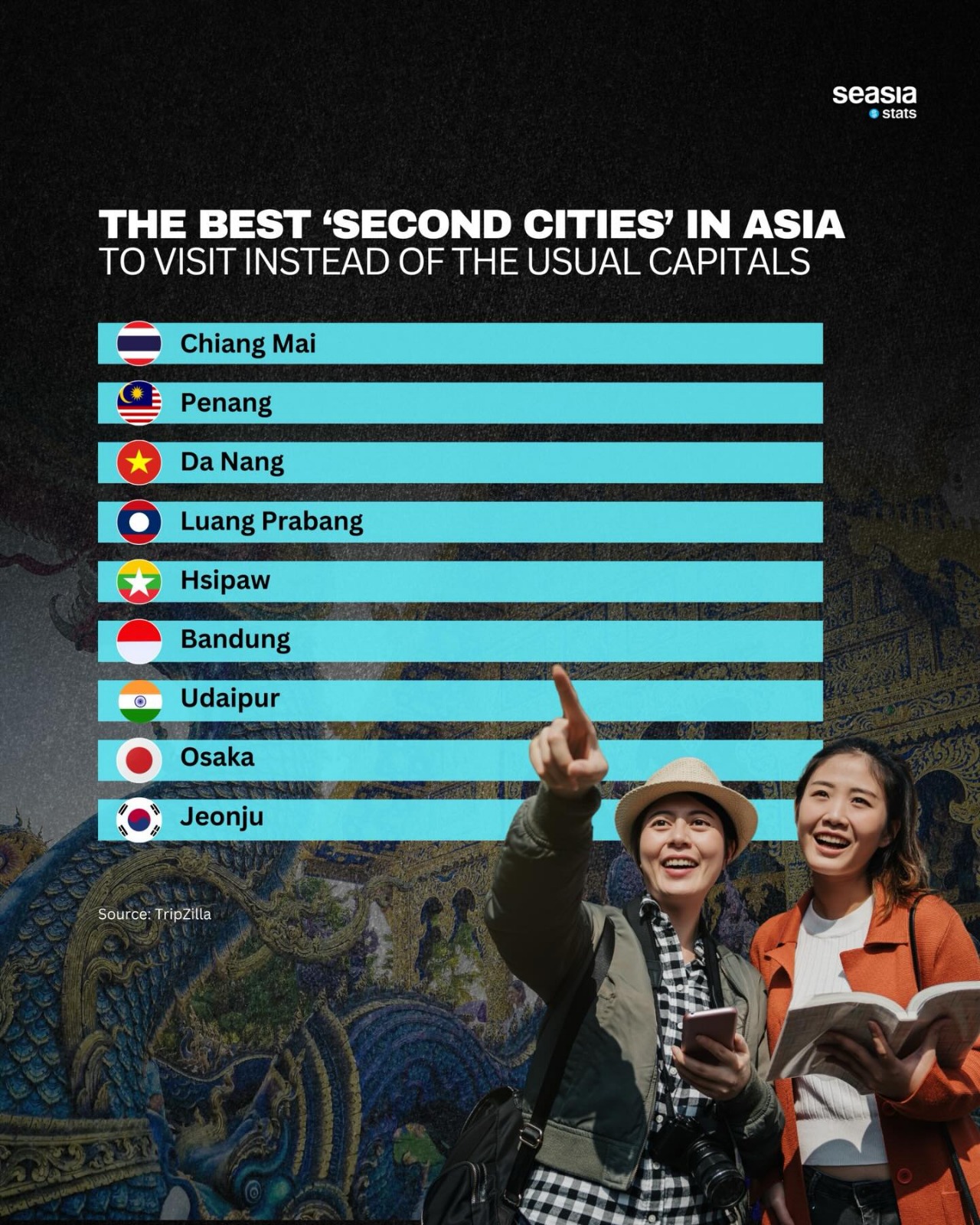
The best trips are often the ones that happen just outside the spotlight. Not in the capital city everyone already knows, but in the places that feel more textured, more human, and somehow more memorable. Across Asia, a growing number of travelers are looking beyond the usual megacities and turning instead to so-called “second cities”—destinations that offer the soul of a country without the fatigue of its busiest front door.
Why “Second Cities” Are Having a Moment
The appeal is simple: less rush, more depth. These cities tend to be easier to navigate, often cheaper, and far more intimate in the way they reveal local life. A recent TripZilla feature summed it up neatly, describing second cities as places that offer “culture, food, and character, without the crowds.”
That is exactly what makes this Asia list feel so relevant. Instead of defaulting to Bangkok, Kuala Lumpur, Hanoi, Jakarta, Tokyo, or Seoul, travelers are being nudged toward places that reward curiosity rather than checklist tourism.
Southeast Asia Dominates the Conversation
What stands out immediately is how strongly Southeast Asia performs. Of the cities listed, six come from the region: Chiang Mai, Penang, Da Nang, Luang Prabang, Hsipaw, and Bandung. That says a lot about ASEAN’s travel appeal right now. The region is not just rich in capital-city energy; it is arguably even better in its quieter urban centers.
Chiang Mai, often seen as Thailand’s softer counterpoint to Bangkok, leads many “second city” conversations because it offers something increasingly rare in tourism: atmosphere. Temples, mountain air, café culture, night markets, and a slower daily rhythm all coexist without feeling overproduced. TripZilla describes it as a place where “temples anchor daily life” and “mountains frame the horizon,” which captures the city’s charm well.
Then there is Penang, especially George Town, which may be one of the best examples of a city where food and heritage are inseparable. Its appeal is not just that it is beautiful, but that it still feels lived-in. Street art, old shophouses, clan houses, hawker stalls, and layered communities give it a kind of everyday richness that many polished tourist cities lose over time. For Malaysia, Penang continues to function as both cultural archive and culinary capital.
Cities That Feel Like Gateways, Not Detours
One reason second cities work so well is that they often act as portals to a wider region.
Da Nang, for example, is more than a beach city. It sits in a strategic cultural corridor between Hoi An and Hue, making it one of Vietnam’s most practical and rewarding travel bases. TripZilla notes that its strength lies in “balance”—between sea and mountains, modernity and heritage, expansion and manageability. That balance is exactly why more travelers are choosing it over the intensity of Ho Chi Minh City or Hanoi.
Luang Prabang offers something even rarer: serenity. Framed by the Mekong and Nam Khan rivers, it remains one of Southeast Asia’s most atmospheric destinations, where Buddhist temples, French colonial facades, and riverine calm all shape the visitor experience. In a region often marketed through adrenaline and movement, Luang Prabang stands out by asking people to slow down.
Bandung, meanwhile, gives Indonesia a very different urban story from Jakarta. Cooler in climate and younger in energy, it has long been loved for its design scene, food culture, and “Paris of Java” aura. It feels less like a national showcase and more like a city with its own personality.
Beyond ASEAN, the Pattern Still Holds
The same logic applies elsewhere. Osaka offers a more relaxed, food-first alternative to Tokyo. Udaipur presents India through lakes, palaces, and old-world romance rather than metropolitan overload. Jeonju gives South Korea a deeper traditional register through hanok architecture and culinary heritage. These are not secondary experiences. In many ways, they are the more revealing ones.
The Future of Travel May Be Less Obvious
What this list ultimately reveals is a shift in how people want to travel. Increasingly, they are not just chasing landmarks—they are chasing feeling. They want cities that still breathe, neighborhoods that still belong to locals, and experiences that feel discovered rather than delivered.
And that may be where Southeast Asia shines brightest. Its capitals may grab the headlines, but its second cities often keep the memory.