

The Biggest Cities in the World by Population
Greater Jakarta or Jabodetabek is now the biggest city in the world by population.

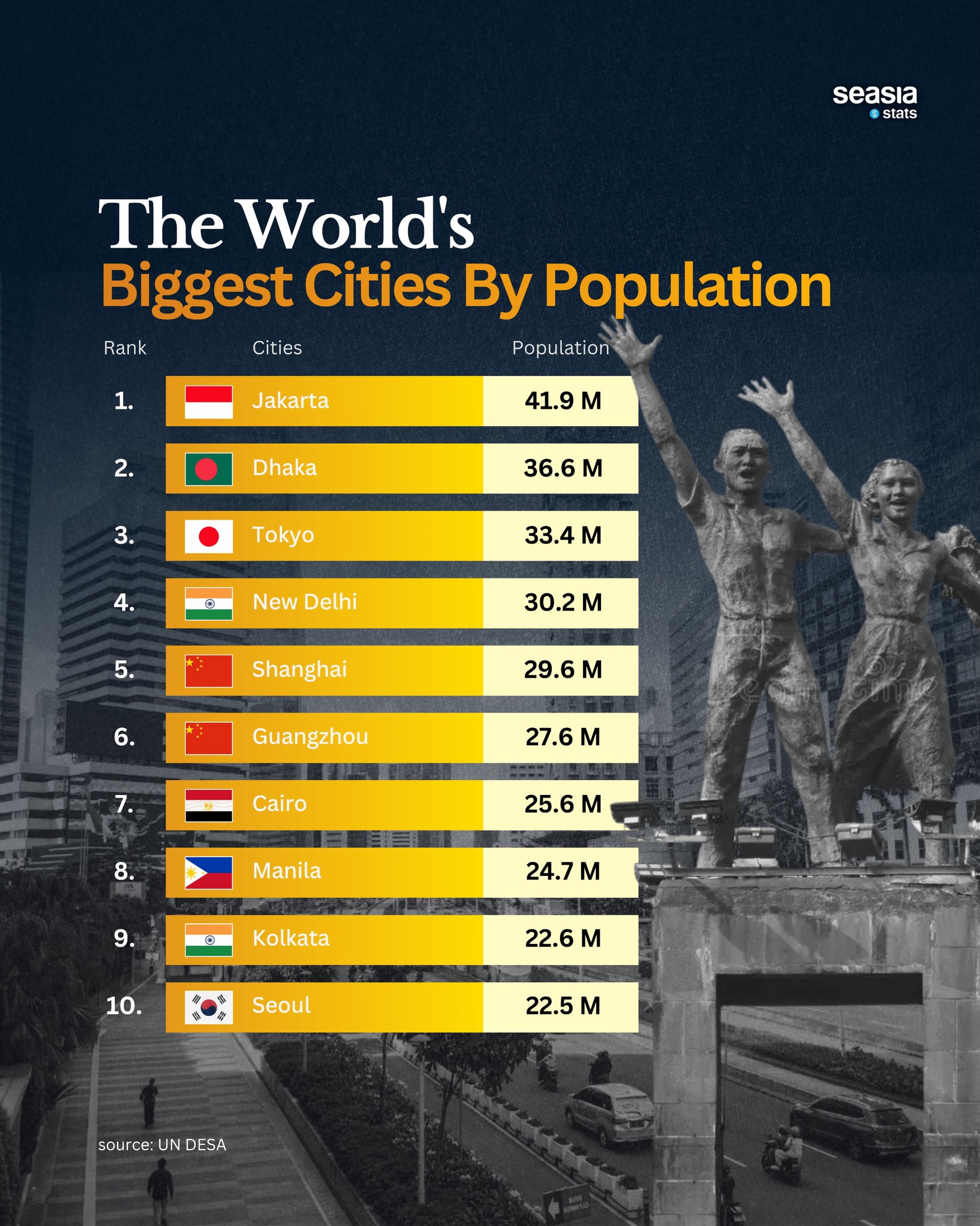
The world's largest cities are home to hundreds of millions of people and serve as major centers of culture, business, innovation, and economic activity.
Rapid urbanization has transformed these metropolitan areas into global hubs that attract residents seeking employment, education, and improved opportunities. Based on population, the ten biggest cities in the world showcase the remarkable scale of modern urban life.
At the top of the list is Greater Jakarta or Jabodetabek, Indonesia, with a population of 41.9 million. As the nation's capital and economic heart, Jakarta continues to expand despite challenges such as traffic congestion and rapid urban growth.
Second is Dhaka, Bangladesh, with 36.6 million residents. Dhaka is one of the fastest-growing cities in the world and plays a vital role in the country's economy, particularly through its thriving textile and garment industries.
Tokyo, Japan, ranks third with 33.4 million people. Known for its advanced technology, efficient transportation system, and vibrant culture, Tokyo remains one of the world's most influential metropolitan areas.
India is represented by New Delhi, which has a population of 30.2 million. As the country's capital, it is an important center for government, commerce, and history.
China has two cities among the top ten. Shanghai, with 29.6 million people, is a global financial powerhouse and one of the busiest ports in the world. Guangzhou, home to 27.6 million residents, is another major commercial and manufacturing center that has experienced tremendous economic growth.
In Africa, Cairo, Egypt, stands as the continent's largest city with 25.6 million inhabitants. Its rich history, iconic landmarks, and strategic location make it a significant cultural and economic center.
The Philippines' capital region, Manila, has a population of 24.7 million. It is the country's political, financial, and educational hub, contributing significantly to the national economy.
Another major Indian metropolis, Kolkata, ranks ninth with 22.6 million residents. The city is renowned for its cultural heritage, literature, and historic importance.
Completing the list is Seoul, South Korea, with 22.5 million people. Seoul is recognized worldwide for its technological innovation, modern infrastructure, and influence in entertainment and popular culture.
Together, these ten cities demonstrate the extraordinary scale of global urbanization. They face common challenges such as housing, transportation, and environmental sustainability while continuing to drive economic development and cultural exchange.
As urban populations continue to grow, these metropolitan areas will remain at the forefront of shaping the future of cities around the world.