

The Busiest Airports in Southeast Asia in 2025
As expected, Singapore Changi Airport is the busiest in Southeast Asia.

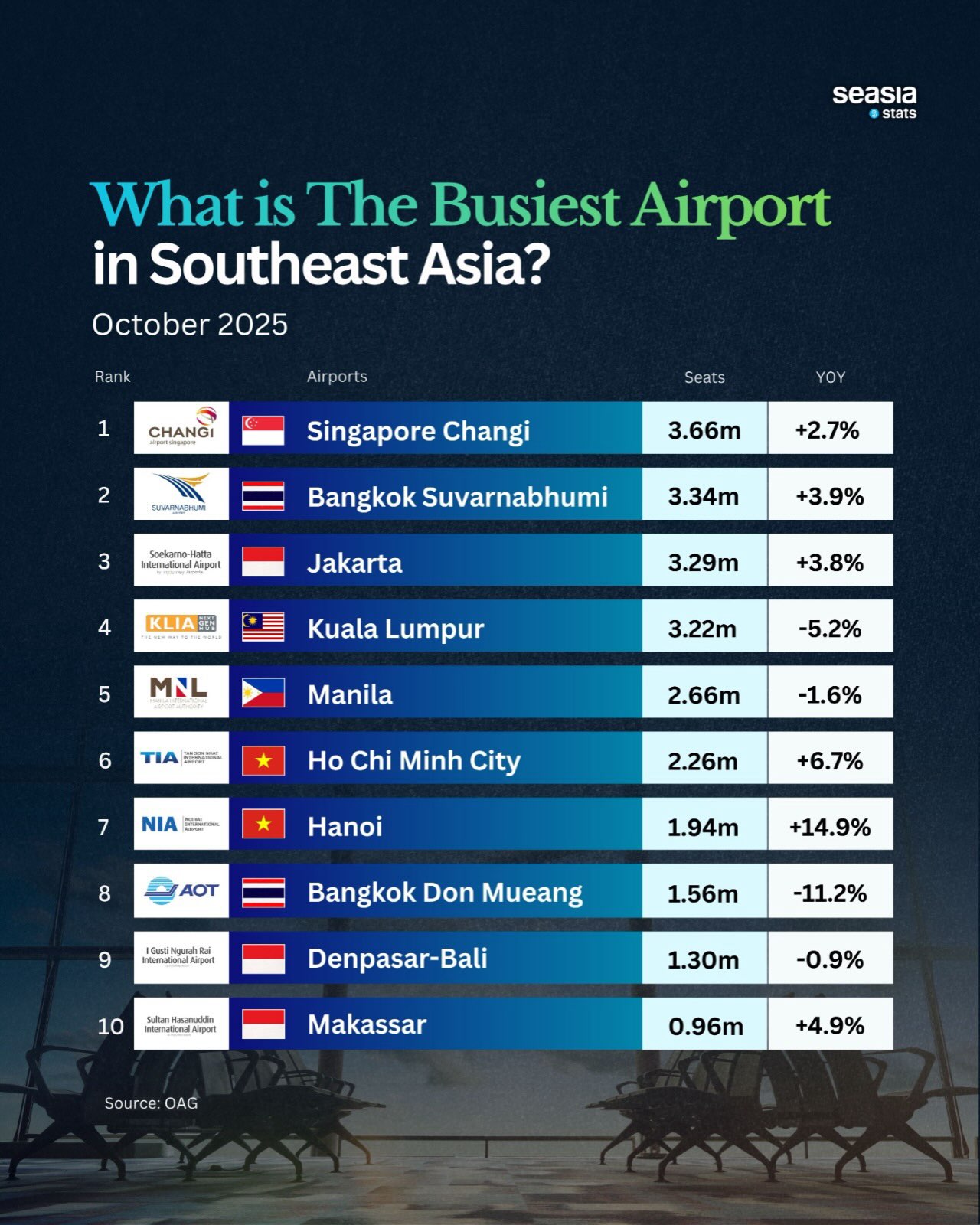
Southeast Asia’s aviation industry continued to demonstrate strong activity in 2025, with major airports handling millions of seats amid changing travel demand across the region according to OAG.
Singapore Changi Airport took the top position with 3.66 million seats, representing a 2.7% increase compared with the previous year. As one of Asia’s leading international aviation hubs, Changi benefits from its extensive global connectivity and strong position as a gateway between Southeast Asia and major markets worldwide.
Bangkok Suvarnabhumi Airport ranked second with 3.34 million seats, recording growth of 3.9%. Thailand’s primary international gateway continued to benefit from demand for international travel and the country’s popularity as a tourism destination.
Jakarta came third with 3.29 million seats, an increase of 3.8%, highlighting the importance of Indonesia’s capital as a major domestic and international aviation market.
Kuala Lumpur International Airport ranked fourth with 3.22 million seats, although its capacity declined by 5.2%. Manila followed in fifth place with 2.66 million seats, down 1.6%. Despite these decreases, both airports remain important gateways for their respective countries, connecting passengers to destinations across Asia and beyond.
Vietnam recorded particularly strong growth at its two leading airports. Ho Chi Minh City ranked sixth with 2.26 million seats, representing a 6.7% increase.
Hanoi followed in seventh place with 1.94 million seats, posting the strongest growth among the ten airports at 14.9%. These increases highlight the expanding importance of Vietnam’s aviation market and the growing demand for travel to and from the country.
Bangkok Don Mueang Airport ranked eighth with 1.56 million seats, although capacity declined by 11.2%. Denpasar Bali Airport took ninth place with 1.30 million seats, down 0.9%, reflecting a slight contraction in scheduled capacity at one of Indonesia’s most important tourism gateways.
Makassar rounded out the top ten with 960,000 seats, representing a 4.9% increase. Its position underscores the importance of regional airports in connecting Indonesia’s extensive archipelago.
Overall, OAG’s 2025 figures reveal a diverse Southeast Asian aviation landscape. Singapore retained the leading position, while Hanoi recorded the strongest growth. Seat capacity measures available seats rather than actual passengers carried, but it provides a valuable indicator of airline activity and connectivity across the region.