

The Easiest Countries for Digital Nomads in 2026
If you want to be a digital nomad, these are the easiest countries to be one.

Working remotely while exploring the world has become an increasingly popular lifestyle. However, becoming a digital nomad involves more than finding beautiful destinations and reliable internet.
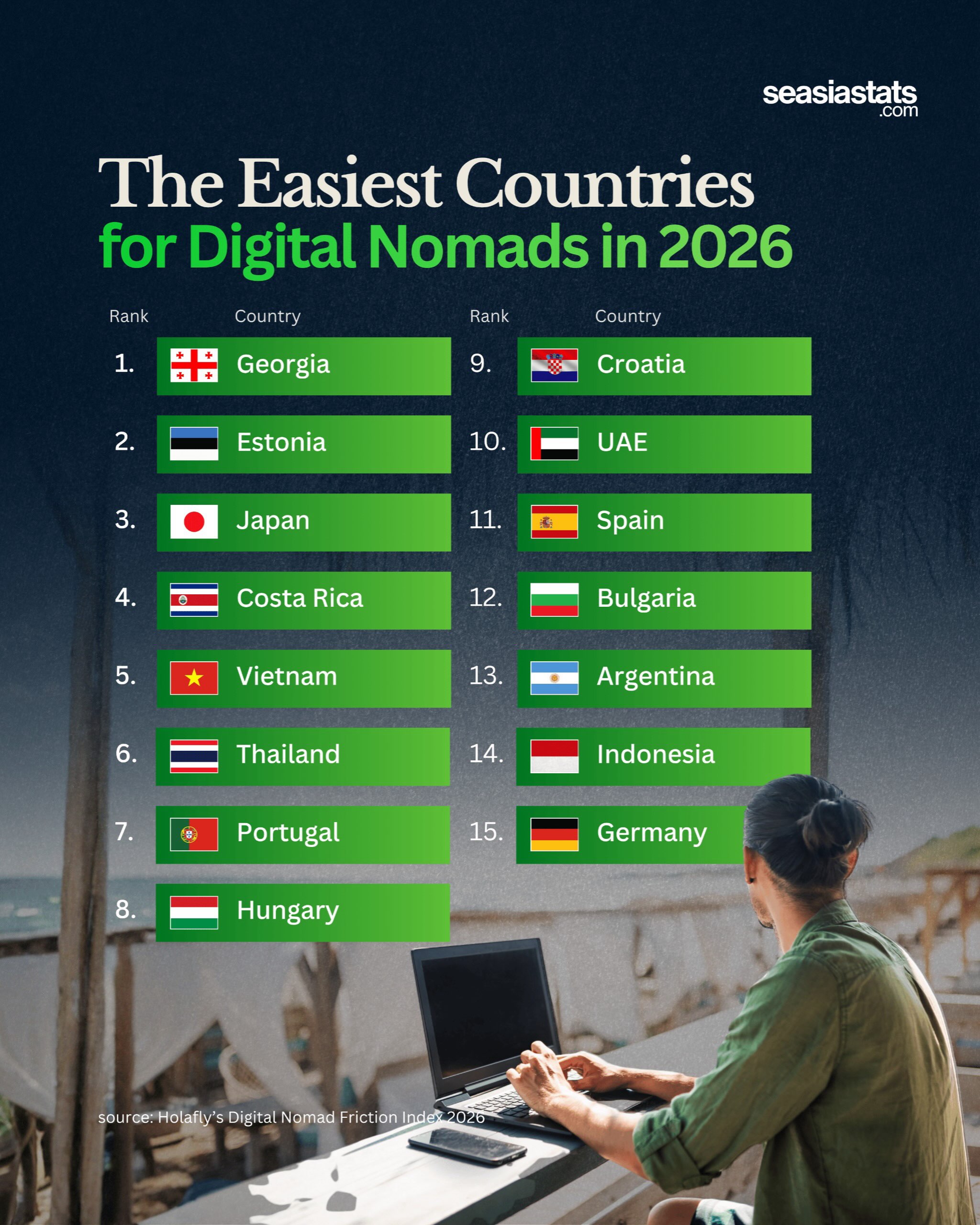
Visa requirements, banking services, healthcare, local bureaucracy, and potential disruptions can significantly affect everyday life abroad. According to Holafly's Digital Nomad Friction Index 2026, fifteen countries stand out for their varying levels of difficulty when establishing a life as a remote worker.
Georgia ranks first as the easiest country for digital nomads in the index. Its relatively straightforward administrative requirements make it attractive to international remote workers.
Estonia ranks second, appealing to technology professionals with its advanced digital infrastructure and modern public services. Japan takes third place, offering excellent transportation, organized cities, and a unique combination of traditional culture and modern innovation.
Costa Rica ranks fourth, attracting digital nomads with its tropical landscapes, outdoor activities, and relaxed lifestyle. Vietnam comes fifth, offering vibrant cities, affordable living options, delicious cuisine, and a growing remote-working community.
Thailand ranks sixth, remaining popular for its beautiful beaches, cultural attractions, coworking spaces, and diverse food scene.
Portugal occupies seventh place, drawing remote workers with its pleasant climate, historic cities, and coastal scenery. Hungary ranks eighth, with Budapest offering impressive architecture, lively cafés, and a convenient European urban lifestyle. Croatia takes ninth place, attracting visitors with its Adriatic coastline, historic towns, and Mediterranean atmosphere.
The United Arab Emirates ranks tenth, particularly appealing to professionals seeking modern infrastructure, international business connections, and sophisticated urban amenities.
Spain occupies eleventh place, offering sunny weather, rich cultural traditions, and lively cities such as Madrid and Barcelona. Bulgaria ranks twelfth, providing historic destinations, mountain scenery, and access to European travel opportunities.
Argentina comes thirteenth, attracting remote workers with Buenos Aires's vibrant culture, diverse landscapes, and celebrated food traditions.
Indonesia ranks fourteenth, offering tropical islands, cultural attractions, and established digital nomad communities in destinations such as Bali. Germany completes the list in fifteenth place, providing strong infrastructure, efficient public transportation, and access to Europe's major business centers.
In conclusion, these fifteen countries offer different opportunities for people seeking to combine work and travel in 2026. Georgia leads the ranking for its relatively low administrative friction, while the other destinations provide distinct advantages in lifestyle, culture, connectivity, and infrastructure.
Nevertheless, the index measures practical obstacles rather than overall quality of life. Digital nomads should also consider visa eligibility, tax obligations, personal budgets, and healthcare needs before choosing where to live and work abroad.