

The Fastest-Improving Tourism Economies in 2026
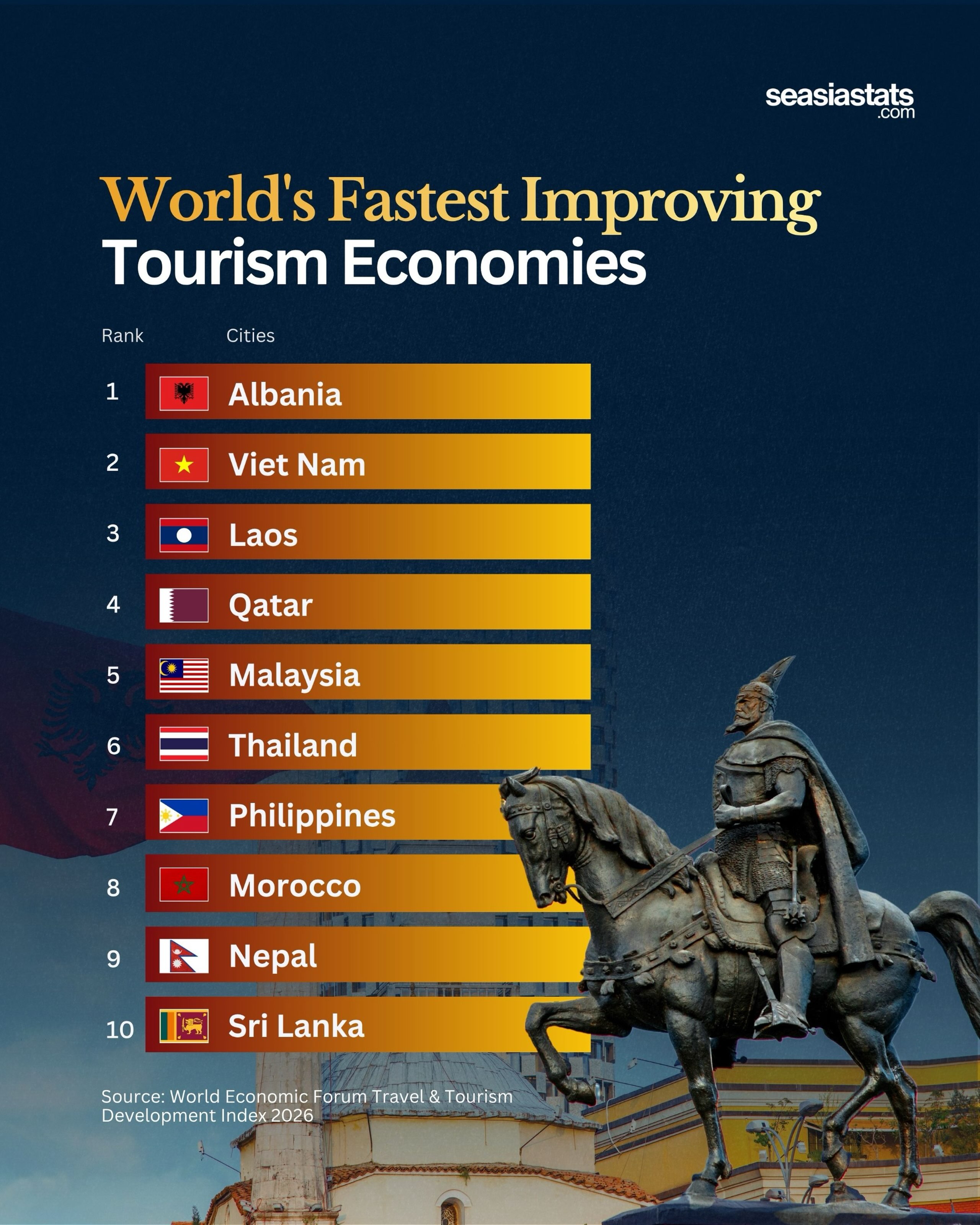
Albania has the best improvement on its tourism, rising by 7% on its TTDI score.

The global tourism industry is entering a new phase of growth, and emerging destinations are increasingly challenging established tourism markets.
According to the World Economic Forum’s Travel & Tourism Development Index (TTDI) 2026, Albania, Vietnam, Laos, Qatar, Malaysia, Thailand, the Philippines, Morocco, Nepal and Sri Lanka recorded the fastest improvements in tourism development between 2024 and 2026.
Albania led the world, with its TTDI score rising by 7%. The country benefited from improvements in tourist services and infrastructure, air transport, and ground and port infrastructure, while its relatively affordable prices have strengthened its appeal as an alternative European destination.
Vietnam followed with a 6.3% improvement, reflecting the country's expanding tourism infrastructure and connectivity.
In third place, Laos improved by 6.1%, while Qatar rose by 6%. Qatar's progress highlights the growing importance of the Middle East as a tourism hub, supported by infrastructure, connectivity and investment.
Malaysia and Thailand also recorded strong gains of 5.8% and 5.6%, respectively, reinforcing Southeast Asia's position as one of the world's most dynamic tourism regions.
The Philippines and Morocco each improved by 5.5%. The Philippines' progress reflects continued development of its tourism sector and infrastructure, while Morocco's gains demonstrate the strength of tourism development in North Africa. Nepal, with a 5.1% increase, and Sri Lanka, which improved by 4.3%, completed the top 10.
The broader trend is significant. The 2026 TTDI found that 101 of 110 economies or 92%, improved their tourism development scores between 2024 and 2026, while the global average increased by about 2.1%. Asia-Pacific accounted for seven of the ten fastest-improving economies, making it the strongest regional source of tourism momentum.
However, the TTDI does not simply measure tourist arrivals or tourism revenue. It evaluates the conditions that enable sustainable and resilient tourism, including infrastructure, air connectivity, tourist services, cultural and natural resources, price competitiveness and sustainability.
The results therefore suggest that these ten economies are not merely attracting more visitors; they are strengthening the foundations needed to support long-term tourism growth.
As established destinations confront rising costs, infrastructure pressures and sustainability challenges, the rapid progress of these emerging economies signals a shifting global tourism landscape. Their continued investment could make them some of the most important tourism markets of the coming decade.