

The Fastest Trains in the World
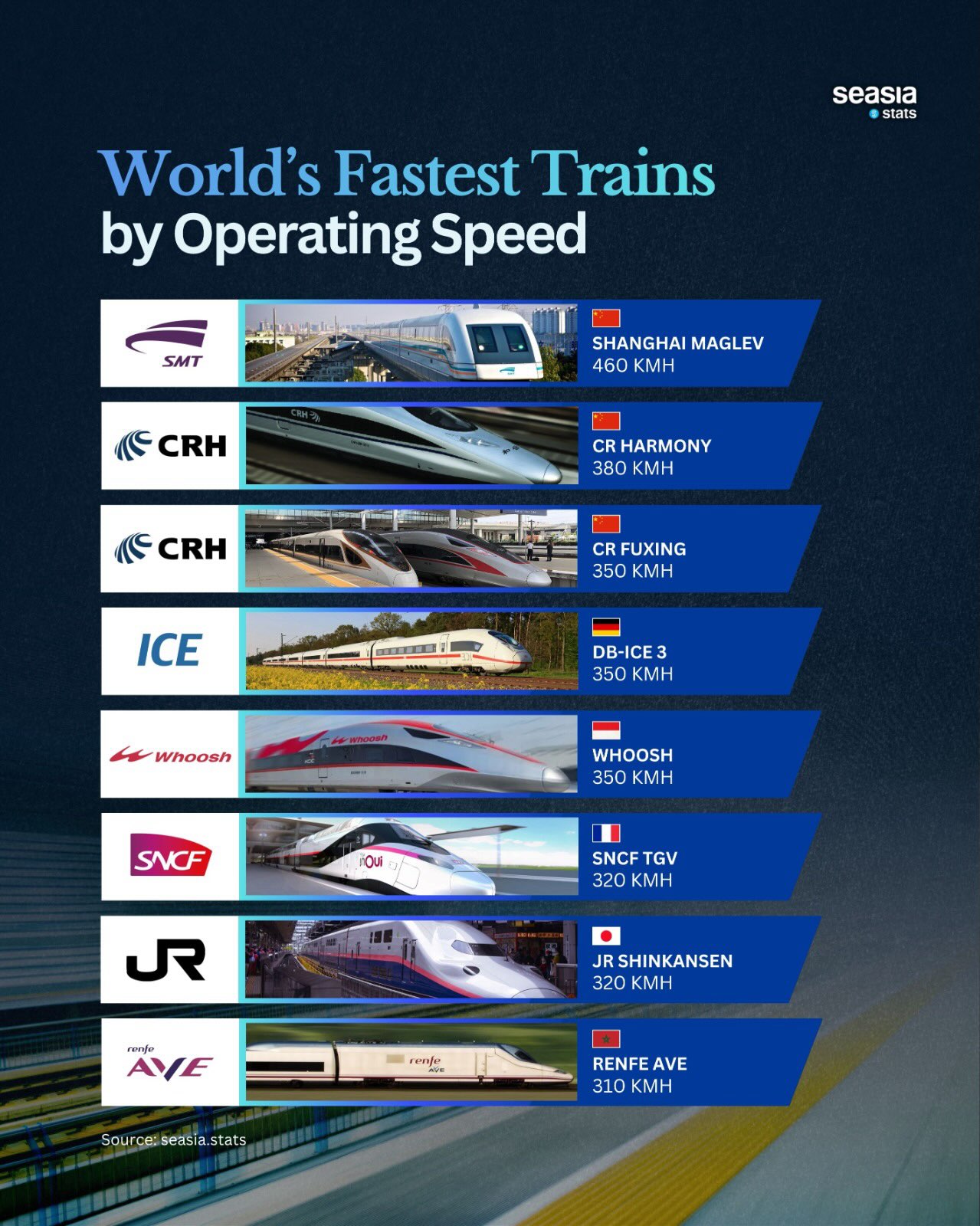
China still dominates the high-speed rail game with three top fastest trains in the world.

High-speed rail has transformed modern transportation by making travel faster, more efficient, and environmentally friendly. Around the world, advanced railway systems connect major cities in just a few hours while showcasing remarkable achievements in engineering and technology.
The fastest trains represent decades of innovation, offering passengers comfort, safety, and reliability at extraordinary speeds.
Leading the world is the Shanghai Maglev, which reaches an operating speed of 460 km/h. Using magnetic levitation technology instead of conventional wheels and rails, the train floats above the track, minimizing friction and allowing it to achieve exceptional speed.
Serving the route between Shanghai Pudong International Airport and the city, it remains one of the most impressive examples of commercial high-speed transportation.
China also operates two of the world's fastest conventional high-speed trains. The CR Harmony can reach 380 km/h, while the newer CR Fuxing operates at speeds of up to 350 km/h.
These trains form the backbone of China's extensive high-speed rail network, connecting hundreds of cities and carrying millions of passengers each year with outstanding efficiency.
Germany's DB-ICE 3 is another engineering milestone, capable of operating at 350 km/h. Known for its advanced design and passenger comfort, the train has become a symbol of modern European rail travel.
Joining this elite group is Whoosh, Indonesia's first high-speed railway, which also reaches 350 km/h. Connecting Jakarta and Bandung, Whoosh represents a significant leap forward in Southeast Asia's transportation infrastructure.
France's SNCF TGV has long been recognized as one of the pioneers of high-speed rail. Operating at speeds of 320 km/h, the TGV has inspired the development of similar systems around the world while continuing to provide fast and reliable service across France and neighboring countries.
Japan's renowned JR Shinkansen, also operating at 320 km/h, has earned an international reputation for exceptional punctuality, safety, and efficiency. Since its introduction in 1964, the Shinkansen has become a global benchmark for high-speed rail technology.
Completing the list is Spain's RENFE AVE, which reaches speeds of 310 km/h. The AVE network links major Spanish cities with comfortable and efficient service, contributing significantly to the country's economic and regional connectivity.
Together, these remarkable trains demonstrate how technological innovation continues to reshape transportation. By reducing travel times, supporting economic development, and offering a sustainable alternative to air and road travel, the world's fastest trains are helping define the future of mobility while bringing people and cities closer than ever before.