

The Fittest Countries in the World
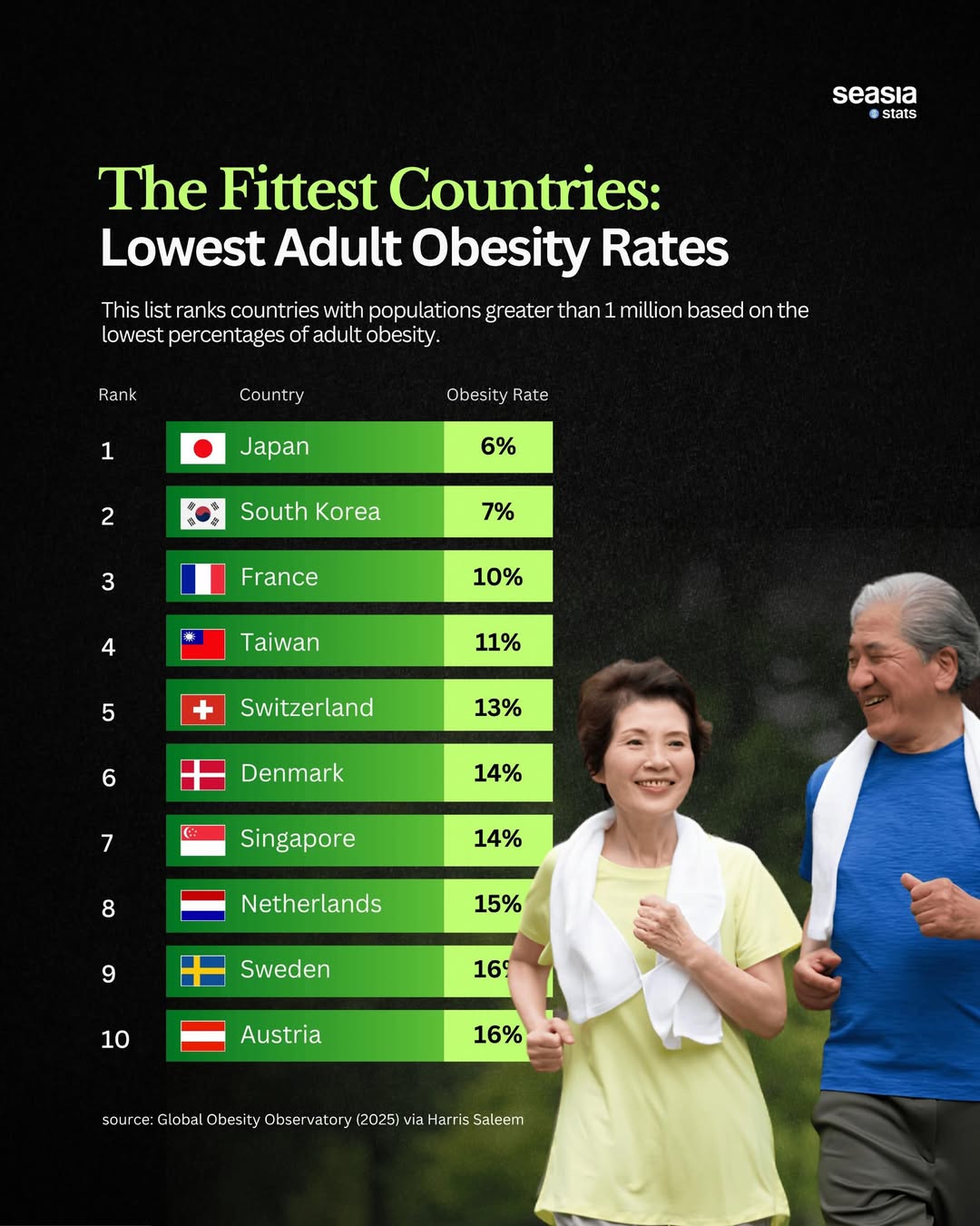
Citizens of these countries are the fittest in the world, with the least obesity rates.

Maintaining a healthy population has become a major challenge for many countries as modern lifestyles increasingly encourage inactivity and unhealthy eating habits.
However, several nations continue to stand out for their remarkably low obesity rates and strong cultures of fitness, balanced nutrition, and active living. These countries demonstrate how lifestyle choices, public health policies, and traditional diets can contribute to healthier societies.
Japan ranks as the fittest country in the world, with an obesity rate of only 6%. The country is widely known for its healthy food culture, smaller portion sizes, and active daily routines.
Traditional Japanese meals often include fish, rice, vegetables, and fermented foods, all of which support long-term health. Walking and public transportation are also common parts of everyday life in Japan.
South Korea follows closely with a 7% obesity rate. Korean cuisine emphasizes vegetables, seafood, fermented dishes such as kimchi, and moderate portions. In addition, many South Koreans maintain active lifestyles through walking, hiking, and outdoor exercise. Health awareness and beauty culture also encourage people to stay physically fit.
France has one of the lowest obesity rates in Europe at 10%. Despite its famous pastries and rich cuisine, the French approach to eating focuses on moderation and quality rather than excessive consumption. Meals are often enjoyed slowly, with fresh ingredients and balanced nutrition playing an important role in everyday diets.
Taiwan records an obesity rate of 11%, supported by a food culture rich in vegetables, seafood, tofu, and tea-based beverages. Busy urban lifestyles also encourage walking and cycling, helping people stay active throughout the day.
Switzerland maintains a low obesity rate of 13%, thanks to strong outdoor sports traditions such as hiking, skiing, and cycling. The country’s emphasis on physical activity and high-quality healthcare contributes significantly to public fitness levels.
Denmark and Singapore both report obesity rates of 14%. Denmark promotes cycling as a major form of transportation, while Singapore encourages healthy living through public fitness campaigns, clean urban planning, and access to recreational spaces.
The Netherlands follows with a 15% obesity rate. Dutch cities are famously bicycle-friendly, making daily physical activity a natural part of life. Sweden and Austria each record obesity rates of 16%, supported by active lifestyles, outdoor recreation, and strong healthcare systems.
These countries show that maintaining low obesity rates is not only about dieting but also about creating environments that encourage movement, balanced eating, and healthier habits. Their success offers valuable lessons for the rest of the world as global health challenges continue to grow.