

The Largest Apparel Retail Groups in the World
Are you wearing something from one of these largest apparel retail groups in the world?

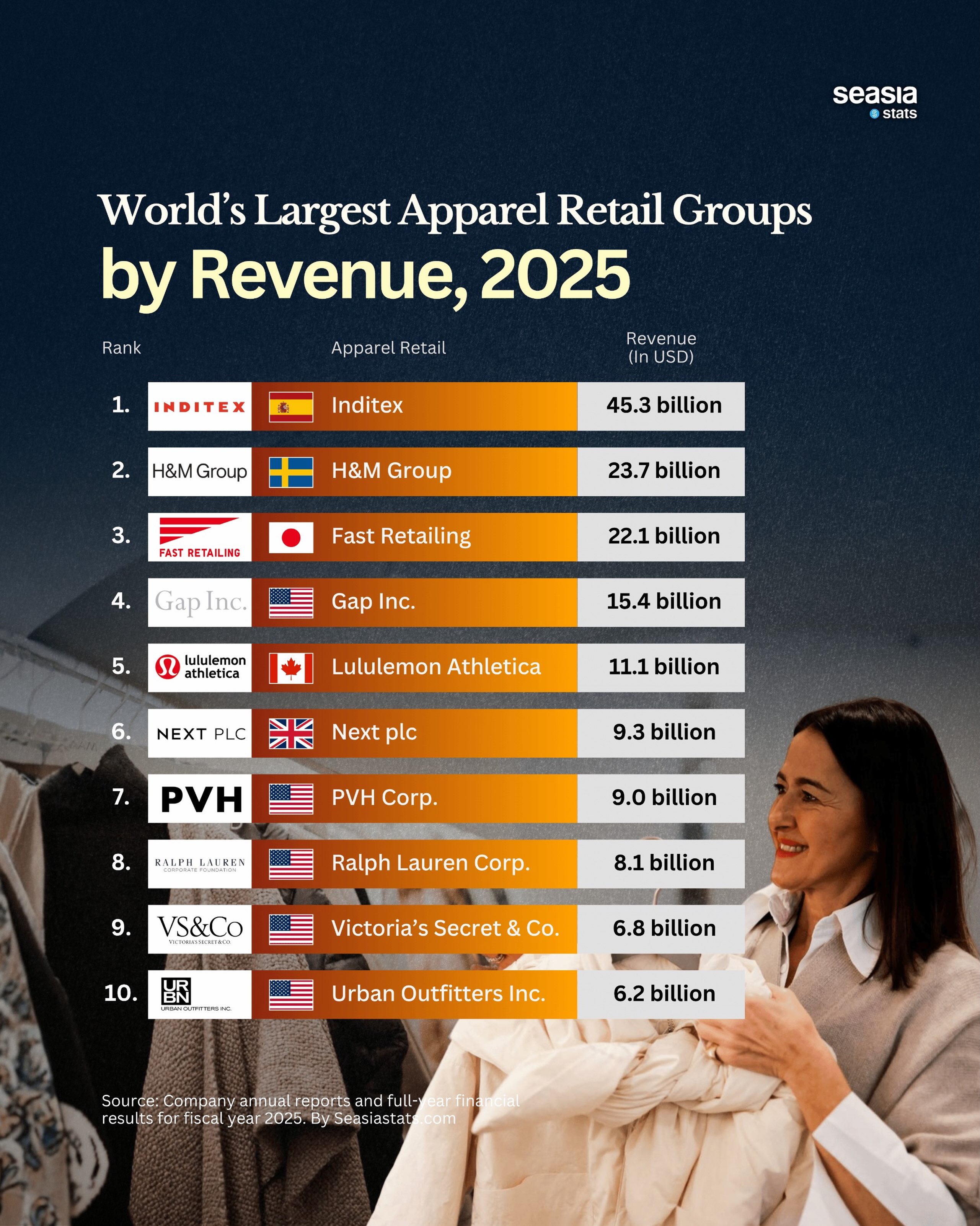
The fashion retail industry remains one of the most competitive sectors in the global economy, with leading companies generating billions of dollars in annual revenue through extensive store networks, e-commerce platforms, and globally recognized brands.
Based on 2025 revenue in U.S. dollars, the world's largest fashion retail groups continue to demonstrate their ability to adapt to changing consumer preferences while expanding their international presence.
Spain's Inditex remains the world's largest fashion retail group with annual revenue of US$45.3 billion. The company operates several well-known brands, including Zara, Pull&Bear, Massimo Dutti, Bershka, Stradivarius, Oysho, and Zara Home.
Its fast-response supply chain and ability to quickly translate fashion trends into retail products have helped maintain its leadership position.
Sweden's H&M ranks second with US$23.7 billion in revenue. Known for offering affordable fashion to customers worldwide, H&M has built a strong global presence while expanding its sustainability initiatives and digital retail operations. The company continues to invest in both physical stores and online shopping experiences.
Japan's Fast Retailing occupies third place with US$22.1 billion in revenue. Best known for its flagship Uniqlo brand, the company focuses on high-quality everyday clothing rather than fast-changing fashion trends. Its emphasis on functional apparel and international expansion has driven steady growth across Asia, Europe, and North America.
The United States is represented by several major retailers. The highest on the list is Gap Inc. on fourth rank with US$15.4 billion in revenue through brands such as Gap, Old Navy, Banana Republic, and Athleta. Canada's Lululemon Athletica follows with US$11.1 billion, reflecting the continued popularity of premium athletic and lifestyle apparel.
The United Kingdom's Next plc generated US$9.3 billion in revenue, supported by its successful combination of retail stores, online sales, and third-party brand partnerships. Meanwhile, PVH Corp., owner of Calvin Klein and Tommy Hilfiger, recorded US$9.0 billion in revenue, demonstrating the enduring strength of its global fashion brands.
Ralph Lauren Corp. secured eighth place with US$8.1 billion in revenue. Its timeless luxury-inspired apparel and accessories continue to appeal to consumers worldwide. Victoria's Secret & Co. followed with US$6.8 billion, maintaining its position as a leading lingerie and beauty retailer while reshaping its brand identity for modern consumers.
Rounding out the top ten is Urban Outfitters Inc., which generated US$6.2 billion in revenue through brands including Urban Outfitters, Anthropologie, Free People, and Nuuly. The company continues to attract younger consumers by combining fashion, lifestyle products, and digital innovation.
Together, these ten retail groups generated more than US$156 billion in combined revenue during 2025, highlighting the continued strength of the global fashion industry despite evolving consumer trends, economic uncertainty, and increasing competition from online retailers.
Their ongoing investments in sustainability, digital commerce, and international expansion will likely shape the future of fashion retail for years to come.