

The Longest Airport Runways in Southeast Asia
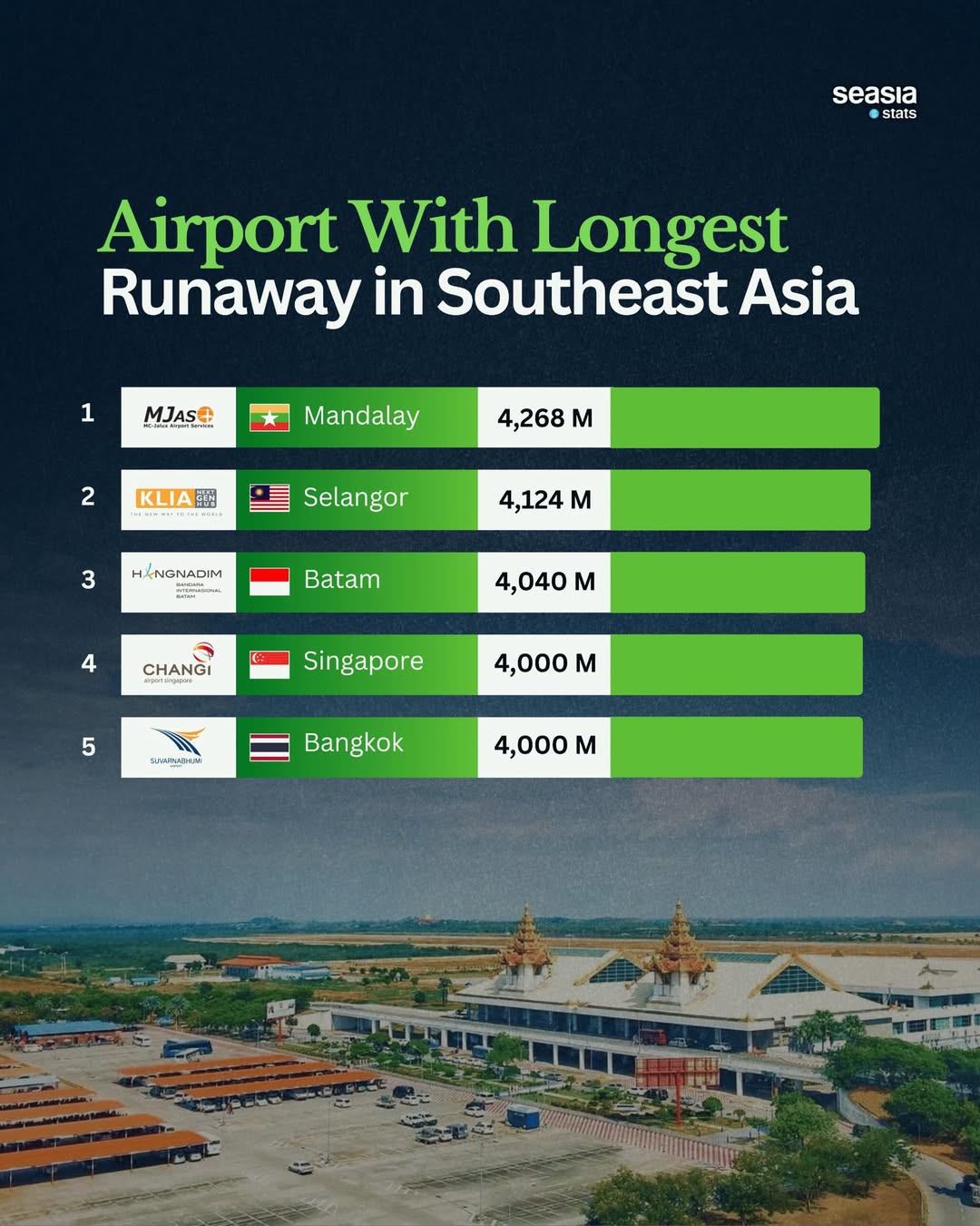
There are 5 airports in Southeast Asia with runways that stretch for 4,000 meters long or more.

Southeast Asia is home to some of the world’s busiest aviation hubs, connecting millions of travelers across the region and beyond. One of the most important pieces of airport infrastructure is the runway.
Longer runways allow airports to accommodate larger aircraft, support long-haul international flights, and ensure safer operations under varying weather and load conditions. Among the airports in Southeast Asia, five stand out for having the region’s longest runways.
At the top of the list is Mandalay International Airport in Myanmar, which boasts a runway measuring 4,268 meters. Opened in 2000, the airport was designed to handle large commercial aircraft and future traffic growth. Its exceptionally long runway can accommodate virtually any passenger aircraft in operation today, making it the longest runway in Southeast Asia.
In second place is Kuala Lumpur International Airport (KLIA) in Malaysia. With a runway length of 4,124 meters, KLIA serves as one of the region’s most important aviation gateways. The airport is known for its modern facilities and extensive international network, handling flights to destinations across Asia, Europe, the Middle East, and Oceania.
Indonesia’s Hang Nadim International Airport in Batam ranks third with a runway measuring approximately 4,040 meters. The airport was built with long-term expansion in mind and has one of the longest runways in the country. Its length enables the operation of wide-body aircraft and supports the airport’s ambitions to become a larger regional aviation hub.
Sharing fourth place are Singapore Changi Airport and Thailand’s Suvarnabhumi Airport, both featuring runways that are 4,000 meters long.
Changi Airport is internationally recognized for its efficiency, passenger experience, and global connectivity, while Suvarnabhumi serves as Thailand’s primary international gateway and one of the busiest airports in Southeast Asia. Their long runways allow them to accommodate high volumes of traffic and operate some of the world’s largest aircraft.
These airports demonstrate how runway length plays a vital role in supporting aviation growth and international connectivity. As air travel demand continues to increase across Southeast Asia, such infrastructure will remain essential for handling larger aircraft, expanding route networks, and strengthening the region’s position as a major global aviation market.