

The Loudest Countries in the World
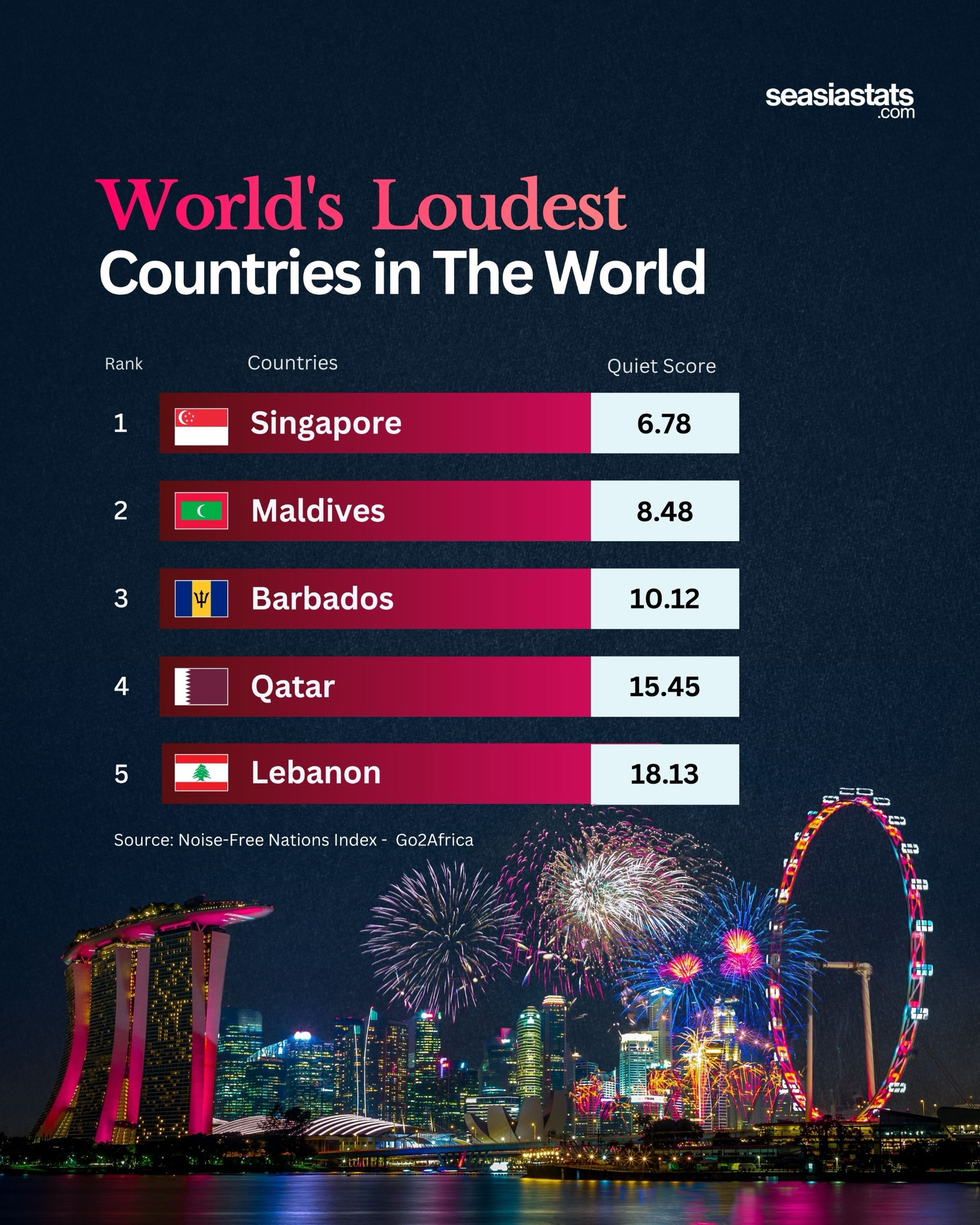
Singapore is the loudest country in the world with the score of 6.78.

Noise pollution is an often-overlooked environmental problem that can affect people’s comfort, concentration, sleep, and overall quality of life.
According to the Noise-Free Nations Index, five countries stand out for their noise levels. Their scores range from 6.78 to 18.13, with higher scores indicating greater noise levels according to the index.
At the top of the list is Singapore, with a score of 6.78. Although Singapore is a highly urbanized and densely populated country, its relatively low score among these five countries suggests that noise is comparatively well controlled.
Busy roads, construction, commercial areas, and large numbers of residents can all contribute to urban noise, making effective noise management especially important.
The Maldives follows with a score of 8.48. Known around the world for its peaceful beaches and tropical islands, the Maldives may seem like an unlikely country to appear on a list of noisy nations. However, noise levels can vary considerably between quieter resort islands and more densely populated areas, particularly around the capital and transportation hubs.
Barbados, with a score of 10.12, ranks third among the five. As a popular Caribbean destination, the country experiences activity from tourism, transportation, businesses, and entertainment. These activities can contribute to noise, particularly in busy urban and tourist areas.
In fourth place is Qatar, which records a score of 15.45. Rapid urban development, construction, traffic, and economic activity can create significant sources of environmental noise. The country's fast-growing cities have experienced major infrastructure development, which can increase noise exposure in populated areas.
Finally, Lebanon has the highest quiet score on this list, at 18.13. Its relatively high level may be associated with concentrated urban activity, traffic, construction, and other everyday sources of noise. Major cities and busy neighborhoods can be particularly affected.
Overall, these figures demonstrate that noise pollution can occur in countries with very different environments, economies, and lifestyles. From highly developed cities to tropical island nations, managing unnecessary noise is important for creating healthier and more comfortable communities.
The Noise-Free Nations Index provides one way to compare these countries and highlights the importance of paying attention to an environmental issue that is often heard but not always noticed.