

The Most Spoken Languages That Are Not National Languages
These languages have so many speakers, yet don't have a status of national language in any country.

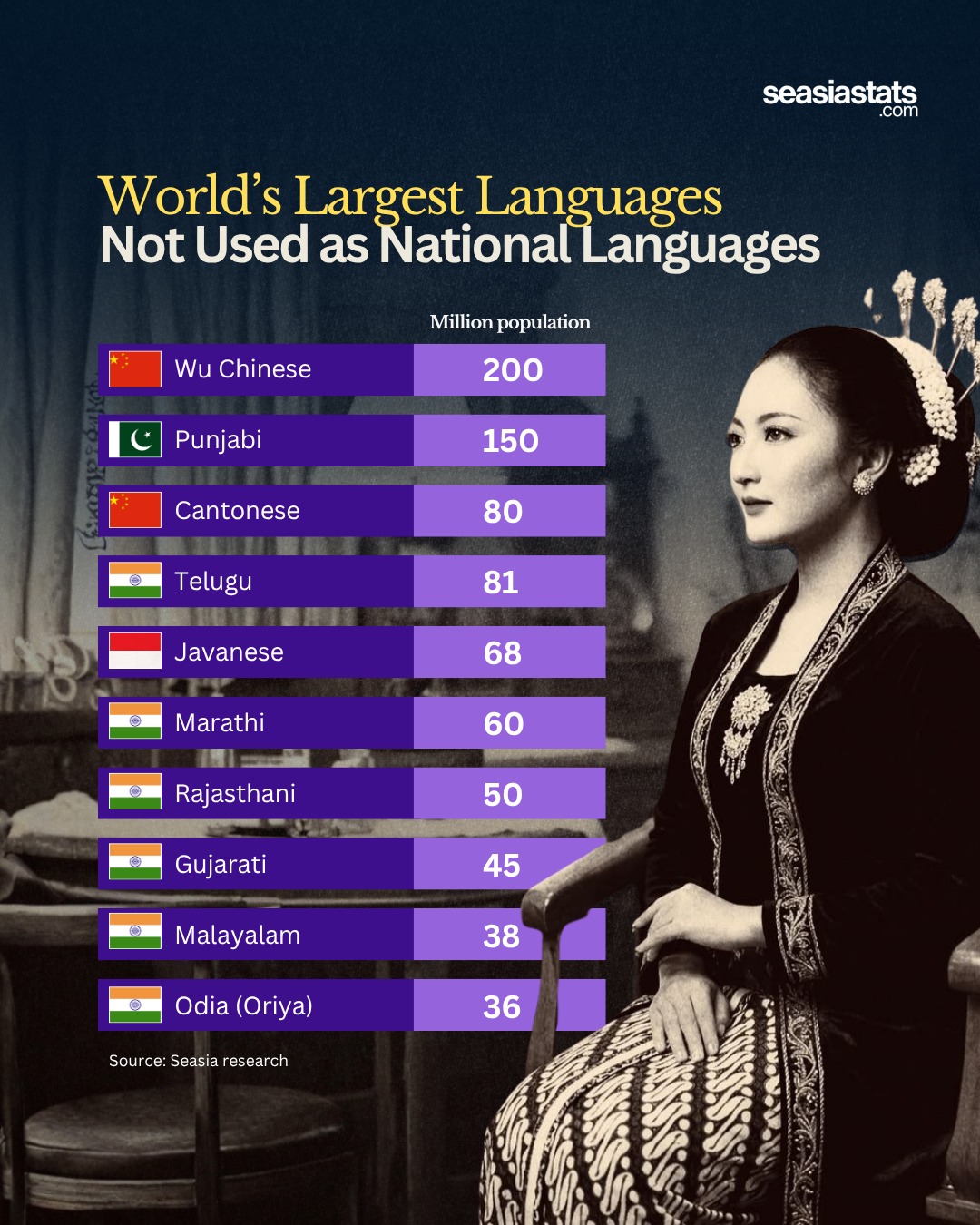
Languages are an important part of human culture, identity, and communication. Although some languages are recognized as national or official languages, many others have millions of speakers without having the same national status.
These languages are widely used in everyday conversations, education, business, entertainment, and regional communication.
Wu Chinese is one of the largest language varieties in China, with approximately 200 million speakers. It is mainly spoken in Shanghai, Zhejiang Province, and surrounding areas. Despite its large number of speakers, Mandarin Chinese holds the dominant official position in China.
Punjabi, spoken by around 150 million people, is widely used in Pakistan and India. Although Punjabi has official status in certain regions, it is not the national language of either country.
Cantonese has approximately 80 million speakers, particularly in Hong Kong, Macau, and Guangdong Province in southern China. It is famous for its distinctive pronunciation, cultural traditions, and influence on Chinese cinema and music.
Telugu, with around 81 million speakers, is primarily spoken in the Indian states of Andhra Pradesh and Telangana. It is one of India's constitutionally recognized scheduled languages and has a rich literary tradition.
Javanese, spoken by approximately 68 million people, is one of Indonesia's most widely spoken regional languages. It is especially common in Central Java, East Java, and Yogyakarta. Although it is deeply rooted in Indonesian culture, Indonesian is the country's national language.
Marathi has around 60 million speakers, mainly in Maharashtra, India. Rajasthani, with approximately 50 million speakers, is used across Rajasthan and neighboring areas. Gujarati, spoken by about 45 million people, is prominent in Gujarat, India, and among Indian communities worldwide.
Malayalam has approximately 38 million speakers, primarily in Kerala, India, and is known for its extensive literature and distinctive writing system. Odia, also called Oriya, has around 36 million speakers, mainly in Odisha, India.
These languages demonstrate that a language's importance cannot be measured solely by its national status. Each has a unique history, literature, and cultural significance. However, speaker estimates vary depending on how languages and dialects are classified.
Preserving and promoting these languages is essential for protecting cultural diversity and ensuring that future generations can continue to use and appreciate their linguistic heritage.