

The Safest Airlines in the World in 2026
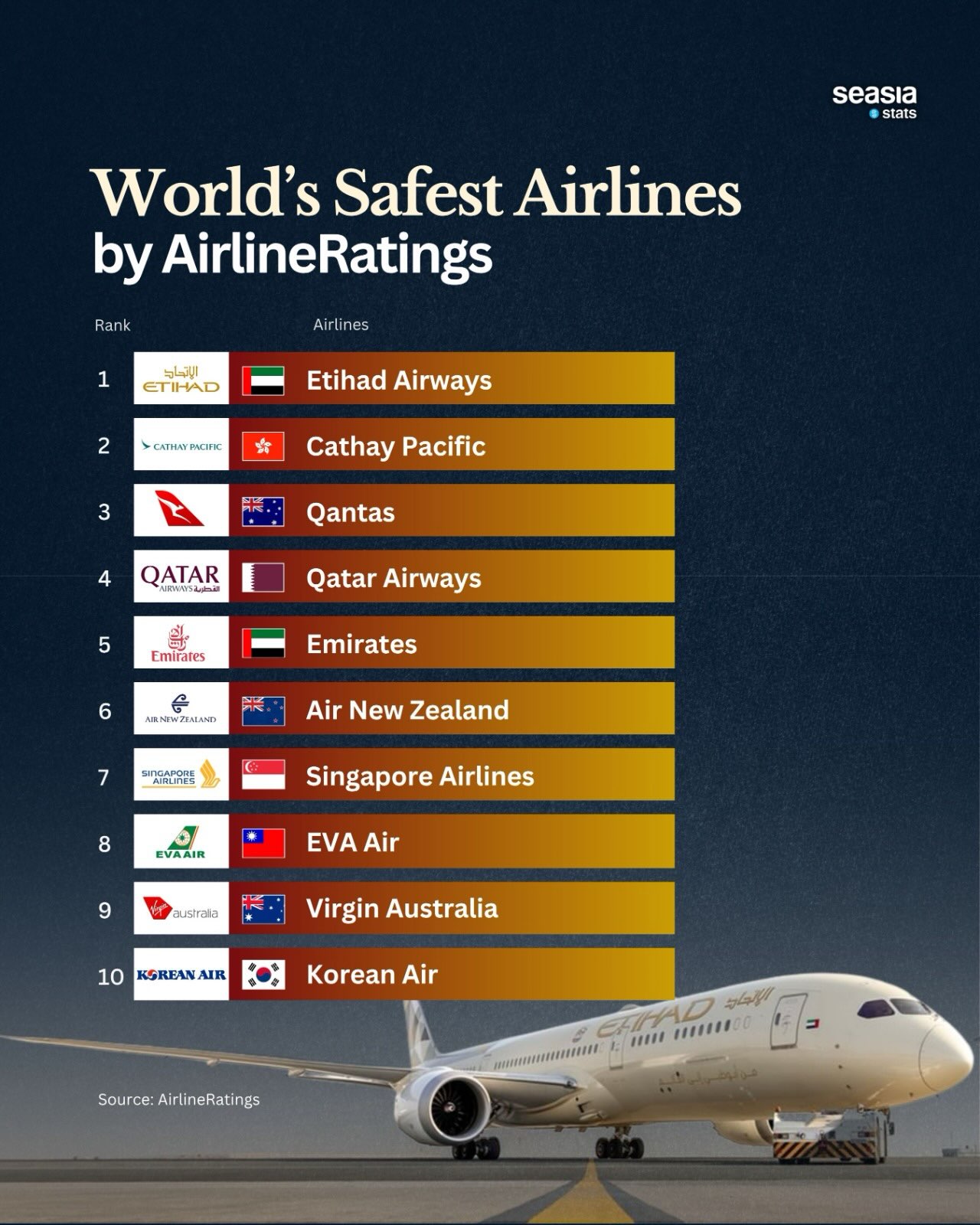
According to AirlineRatings, Etihad Airways is the safest airline in the world for 2026.

Air travel is widely regarded as one of the safest ways to travel, thanks to continuous improvements in aircraft technology, strict aviation regulations, and highly trained flight crews. However, some airlines stand out for their exceptional commitment to passenger safety.
According to AirlineRatings’ 2026 rankings, ten airlines have earned recognition as the safest full-service carriers in the world, demonstrating outstanding safety standards and operational excellence.
Leading the list is Etihad Airways, based in Abu Dhabi, United Arab Emirates. Ranked number one, Etihad is recognized for its modern aircraft fleet, advanced cockpit technology, excellent pilot training, and strong turbulence management practices.
Following closely in second place is Cathay Pacific, Hong Kong’s flag carrier, which has established a strong reputation for maintaining high operational standards and prioritizing passenger well-being.
In third place is Qantas, Australia's national airline, which is widely respected for its extensive aviation experience and long-standing commitment to safety innovation. Meanwhile, Qatar Airways, ranked fourth, continues to demonstrate its dedication to safety through modern aircraft, comprehensive crew training, and rigorous operational procedures.
Completing the top five is Emirates, another major airline from the United Arab Emirates, known for its advanced fleet and strong emphasis on international aviation safety standards.
The sixth position belongs to Air New Zealand, an airline recognized for its consistent safety performance and commitment to maintaining high standards across its operations.
Next is Singapore Airlines, which returns to the top ten following improvements and continued investment in safety management and crew training. Ranked eighth, EVA Air from Taiwan also earns recognition for its strong safety culture, modern aircraft, and commitment to reliable operations.
Meanwhile, Australia's Virgin Australia takes ninth place, reflecting its continued efforts to maintain safe and efficient flight operations. Completing the top ten is Korean Air, South Korea's flag carrier, which has strengthened its safety practices through operational improvements, technological investment, and comprehensive employee training.
AirlineRatings determines its rankings by evaluating several important factors, including incident rates, aircraft age, serious incidents, pilot training, international safety audits, and turbulence prevention. These criteria help provide a broader picture of an airline's commitment to passenger protection.
Ultimately, these ten airlines demonstrate that safety remains a fundamental priority in modern aviation. Although their rankings differ, each carrier represents a high standard of operational excellence.
For travelers around the world, these airlines offer reassuring examples of how continuous investment, professional training, and strong safety cultures contribute to safer journeys.