

The Safest Cities in Southeast Asia
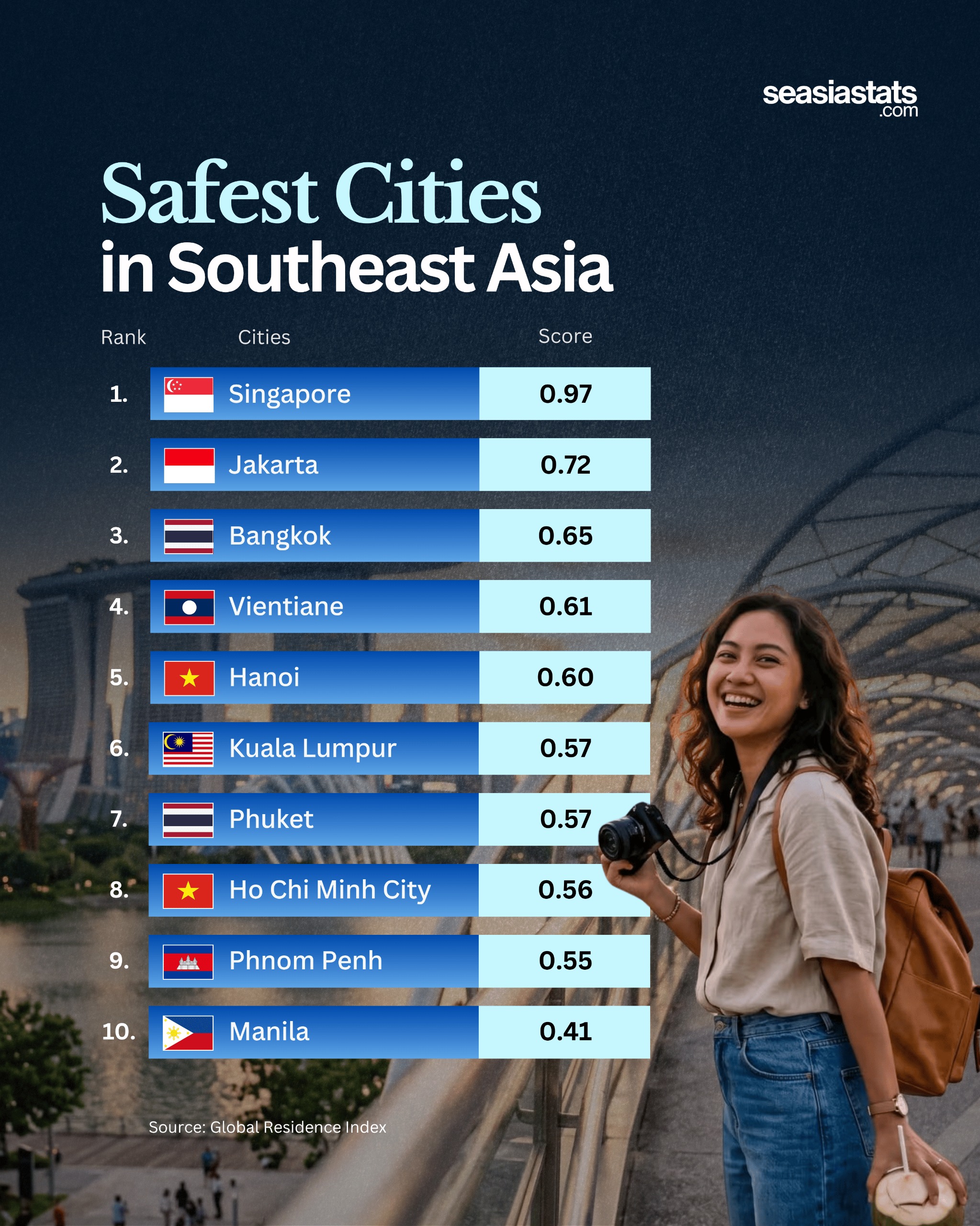
Singapore is still the safest city in Southeast Asia with the score of 0.97.

Safety is one of the most important considerations for people choosing where to live, work, study, or travel. A safe city provides residents and visitors with greater confidence in their daily activities while supporting economic growth, tourism, and investment.
According to the Global Residence Index, several Southeast Asian cities stand out for their strong safety performance, reflecting effective public security, stable communities, and well-developed urban environments.
At the top of the ranking is Singapore, which achieves an outstanding safety score of 0.97. Widely recognized for its low crime rates, efficient law enforcement, and clean public spaces, Singapore consistently ranks among the safest cities in the world.
Its strict legal system, reliable infrastructure, and high standard of living contribute to an environment where both residents and international visitors feel secure.
Jakarta, Indonesia, ranks second with a score of 0.72. As one of Southeast Asia's largest metropolitan areas, Jakarta has continued to improve urban safety through enhanced policing, better public services, and investments in transportation and digital infrastructure. Its ranking reflects ongoing efforts to create a safer environment for its growing population.
Third place goes to Bangkok, Thailand, with a score of 0.65. As one of Asia's leading tourism destinations, Bangkok combines a vibrant urban lifestyle with continuous improvements in public safety and emergency services. The city remains an attractive destination for both business travelers and tourists.
Vientiane, the capital of Laos, ranks fourth with a score of 0.61, followed closely by Hanoi, Vietnam, at 0.60. Both cities are known for relatively low levels of violent crime and welcoming environments, making them increasingly popular among international visitors and expatriates.
Malaysia's capital, Kuala Lumpur, and Thailand's resort island of Phuket each receive a score of 0.57, sharing sixth place. Kuala Lumpur benefits from modern infrastructure and a well-developed urban environment, while Phuket combines a relaxed lifestyle with strong tourism-focused security measures.
Ho Chi Minh City, Vietnam's largest commercial center, follows with a score of 0.56. Its expanding economy and ongoing urban development have been accompanied by continued efforts to improve public safety. Phnom Penh, Cambodia, ranks ninth with 0.55, reflecting gradual improvements in security and public services as the city continues to modernize.
Completing the top ten is Manila, Philippines, with a score of 0.41. Although it records the lowest score among the cities listed, Manila remains a major economic and cultural hub, with ongoing initiatives aimed at strengthening public safety and urban management.
These rankings highlight the importance of safety in enhancing quality of life, attracting investment, and supporting sustainable urban development across the region.