

The US Dollar Is the Official Currency in These 8 Countries
When most people think of the US dollar, they picture American soil. But the reality is that the greenback stretches far beyond the borders of the United States

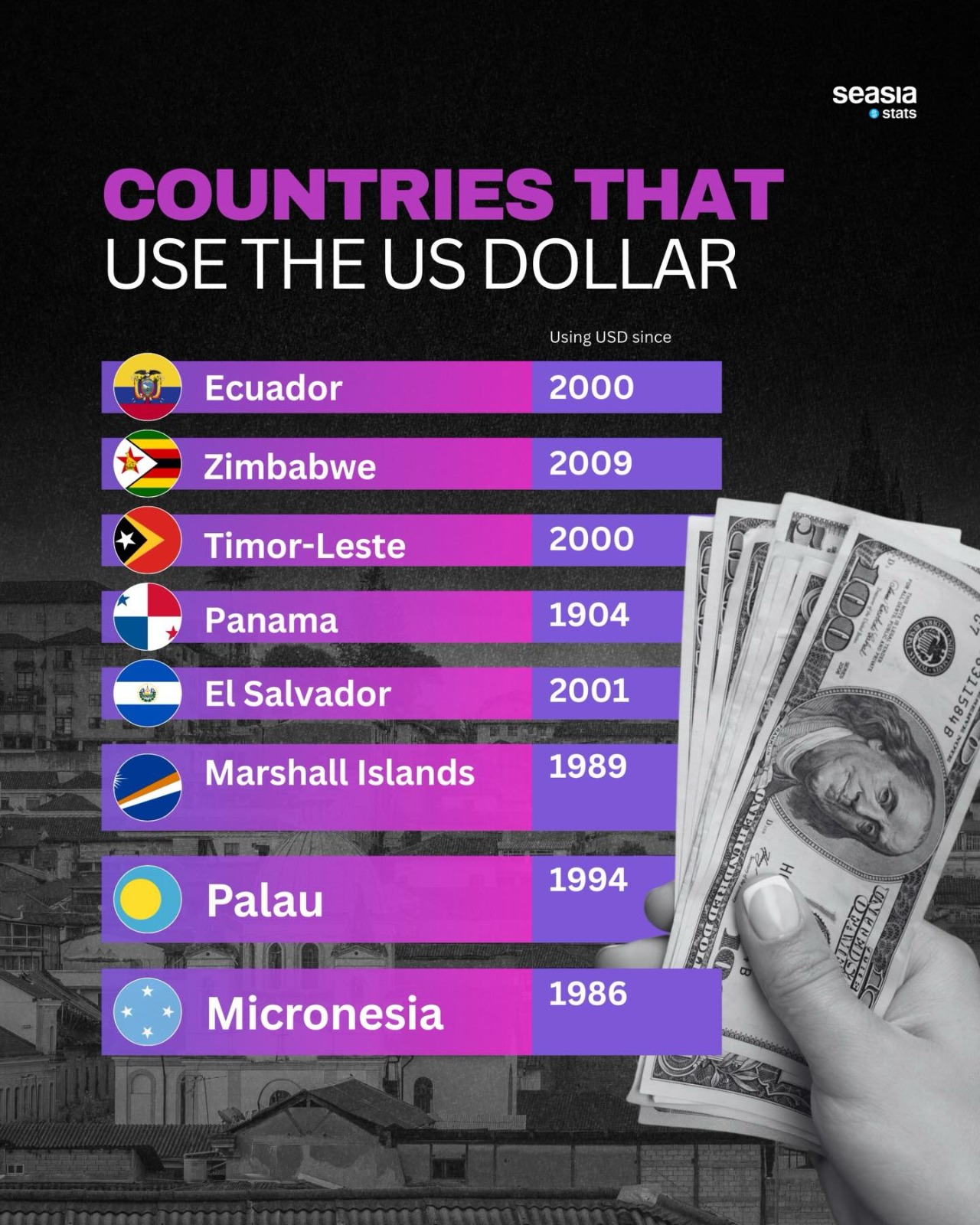
When most people think of the US dollar, they picture American soil. But the reality is that the greenback stretches far beyond the borders of the United States, serving as the official currency in eight countries spanning Latin America, Africa, and the Pacific. These nations have made the deliberate choice to trade, save, and build their economies using a currency printed thousands of miles away.
The motivations behind this decision differ from country to country. For Ecuador and El Salvador, dollarization was a response to severe economic instability and collapsing confidence in their own currencies. Zimbabwe adopted the dollar in 2009 as a last resort after experiencing one of the worst hyperinflation crises in recorded history, where its own currency had become virtually worthless. Panama, on the other hand, has been using the dollar since 1904, making it one of the longest-running cases of official dollarization in the world.
For smaller Pacific island nations like Micronesia, Palau, and the Marshall Islands, the story is somewhat different. Their adoption of the dollar is deeply tied to their political and historical relationships with the United States following independence arrangements in the latter half of the 20th century. Timor-Leste, one of the world's youngest nations, also chose the dollar upon gaining independence in the early 2000s as a practical measure to ensure financial credibility and stability.
What makes this phenomenon so fascinating is that none of these eight countries share a physical border with the United States. Yet each has concluded, for its own reasons, that surrendering monetary independence is a worthwhile trade-off for the stability and global credibility that the dollar provides. In a world where currency crises can devastate entire populations overnight, the appeal of anchoring an economy to the world's most dominant currency is easy to understand.
The reach of the US dollar outside American borders is a striking reminder of just how deeply intertwined global economies have become. It is not merely a symbol of American economic power, but a practical lifeline that sovereign nations across the globe have chosen to depend on, reflecting both the strengths and the complexities of the modern international financial system.