

The Various Names for Gasoline in Southeast Asia
How do Southeast Asians say "gasoline"?

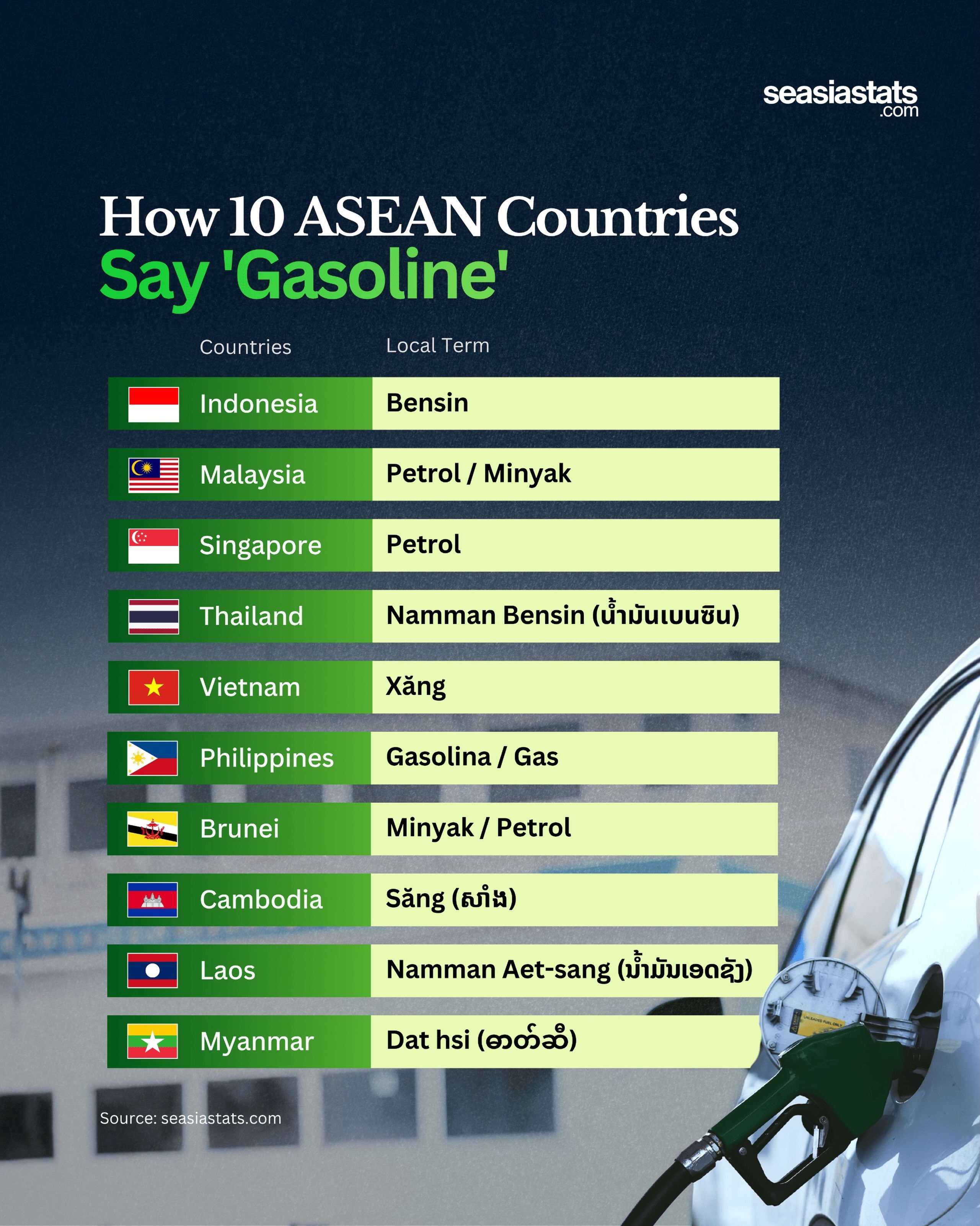
Although gasoline is the same essential fuel used to power millions of vehicles across Southeast Asia, the word people use for it varies considerably from one country to another.
These differences reflect the region's rich linguistic diversity, as well as historical influences from English, Spanish, French, and local languages. From "bensin" in Indonesia to "dat hsi" in Myanmar, each term tells a story about culture and language.
In Indonesia, gasoline is commonly called "bensin." The word comes from "benzene" which is a part of gasoline and has been part of everyday Indonesian vocabulary for decades and is widely understood throughout the country. Although different fuel grades are sold under various brand names, "bensin" remains the general term for gasoline.
In Malaysia, people usually say "petrol," following British English, or simply "minyak," which literally means "oil." In everyday conversation, "minyak" often refers to fuel when the context is clear, while "petrol" is commonly used in signs, advertisements, and official communication.
Like Malaysia, Singapore primarily uses the British English word "petrol." This reflects the country's historical ties to the United Kingdom, and the term is standard in daily conversation, road signs, and service stations.
In Thailand, gasoline is known as "namman bensin" (น้ำมันเบนซิน), which literally means "gasoline oil." The word combines the Thai term for oil or fuel, "namman," with "bensin," a borrowing related to the international word "benzene."
In Vietnam, gasoline is called "xăng" (often written as "xang" without Vietnamese diacritics). The term is unique to Vietnamese and is used nationwide for all types of gasoline sold at filling stations.
In the Philippines, motorists commonly use "gasolina" or simply "gas." "Gasolina" comes from Spanish, reflecting more than three centuries of Spanish influence, while the shortened "gas" has become increasingly common in everyday speech.
In Brunei, both "petrol" and "minyak" are widely used, much like in neighboring Malaysia. English is commonly spoken alongside Malay, making both terms familiar to most residents.
In Cambodia, gasoline is known as "sang." The word is widely used in Khmer and is recognized across the country at fuel stations and in daily conversation.
In Laos, people say "namman aet-sang," combining the Lao word for fuel with a term referring specifically to gasoline. Finally, in Myanmar, gasoline is called "dat hsi," the standard Burmese term used in everyday life.
Despite these linguistic differences, every term refers to the same vital fuel that keeps Southeast Asia's transportation systems moving. Together, these words highlight the region's remarkable cultural diversity while illustrating how languages evolve through history, trade, and international influence.