

The World's Annual Sunshine Hours
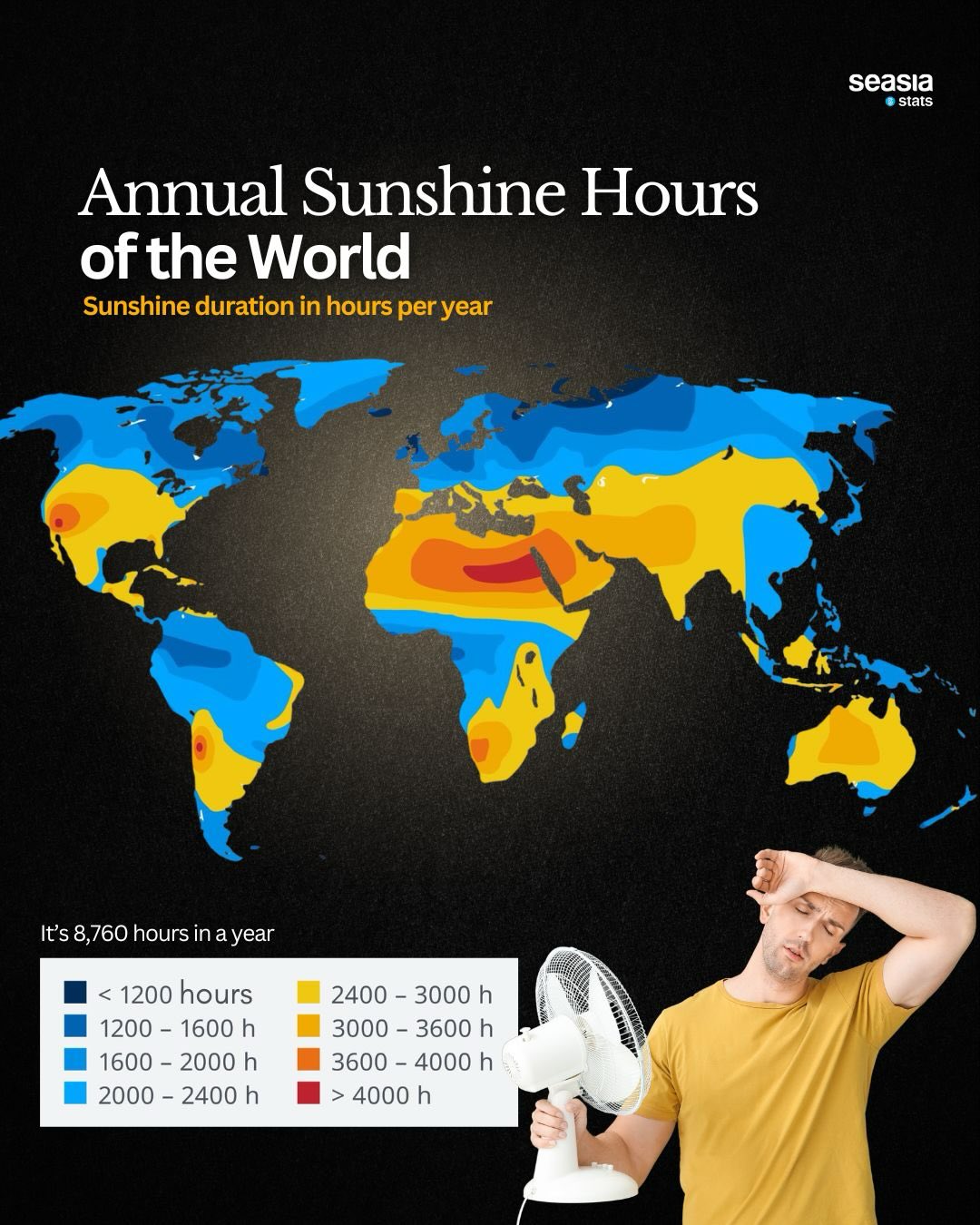
The global annual sunshine patterns vary greatly with Sahara Desert receives the most.

Sunshine is one of the most important natural factors influencing climate, agriculture, tourism, and daily life across the globe. The amount of sunshine a region receives each year varies greatly depending on latitude, weather systems, cloud cover, and geographic conditions.
While some places enjoy clear blue skies almost every day, others spend much of the year under clouds, rain, or snow. Annual sunshine hours are often used by climatologists to measure how much direct sunlight reaches a particular area over the course of a year.
The sunniest region on Earth is widely recognized as the Sahara Desert in North Africa. This vast desert receives more than 4,000 hours of sunshine annually, making it the global champion for solar exposure. In many parts of the Sahara, cloudless skies dominate nearly every season.
Countries such as Algeria, Libya, Egypt, and Chad experience intense sunlight throughout the year because of stable high-pressure systems and extremely dry air. In some desert locations, sunshine is present for more than 11 hours per day on average.
Beyond the Sahara, the broader Middle East and North Africa region also ranks among the sunniest parts of the world. Many countries in these areas receive between 3,000 and 4,000 hours of sunshine each year.
Places like Saudi Arabia, the United Arab Emirates, Sudan, and Morocco are famous for their bright skies and hot climates. These regions benefit from subtropical desert conditions that reduce rainfall and minimize cloud formation.
Australia is another continent known for high sunshine levels. Most parts of the country receive between 2,400 and 3,600 sunshine hours annually. Central and western Australia are particularly sunny due to their dry climate and vast open landscapes.
European countries around the Mediterranean Sea, especially Italy and Greece, also enjoy abundant sunlight within the same range. Their warm summers and relatively mild winters attract millions of tourists seeking sunny weather and pleasant coastal conditions.
In contrast, some of the coldest and cloudiest places on Earth receive far fewer sunshine hours each year. Canada and Alaska often experience long winters with limited daylight, especially in northern regions close to the Arctic Circle.
Much of Northern Europe, including countries such as Norway, Finland, and Iceland, also receives lower annual sunshine totals because of frequent cloud cover and short winter days.
Japan and the northern parts of South America similarly record between 1,200 and 2,400 sunshine hours annually. In these regions, seasonal storms, humid climates, and persistent cloud systems reduce direct sunlight. Tropical rainforests in northern South America, for example, often experience heavy rainfall and overcast skies for much of the year.
These differences in annual sunshine hours shape ecosystems, lifestyles, and even cultures around the world, demonstrating how strongly sunlight influences life on Earth.