

The World's Largest Mosques
The top two largest mosques in the world are located in Saudi Arabia, the birthplace of Islam.

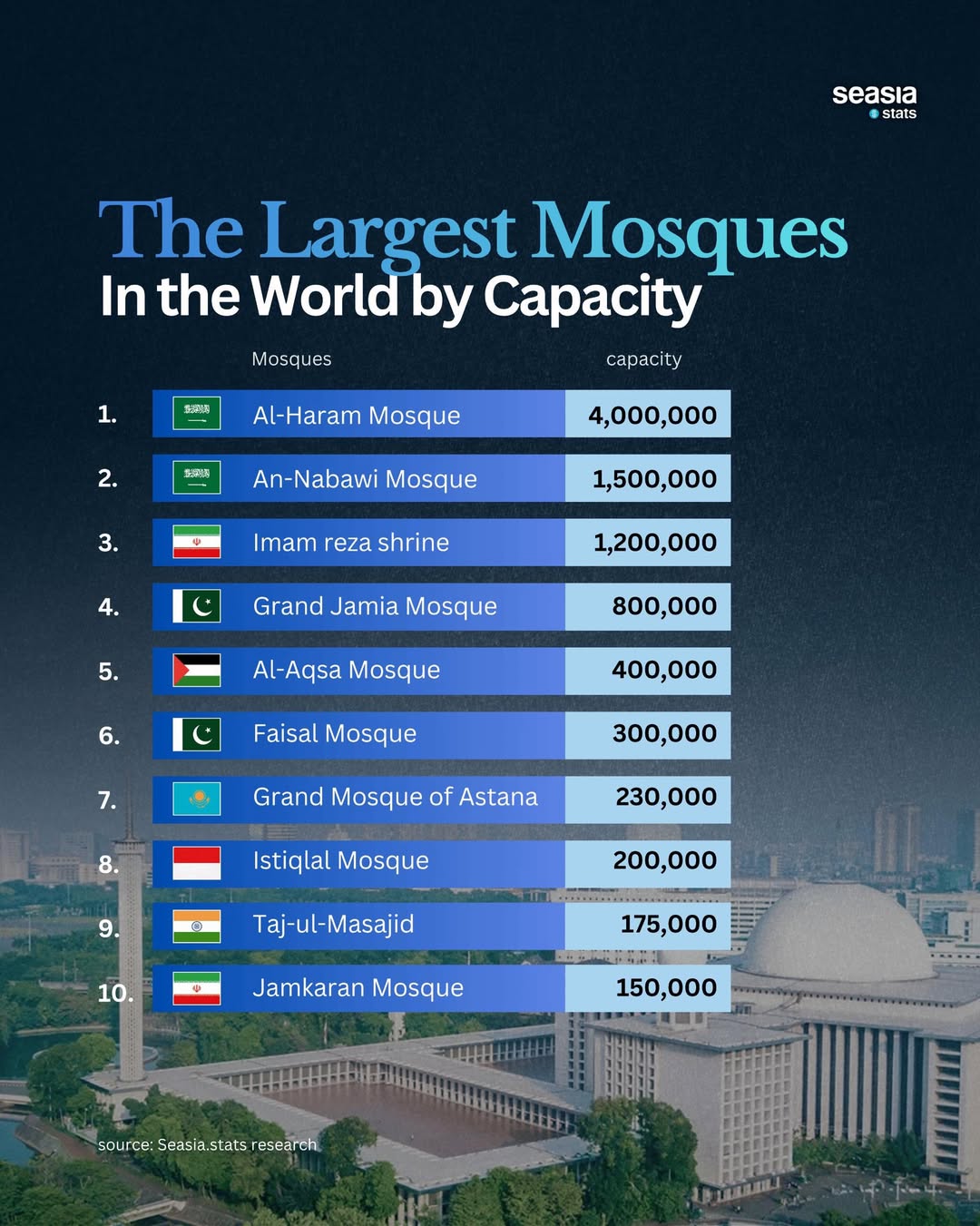
Mosques are among the most important religious and architectural landmarks in the Islamic world. Designed to accommodate large congregations of worshippers, some mosques can host hundreds of thousands or even millions of people during prayers and religious events. The following are the largest mosques in the world by worshipper capacity.
At the top of the list is Al-Haram Mosque in Mecca, Saudi Arabia, the holiest site in Islam. Surrounding the Kaaba, the mosque can accommodate approximately 4 million worshippers during peak pilgrimage periods, making it by far the largest mosque in the world.
Second is An-Nabawi Mosque in Medina, Saudi Arabia, with a capacity of around 1.5 million people. Established by the Prophet Muhammad, it is one of Islam’s most sacred sites and attracts millions of visitors annually.
The Imam Reza Shrine in Mashhad, Iran, ranks third with a capacity of approximately 1.2 million worshippers. This vast religious complex is centered around the shrine of Imam Reza, the eighth Imam in Shia Islam.
Pakistan’s Grand Jamia Mosque comes next, capable of accommodating about 800,000 worshippers. Located in Karachi, it is one of the largest mosque projects in South Asia and a major center of Islamic worship.
Al-Aqsa Mosque in Jerusalem has a capacity of approximately 400,000 people. As the third holiest site in Islam, it holds immense religious and historical significance for Muslims worldwide.
The Faisal Mosque in Islamabad, Pakistan, can host around 300,000 worshippers. Known for its unique contemporary design inspired by a desert tent, it remains one of the country's most recognizable landmarks.
Kazakhstan’s Grand Mosque of Astana ranks seventh with a capacity of about 230,000 worshippers. Opened in 2022, it is the largest mosque in Central Asia and showcases impressive Islamic architecture.
Indonesia’s Istiqlal Mosque, located in Jakarta, can accommodate approximately 200,000 worshippers. As the largest mosque in Southeast Asia, it symbolizes the nation’s religious diversity and independence.
The Taj-ul-Masajid in Bhopal, India, has a capacity of around 175,000 worshippers. Its name means “Crown of Mosques,” reflecting its grandeur and historical importance.
Completing the top ten is Jamkaran Mosque in Qom, Iran, which can host approximately 150,000 worshippers. It is a significant pilgrimage destination, especially among Shia Muslims.
Together, these magnificent mosques demonstrate the scale, beauty, and spiritual importance of Islamic architecture across different regions of the world.