

The World's Loneliest Countries
Loneliness is a serious issue in these ten countries.

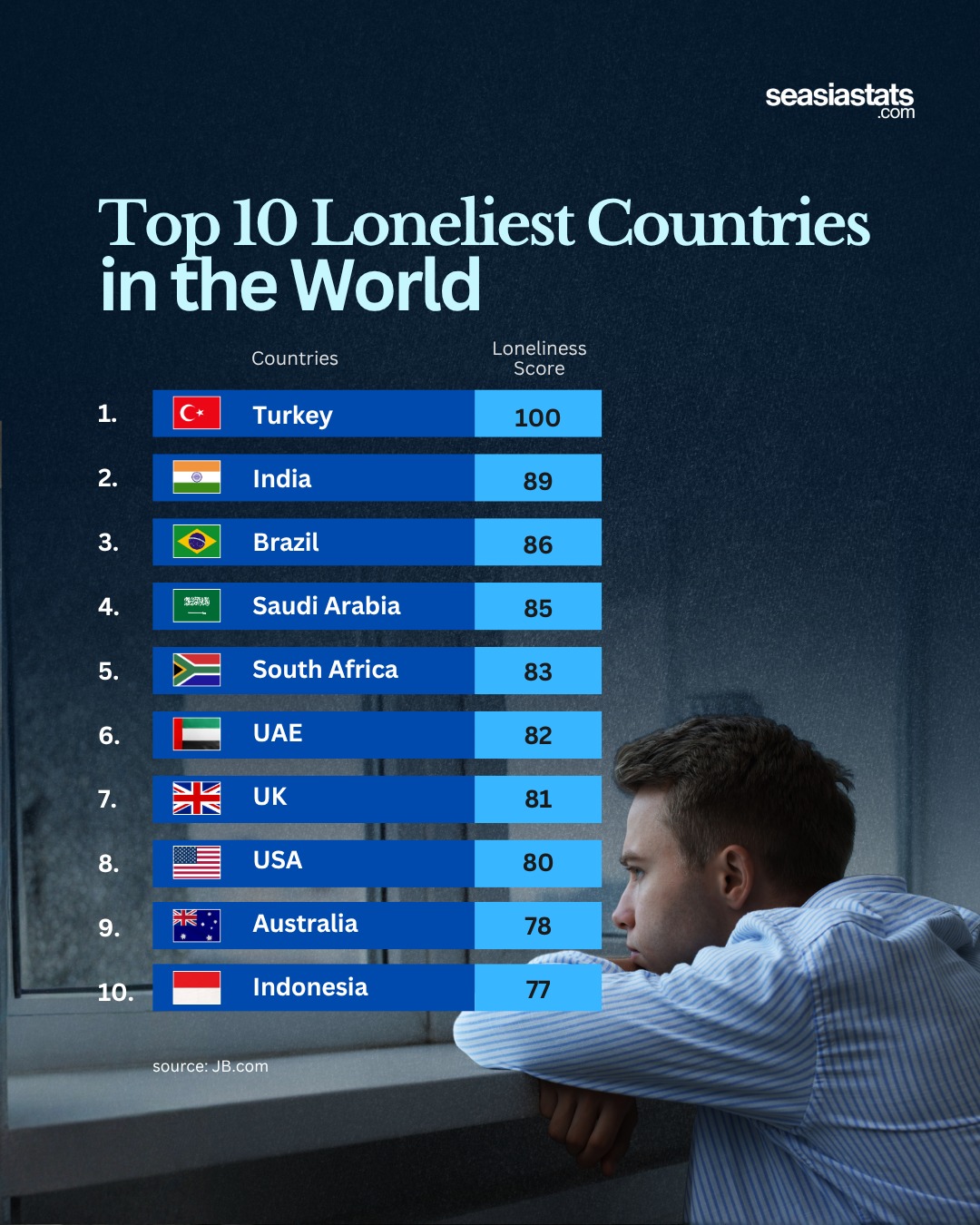
Loneliness is increasingly recognized as a major social issue worldwide, affecting individuals regardless of their age, culture, or background. A study published by JB.com identifies several countries where reported levels of loneliness are especially high.
The ranking takes into account various factors associated with loneliness, including social isolation, changing ways of life, urbanization, and the growing influence of digital communication on face-to-face relationships.
Turkey occupies first place as the world’s loneliest country, receiving a score of 100. This figure serves as the reference point for the other countries included in the study. Rapid urbanization, financial pressures, and changes in traditional social structures may all play a role in increasing feelings of isolation among residents.
India ranks second with a score of 89. Although the country has a huge population and traditionally strong family connections, modernization, migration toward cities, and demanding working lives have introduced new obstacles to maintaining close social relationships.
Educational and professional opportunities can also take people away from their established support systems.
Brazil comes third with a score of 86. The country is widely recognized for its lively social culture and strong traditions of community and celebration. Nevertheless, economic inequality, pressures associated with urban living, and changing lifestyles may leave some people experiencing social isolation.
Saudi Arabia ranks fourth with a score of 85. Significant economic and social changes have transformed the country in recent years. Shifts in employment patterns, family structures, and urban lifestyles may influence how connected people feel to their communities.
South Africa takes fifth place with a score of 83. Economic and social inequality, combined with geographical separation and community-related difficulties, can limit opportunities for people to develop and maintain meaningful relationships.
The United Arab Emirates records a score of 82. Its position as an international business center means that a large proportion of its population consists of expatriates. Many live thousands of kilometers away from relatives and established friendship networks, potentially increasing vulnerability to loneliness.
The United Kingdom ranks seventh with a score of 81. Loneliness is considered an important public health concern there, affecting people from different generations even in an era of widespread internet and digital communication.
The United States follows in eighth place with a score of 80. Increasing attention has been given to social isolation, reduced participation in community activities, and modern lifestyles that can make maintaining close personal relationships more difficult.
Australia ranks ninth with a score of 78. Despite its strong overall quality of life, its vast geography, remote communities, physical distance from relatives, and changing social habits can contribute to feelings of loneliness.
Indonesia completes the top ten with a score of 77. Continued urban development and modernization are transforming traditional community relationships, creating new challenges for preserving strong social connections.
Overall, the findings demonstrate that loneliness is not limited to any particular culture, economic system, or population. Tackling this growing issue will require stronger communities, deeper personal connections, and greater attention to social well-being in a world where people can be digitally connected while still feeling increasingly alone.