

The Worst Countries for Workers
Workers in these countries are having it the hardest.

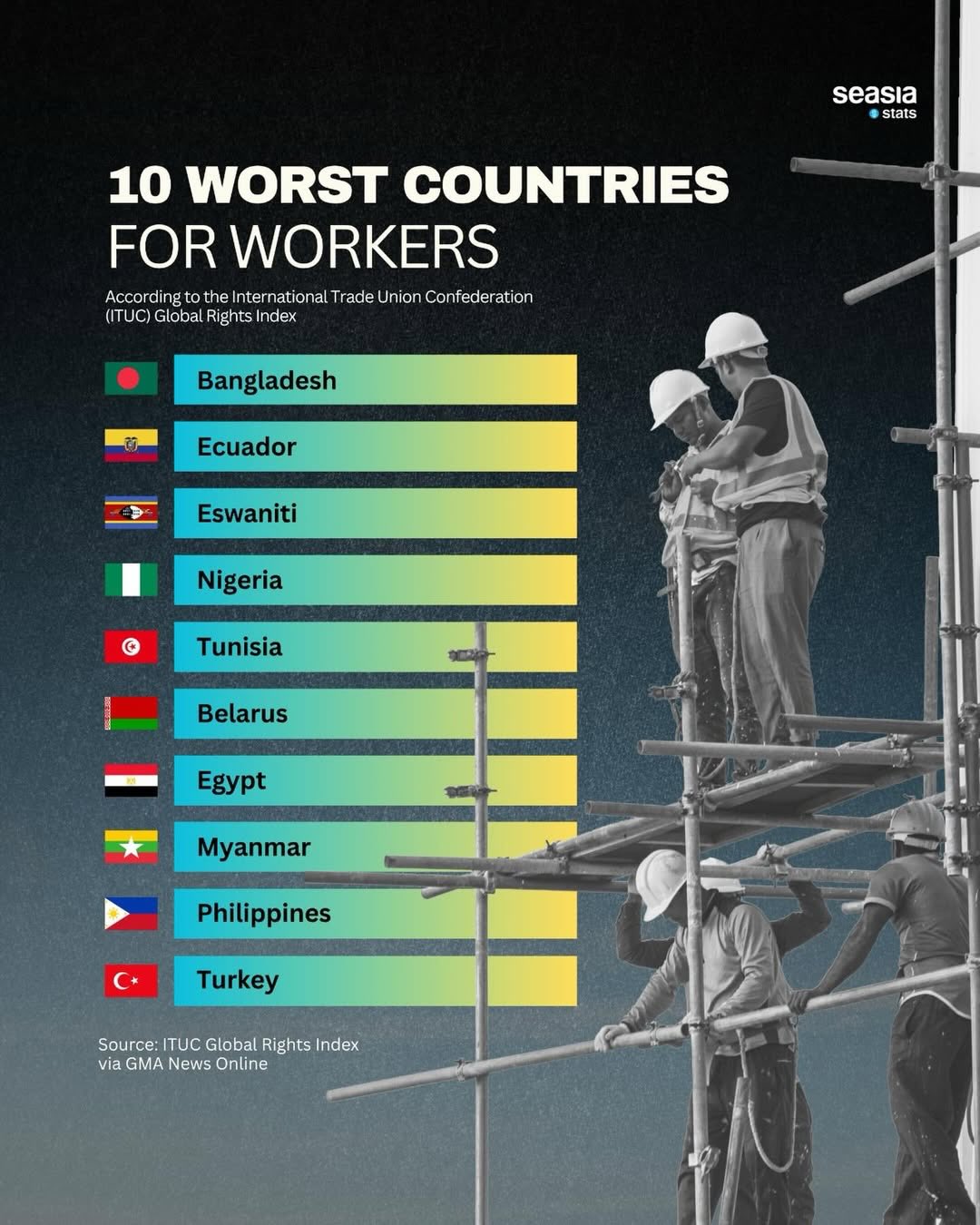
The International Trade Union Confederation (ITUC) Global Rights Index evaluates countries based on their protection of workers' rights, including freedom of association, collective bargaining, and the right to strike.
Countries receiving the lowest ratings are considered among the most difficult places in the world for workers, often due to restrictions on labor rights, unsafe working conditions, or limitations on independent trade unions.
Bangladesh remains a major global manufacturing hub, particularly in the garment industry. However, labor advocates have frequently raised concerns about workplace safety, wages, and barriers to union organizing. Similar concerns have also emerged in Ecuador, where workers and unions have reported challenges in exercising collective labor rights.
In Eswatini and Nigeria, labor organizations have highlighted restrictions on trade union activities and difficulties faced by workers seeking improved employment conditions. Economic pressures and political tensions can further complicate labor relations in both countries.
Tunisia, once viewed as a model of democratic transition in North Africa, has faced increasing concerns regarding civil liberties and labor rights. Workers and trade unions have expressed worries about limitations on social dialogue and labor representation.
Belarus has drawn international attention for restrictions on independent trade unions and actions taken against labor activists. According to labor rights organizations, workers face significant obstacles when attempting to organize independently of state-approved structures.
Egypt and Myanmar are also frequently cited in discussions of labor rights concerns. In Myanmar, ongoing political instability and conflict have created particularly difficult conditions for workers. In Egypt, labor groups have raised concerns regarding restrictions on independent union activity and freedom of association.
The Philippines and Turkey complete the list. Both countries have experienced criticism from international labor organizations regarding the treatment of trade unionists, labor activists, and workers seeking to exercise collective rights.
While economic growth and development remain important national priorities, labor groups argue that stronger protections for workers are essential for sustainable progress.
The ITUC Global Rights Index serves as an important reminder that economic development alone does not guarantee strong labor protections.
Respect for workers' rights, safe working conditions, and the freedom to organize are fundamental components of fair and inclusive economies. Strengthening these protections can contribute to greater social stability, economic resilience, and improved quality of life for workers around the world.