

The Worst-Rated Foods in Southeast Asia
Feeling adventurous enough? Here are the worst-rated foods in Southeast Asia you could try.

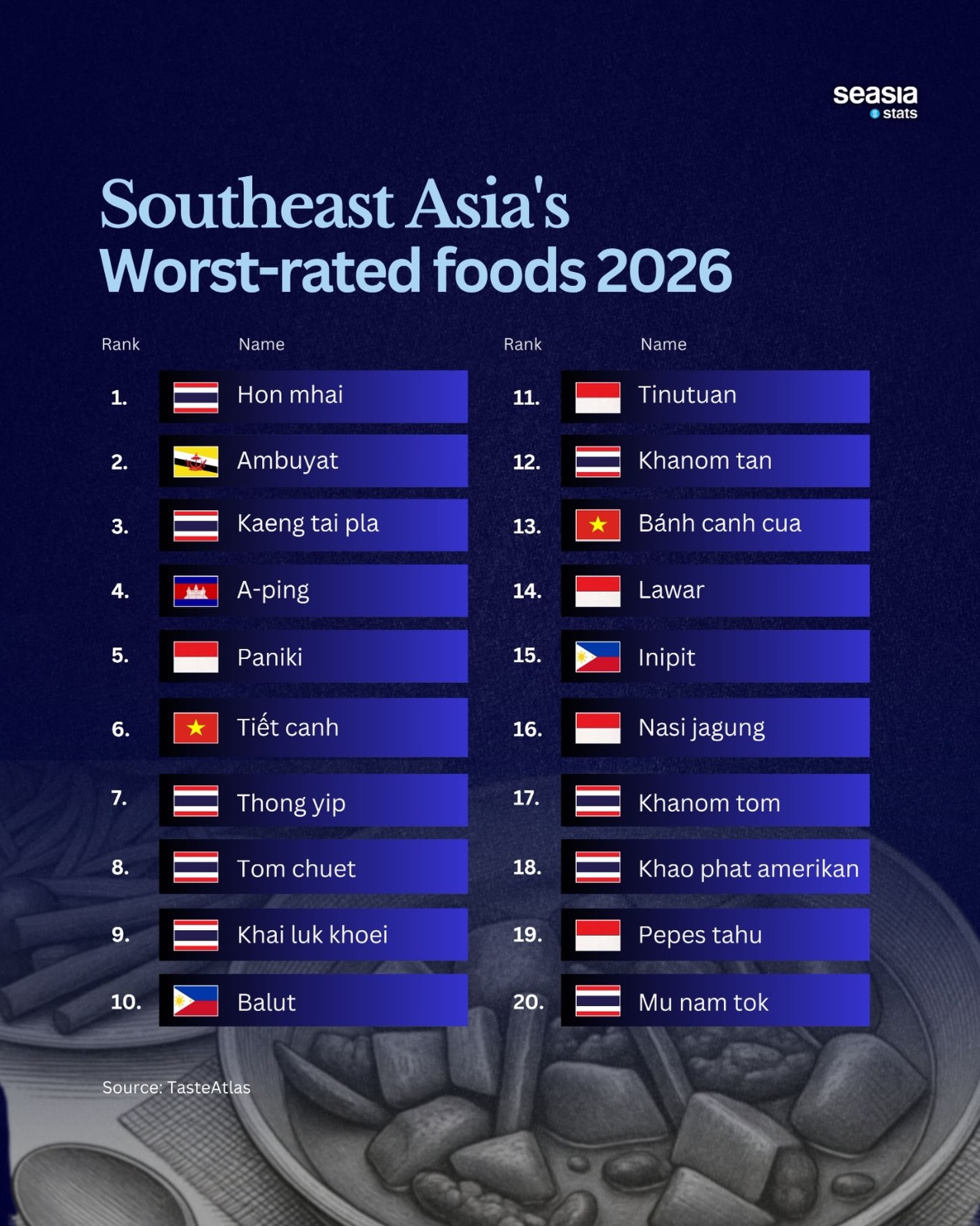
Southeast Asia is celebrated for its vibrant and diverse culinary traditions, but not every local specialty appeals to every palate. TasteAtlas, a global food guide that compiles ratings from diners around the world, has identified several Southeast Asian dishes among the region's lowest-rated foods.
While these rankings reflect public opinion rather than culinary quality, many of these dishes remain deeply rooted in local culture and continue to be enjoyed by generations of residents.
Among the foods featured are Hon Mhai from Cambodia, Ambuyat from Brunei, and Thailand's Kaeng Tai Pla, a pungent southern curry made with fermented fish innards.
Also from Thailand are Thong Yip, an egg-yolk dessert, Tom Chuet, a clear vegetable soup, Khai Luk Khoei, or "son-in-law eggs," and Khao Phat Amerikan, an unusual fried rice dish served with ingredients such as hot dogs, raisins, and ketchup. Another Thai dish on the list is Mu Nam Tok, a spicy grilled pork salad known for its bold seasoning.
Several Indonesian specialties also appear in the rankings. Paniki, a traditional dish from North Sulawesi made with fruit bat, is perhaps the most controversial because of its unusual main ingredient.
Other Indonesian dishes include Tinutuan, a vegetable-rich porridge from Manado, Lawar, a Balinese mixture of vegetables, coconut, minced meat, and spices, Nasi Jagung, a corn-based rice alternative popular in East Java and Madura, and Pepes Tahu, steamed tofu wrapped in banana leaves with aromatic herbs and spices.
Vietnam is represented by Tiet Canh, a dish prepared with fresh animal blood mixed with herbs and peanuts, and Banh Canh Cua, a thick noodle soup featuring crab. Both dishes are regional favorites despite receiving relatively low ratings from international reviewers.
The Philippines contributes Balut, the famous fertilized duck egg that has long divided opinions among first-time visitors, and Inipit, a traditional sponge cake filled with creamy custard. Malaysia is represented by A-ping, a snack made from roasted sago worms that is popular among some indigenous communities in Sarawak.
The list also includes Khanom Tan and Khanom Tom, two traditional Thai desserts that showcase the country's long-standing confectionery heritage. Although these sweets remain popular locally, they have received mixed reviews from TasteAtlas users.
TasteAtlas' rankings should not be viewed as definitive judgments on a country's cuisine. Instead, they highlight how unfamiliar ingredients, distinctive textures, and strong flavors can challenge international tastes.
For adventurous travelers, these dishes offer an opportunity to experience authentic local traditions and discover the remarkable diversity that defines Southeast Asian food culture.