

The Worst-Rated Foods in Southeast Asia
These foods is the worst-rated in Southeast Asia, according to TasteAtlas.

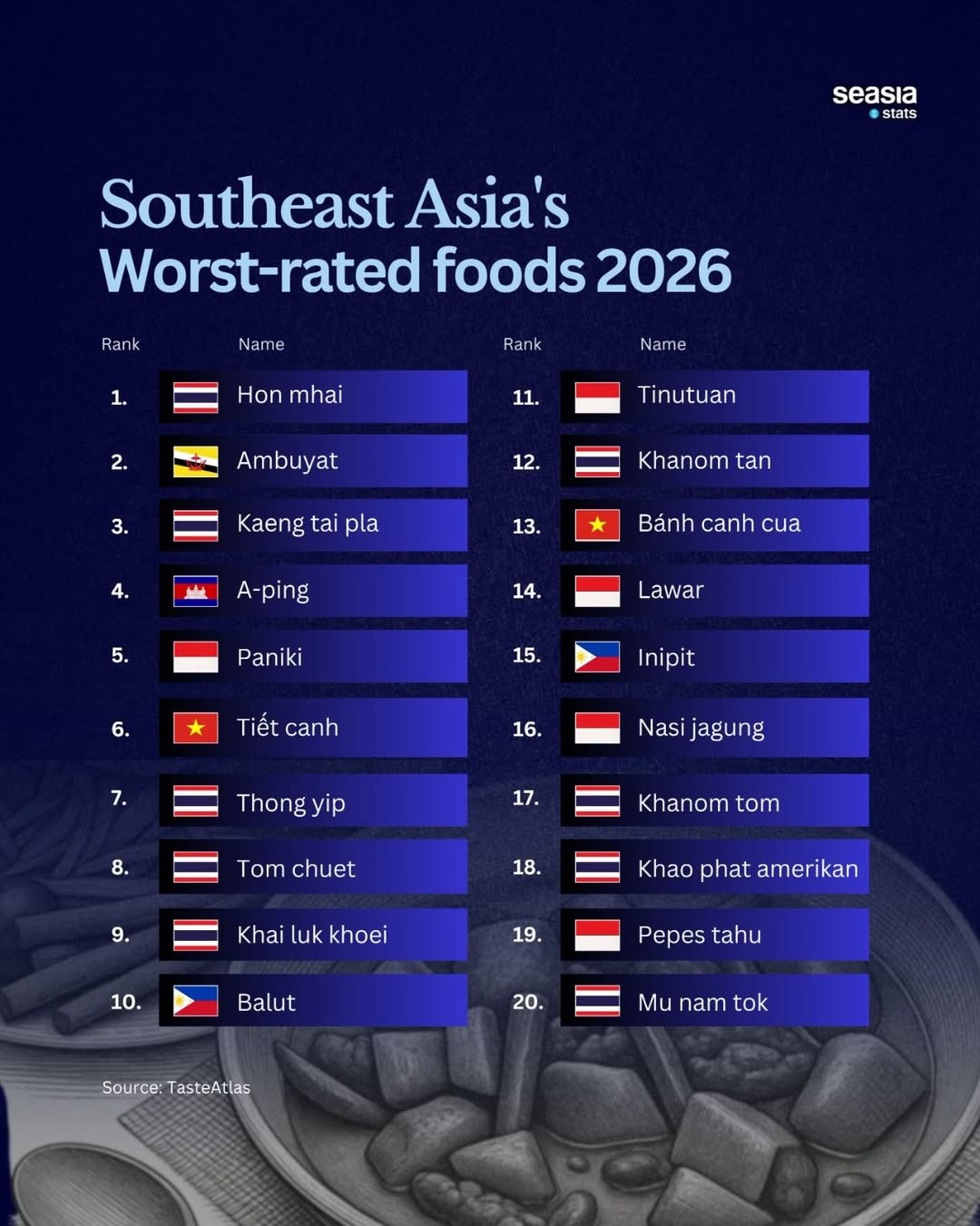
In 2026, food guide platform TasteAtlas published its list of the worst-rated foods in Southeast Asia, sparking debate across the region. The rankings included unusual delicacies, traditional desserts, soups, and local comfort foods that many locals still proudly enjoy.
According to TasteAtlas, dishes such as Hon mhai, Ambuyat, Kaeng tai pla, A-ping, Paniki, Tiet canh, Thong yip, Tom chuet, Khai luk khoei, Balut, Tinutuan, Khanom tan, Banh canh cua, Lawar, Inipit, Nasi jagung, Khanom tom, Khao pat amerikan, Pepes tahu, and Mu nam tok received some of the lowest ratings from users in 2026.
Many of the dishes were criticized because of their strong smells, unusual textures, or unfamiliar ingredients. Hon mhai from Thailand, for example, consists of deep-fried silkworms, while Cambodia’s A-ping is made from fried tarantulas.
These insect-based snacks are popular street foods locally but can appear intimidating to international visitors. Similarly, Balut from the Philippines — a fertilized duck egg with a partially developed embryo — has long divided opinions worldwide.
Several dishes on the list are deeply rooted in regional traditions. Brunei’s Ambuyat, a sticky starch dish made from sago palm, is considered a national treasure despite being described by some outsiders as bland.
Thailand’s Kaeng tai pla, a spicy curry made with fermented fish entrails, also ranked poorly because of its pungent aroma. Vietnam’s Tiet canh, a fresh blood pudding dish, and Indonesia’s Lawar, which sometimes contains raw blood mixed with vegetables and spices, were similarly controversial among voters.
Not all the foods were extreme or exotic. Some everyday dishes and desserts also appeared on the ranking. Thailand’s Thong yip and Khanom tom, both traditional sweets, were criticized for being overly sweet. Indonesia’s Pepes tahu and Nasi jagung, along with the vegetable porridge Tinutuan, were viewed by some users as too simple or lacking flavor.
Despite the negative rankings, many Southeast Asians defended these foods online, arguing that TasteAtlas ratings often fail to capture cultural significance and authentic preparation methods. Discussions on Reddit and social media showed that many people considered the rankings unfair or overly influenced by unfamiliarity with local cuisine.